 Last night was the last night of our 6 month, once-a-month, Unpacking Whiteness exploration at the Zen Center. I honestly got more out of it than I thought I would, and when we went around the circle to give a brief comment on our reaction to the process as a whole, mine was that I was surprised how much I learned from the White people in my group: that I’ve been exploring this topic for a while, unlike many of the participants, and hyper conscious of race my whole life, unlike (based on what they’d said) nearly all of the other participants, and I wasn’t sure I’d get much from the others in my little circle. But every week someone brought up something I hadn’t thought about, or hadn’t been able to put into words, or hadn’t been brave enough to confess to, and I deeply appreciated both what they gave me and the hope they gave me for the potential of other White people. Not that this group of Zen meditators is representative of all White people, but still, I’ll back pocket that optimism.
After we had all said something, anyone was welcome to pick up the talking piece and say whatever they were inspired to add. I didn’t think I had anything else, but a few people’s comments sparked (another!) revelation, and I decided to share.
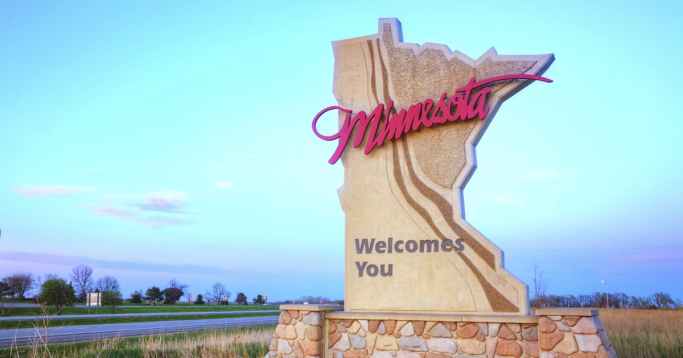
So many Minnesotans I’ve spoken to talk about never having had Black friends, about having grown up in an entirely White community, about having no relationships with people of color, and it occurred to me that the very culture of Minnesota may in fact be racist.
I doubt that is the main reason why this state is still so white. I would but the biggest blame on the racial covenants that are just now coming to light, the people harassed out of their homes, the lynchings in Duluth, etc. But if you look at Minnesota today, how welcoming is it to people who aren’t White, Christian, and Mild? Minnesota Nice isn’t just about passive aggression and passing politeness. It means you made all the friends you’ll ever need in 5th grade, and there is no reason to let strangers into your life. It includes complaining about things to everyone except the people who can do something about it. It means not talking during a movie, but also not having the huevos to tell the person who is talking to be quiet. It means glaring at the person who laughs too loud; and calling the person at work who answers an emailed question directly, without copious smileyfaces and explanation points, “rude.” It means an inordinate amount of people who do not like to be touched, a preference I’d never before encountered. It means that social anxiety can go undiagnosed, because that’s just how people are here. If you are physically expressive, people think you are dramatic. If you are physically affectionate, people think you’re an artist. Or gay. (You probably are.)
I brought this up at work a few years back, when we were talking about culture. (This was before I was brave enough to bring up the fact that we were entirely avoiding a discussion of race.) Nobody was volunteering an answer to the HR Director’s question, so, like many before her, she went to me, because she knew I’d have something to say. I don’t really have a problem with that, except for that fact that in this workplace it is sometimes used against me. But fine. I decided to grab the spotlight and broach the issue of Minnesota culture.
Being indirect in speech, being passive, continually deferring to others is perceived as “normal” here. I know I am perceived as different or bold or whatever because I express opinions when asked, because I sometimes reveal what I know to be true, because I have the gaul to disagree with someone in a meeting where we are supposed to be giving feedback on a topic. You think this perception is normal, but it is not. It is cultural. My behavior was not unusual in Chicago or Los Angeles. It may have been slightly less typical for a woman, but it was not abnormal. You think it is abnormal because people do not typically behave that way in Minnesota, but your standard is not universal, and people who don’t follow that standard should not be Otherized.
Despite the reality that what I actually said was far less coherent, I had several people approach me in the days after that training to express how I’d opened their eyes. It was kind of stunning.
So my revelation last night was looking at this culture through a racial lens and finding even more that was unwelcoming. If I, a run of the mill middle-aged White woman, perceive this culture as repressive, what kind of impact does it have on various people of color? People who might culturally express themselves through spontaneous song or dance? People whose religion is built on argumentation? People who express trust and affection through touch? People who laugh loudly and look for friends across borders? So the Jews plant themselves in St Louis Park and surround themselves with other Jews. And then the Hmong came. And the Somalis. And they also tend to plant roots in neighborhoods that cater to their own culture. And why wouldn’t they? I don’t blame them, and I don’t think it’s all about the language or affinity bias. Minnesota, even Minneapolis/St. Paul, is dominated by a White, Christian culture in a way that Chicago and Los Angeles were not. Yes, the uber-culture in the US is always White, but there was too much of a mix of folks in LA & Chicago for any one cultural standard to dominate. I can’t define either of those cities by culture. When people do single something out, it’s usually an aspect of White culture, like the hippie laid back Californian, but that’s never representative. Minnesota Nice is far more accurate.
So it’s not just the poor transportation and the ridiculous rental prices that keep the Twin Cities from becoming Manhattan. It is our culture of Whiteness and Christianity. It’s oppressive and it is inherently exclusive. And it keeps these goodhearted meditators from having Black friends and Latino neighbors. It makes me sad, but recognizing something concrete always inspires me because concrete can be broken up. I felt inspired when I broached this in the circle last night. I thought it was another eye-opener, another way in which life could be improved for everyone. Something else we could work on!
But no one talked to me afterwards. No one thanked me for this awesome peek behind the curtain. No one openly agreed with me. Of course, that may be because I headed straight for my Chacos and walked out right after I helped put chairs away. I’ve never felt entirely welcome in the Zen center, and that also makes me sad because I set admittedly high expectations for Buddhist communities. Too much ceremony & formality for my comfort? Too little magical ability on their part to reach past my defenses and psychically will me to stay and commune? Aren’t they all enlightened already?!
yeah.probably my own weirdness.
 When we were asked, in our April
  clawing my way to enlightenment