Here We Are, Friends.

Here We Are, Friends.

My time volunteering at the drop-in center was a little different this week. I talked to some of my buddies and made a few rounds greeting acquaintances, but the homeless and marginalized folks who come for coffee, food, and company weren’t, for the most part, concerned about what did or did not happen in the election. The words and impression I get are that they don’t have any party affiliation and don’t feel like who the President is has any tangible impact on their lives. It’s probably the only place I can go where a White guy wearing a Trump hat doesn’t scare or anger me. Politics is generally not a popular topic of conversation among community members.

But the volunteers are a different story. I spent most of the morning listening to, consoling, and freaking out with the wonderful septuagenarian and octogenarian White ladies I’ve been volunteering with for the past 2 1/2 years – a Sister, a former RN, and a former Social Worker who served the same population she volunteers with now. The nurse was particularly concerned about the prospect of RFK leading healthcare, the Social Worker about the LGBTQ community, and all of us about the poor, the homeless, the immigrants (including the beautiful Ecuadorian family that runs the kitchen, who suffered for months while their oldest son was held in immigration detention in a fucking prison in Louisiana, and who have finally felt a little stability), and, of course, democracy.

I rip on White women a lot. (It’s okay. I’m White.) For fuck’s sake, they voted for that misogynistic rapist AGAIN. But I love the ones who show up. I love these women. They haven’t been coming to the center – for Years – to grace the peons with their presence or foist lessons or morality upon anyone. They come to be with people, to talk, to listen, to humanize those who feel less than that, and to revitalize themselves as well. Their privilege doesn’t set them apart from the patrons, it increases the diversity of the whole group, of which they are absolutely a part. So we joke about being occasionally yelled at or called racist, and we mourn the loss of friends who didn’t make it through the night, and we worry about those who are particularly vulnerable, and get frustrated when they seem unwilling or unable to help themselves, and when the system fails them again and again, and we keep showing up.

I’ve been emotionally stable this week, which seems weird. I’m sure it sounds weird, too. I think I pre-grieved this potential outcome in my freak out a few weeks ago, (perhaps I’ll have my comeuppance, like Roman) Whatever the reason, I am so grateful to be, essentially, okay. For as long as it lasts. It allowed me to meet my students where they were at on Wednesday, to keep away from the fear and hatred on Facebook (no judgement, just observation), and to be present for these strong, loving, single women and everyone in our community today, whether with a coffee refill, a laugh, a movie recommendation, or a hug.

This is what I believe. Show up. Show up in your body with other bodies when you can. Show up wherever you can: in your family, in your neighborhood, in your workplace, in your spiritual center. Show up with a hello, a cookie, a conversation. This I can give. This I can control. I’m full of love right now. Wherever you’re at is fine, but I hope wherever it is, you can see a love & community from there.

Heartbreak

Heartbreak

I am not doing well today.

It’s been a difficult week, emotionally. As someone who understands that feelings are just sensations in the body that we interpret as one thing or another, I have been working on not turning those ickies of what feels like fear into interpretations of loneliness, abandonment, friendlessness (which is one of the paths my brain chose to take), and blaming instead the consistently, objectively, large scale BAD STUFF that is undeniably contributing to my current state. War (Israel) and war (Sudan) and war (Ukraine), and climate catastrophes and brutality and heartlessness fucking everywhere our eyes choose to focus.

I think my irritability, acting out blame and frustration these days, may be a reaction to my futility in controlling the things that actually matter and that scare me the most: a no-holds-barred Trump presidency; a non-Trump presidency and civil war; the best case scenario of a non-Trump presidency, no civil war, and nearly half of eligible voters endorsing the rhetoric of hatred, violence, revenge, and antipathy. I can’t change that. But I can yell at B for misplacing a phone charger. And then feel like shit, of course. And then I can just focus on what a broken, horrible person I am and forget about the rest of the world. Doop-de-doop.

The range of news I can tolerate has gotten smaller and smaller. Not just that I don’t like it, and not just the constant reminder that the leaders of one of our two major political parties will literally put people’s lives on the line – both people they’d just as soon see dead and their own supporters – in an attempt to increase fear and anger and votes. Not just the nearly unbelievable compulsion to spread lies about legal, invited immigrants eating White people’s pets and the government blocking assistance to hurricane victims. It’s so much more than that: I feel physical pain whenever I hear an otherwise decent-sounding human tell a reporter they’re voting for Trump because “the economy” or “illegal immigrants” or when I hear anything personal out of Gaza or Lebanon or Sudan, or when I hear Americanness or masculinity or decency defined as cruelty, exclusion, fear, and violence; or when I hear people blaming the pain and emptiness in the pit of their stomachs on foreigners or trans people or poor people or non-Christians instead of the actual, intentional source that is the isolation, fear, and materialism, mandated by unfettered capitalism. Or just the burden of being human, if you prefer that. I’ve listened to NPR’s Morning Edition 4-7 days a week for 20-30 years. Now I can’t get through more than 5 minutes without rushing to mute my speakers, for fear of a total breakdown and inability to get through the work day. Even my comfort news is mostly unwatchable these days. Seth Meyers helped B & I get through COVID and everything since, not only because he’s delightful, hilarious, and a far leftist, but because he does the only Trump impersonation that both diminishes his power and allows me a little compassion for him – making him both more laughable and less terrifying. But I can’t sit through the show’s clips of his latest violent rhetoric or unabashed lies without screaming at the television or hunching over with my head in my hands, my eyes deep in my palms, just praying for it all to be over.

And here I am writing this – writing which feels more essential to my ability to get through the day than literally anything else – when I should SHOULD be making calls to Wisconsin voters (presumably helping keep Trump out of office) or signing up for more Voter Hotline shifts (presumably helping MN voters with information and voting issues) or preparing for my next Mindfulness Meditation class (presumably helping my students cope with whatever happens in the election) or doing the reading for my own MBSR class (presumably helping myself deal with this and all the rest of the stuff in my life) because I feel paralyzed by fear and sadness.

I can buffer this a bit by acknowledging that I am hormonal, and who knows what impact perimenopause is having on my mental state. In general, I’ve gotten off easy in the lottery of female chemistry, but it’s difficult not knowing if my heightened emotions, sensitivity, fragility in the last few years is private and personal or because the world, the country, humanity, is so fucking scary right now. Does it matter which? Probably not. Except to remind me that impermanence is reliable and real, when nothing else is.

There’s been an interesting shift for me in the past few months, and more subtly over the past few years, – from my default emotion – anger – to a less familiar one – sadness. When all of this cruelty and chaos manages to seep past my news filter I feel my heart unzipping, the zipper irretrievably separating. I know I should let it. That’s what the Buddhists say. Let your Heart Break Open. But then how do I get through the day? How do I do my stupid job and cook meals and interact with people I care about and enjoy the humor and beauty that makes life worth living? How do I do that if I’m curled up on the floor in tears?

Don’t worry, I still get angry over stupid, non-political shit. Just ask B. Poor B.

Today is the Day of Atonement. As usual, I am fasting but not so much Atoning. Instead I’m writing, which is pretty close for me. And, I guess, Confessing. Because I’m not great at being a Jew.

I feel like an open wound. I feel somehow responsible for everything and completely powerless. Which is simultaneously true (karma) and false (I can only control my own actions & reactions). I wish I had people to sit and cry with in community. Why don’t I have that? If I had it, would I just be doing that all the time? Surely someone, sometime, would tell us to stop, right? Or we’d run out of tears? Where is our grief circle for the death of compassion? I can’t even generate hatred for Trump anymore. I just feel so fucking sad that people buy into his shit. GOOD PEOPLE, as well as some irretrievably or near-impossibly fucked up people. Maybe too sick to be cured in this lifetime, so the best case scenario is dropping some breadcrumbs for the next. If you’re someone who believes everyone who doesn’t vote for Harris/Walz is stupid, utterly selfish, or unapologetically racist, then you are closing your eyes to a lot of worthwhile human beings. Those judgments apply to a lot of Trump voters, but not to half of the voting population. Why do I care that you don’t believe me? Because there is no bouncing back from the current self-destructive mutual fear and hatred if we oversimplify, build walls, and just bounce around our little bubbles. It’s certainly easier to demonize the other political side – their leaders and mouthpieces make it so fucking easy – but dehumanizing people is literally the beginning of every genocide, and every act of brutality ever. I can’t let myself buy into it. Which means that, instead of angry, I am heartbroken.

I am also subject to my hormones, and who knows what impact perimenopause is having on my mental state. I’ve had a winning ticket in the lottery of female chemistry, but it’s difficult not knowing if my heightened emotions, sensitivity, fragility in the last few years is private and personal or because the world, the country, humanity, is so fucking scary right now. Does it matter? Probably not.

Emotionally, I will feelbetter tomorrow. My period will start and the magnitude of these emotions will feel temporarily inaccessible. But only the magnitude of them. It doesn’t change the truth of any of this. And it doesn’t help me figure out the answer to what do I do? I’m a notorious dabbler; I have no clearly defined role in this life, or not one that is easy to translate into action. What should I be doing? (What is this should? What the fuck is that shit? I’ll tell you what it is: my evil voice. It says everything I do is wrong and/or not enough. It recently stuck me that I don’t think I’ve ever gone a full day in my life without hearing my evil voice – faintly or deafeningly – declaring that I SHOULD actually be doing something more useful, necessary, difficult, productive It’s like my parents were Capitalism & Catholicism; they were neither.) I have a serious spiritual practice, I’m a writer, I actively volunteer, I have been involved in election stuff. I don’t know where I should be putting in my energies and therefore they swirl and ball up into a knot inside me that sucks me dry. Because I’m overwhelmed with all of it. The state of the world, the state of and threats to the people in it, and how little I can do to change it.

The only times I can remember feeling good this week was when I was talking to folks at Peace House or participating in a Restorative Justice conference – the activities that take me out of myself and bring another, an “other”, person into clearer focus and care and community. So if that feels good, I should do more of that, right? Well, first, it’s not easy to just increase that time commitment, but secondly, I don’t know if I should be doing what feels good. Maybe the torture of phone banking is just what this world needs from me. Is it?

Of course there are no right answers. Truly. I believe that, underneath my evil voice. I will probably phone bank if only to fight off my evil self’s future insistence that I caused Trump to win (what an ego!). I’m not looking for any sympathy or any answers, here. Any answers you might provide will be rationalized into what I have already chosen to believe. And I am truly, as they say, fine. But I’d love to hear if this resonates with any of you. I know I’m not alone, but I’m feeling very alone this October 2024. You?

Old Dogs and Dying

Old Dogs and Dying

In Spanish and other languages the parts of the body aren’t possessive. It’s la mano, la cabeza – not my hand, my head. In the meditation practices I follow, we are asked to do the same with thoughts: noting “thinking;” not “I’m thinking”. Most helpful for me: labeling sensations in a disinterested manner. Not, my foot’s numb, my knee hurts, but pain is being experienced. That’s a bit long for me, so I tend to go with pain is happening, boredom is happening or numbness exists, tension exists. It’s a deliberate method not to defer the feeling, but to universalize it. When we attach to our pain, it isolates us – whether it sets us apart as uniquely victimized or uniquely ignored, it sets us apart. When we use our pain to, if subtly, acknowledge the experience of pain everywhere, at the very moment that it’s manifesting in us, it has the opposite effect of opening us up to the world and our place in and with it, and simultaneously, if subtly, transforming our interpretation of the sensation or emotion from something negative into something that simply is.

In one of the books on dying that I’ve consumed (maybe Atul Gawande’s Being Mortal), a man who had lost his oldest son to a genetic condition in his late teens was asked how he got through that tragedy, how he could stand losing a child, he simply said, “He was a wonderful person, and it was an honor to have known him.”

This response, or my memory of it, has stuck with me for years. It comes up almost every time I think about the death of someone I care about – past or eventual. There’s so much in this simple answer. I think it struck me first because it didn’t seem like a response to the question asked. (Something I tend to notice because of my ridiculously literal approach to conversation.) No judgment! I mean, look what this guy had to suffer through. But in fact, it is an answer to the question, and there’s no suffering in it. He “gets through” it because it’s a privilege, it’s a gift. While I have no doubt that this man himself felt as much pain as any of us would in losing a child, it’s not about him. It’s about them as a mutualistic partnership, of shared love.

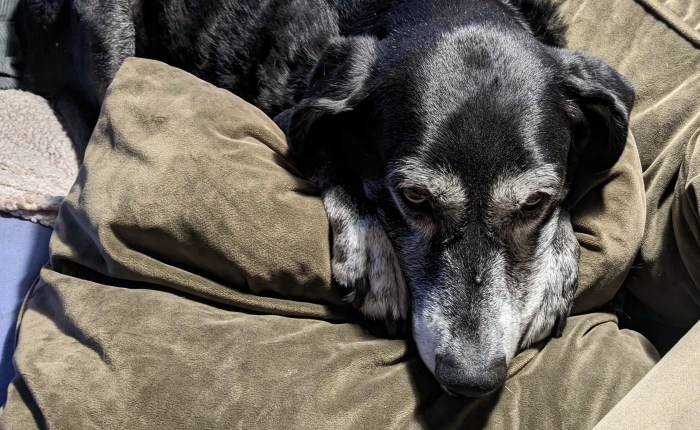
Our dog, Vicious, is old. Not crazy old, but she’s outlived the average lifespan of her major breeds, she’s quite deaf, and she has issues with her back legs (alleviated by some great drugs – science!) B & I both struggle with our fears of losing her. I see it in him and myself, whether we put it into words of not – the way we stare at her when she’s sleeping, the excessive concern when she simply trips or gets up a bit more slowly than usual, the occasional moment of panic after being particularly delighted with some weirdness of hers. When I joke that “it will kill us when she dies” I’m not joking. A part of us – individually and collectively – will die, and something else will likely replace it – the shared sadness, the shared loss, the shared history. I’ve had to talk myself down many times over the past year or so … finding myself obsessing about losing her, working myself up into a frenzy, and then confronting myself with the simplest, most obvious truth, one I’ve been studying for nearly two decades: be here now, bitches. And instead of lying in bed thinking about her being gone, I go downstairs and cuddle her on the couch – whether she likes it or not (she’s neutral). Sometimes it’s hard for us humans to truly understand why living in the future is such a waste of time; it’s so much a way of life that it doesn’t seem harmful at all. But when confronted with a future loss it becomes so fucking clear. I can experience the pain of losing her once she’s dead, or I can torture myself by experiencing the pain even longer! Right now, when I could be appreciating her! Awesome!

Of course we can’t stop ourselves from thinking about the death of loved ones, especially if they’re old or ill, but if we can redirect whenever we catch ourselves – just like coming back to the breath in meditation – life is so much better. We can’t prepare ourselves, emotionally, for tragedy. We can make practical plans, whether logistic, financial, what have you, but the pain you feel when they’re gone will not be lessened one iota by the anxiety you invested in the loss beforehand.

So that’s helped. But then there’s this additional element introduced by that incredibly equanimous parent. The thing that strikes me most about his response is his detachment – not from the experience, but from ownership. It wasn’t that is was his son, his loss: his son was a person in his own right – a wonderful person – who he was honored to know. As I’ve been mulling this over in relation to V, it’s amazing how much spaciousness it gives me. When I think of her as my dog, she begins and ends with me, with our introduction to her existence. But when I think of her as the highly specific, weird freak that she is – one born before I knew her and perhaps inhabiting some kind of consciousness before then; one who has moved countless people and been idolized by the occasional dog, one who will continue to live on in all of us, in our memories and the feelings and experiences she inspired – (in exactly the same way she lives on now when I’m not in her presence), one who makes choices and has preferences unrelated to me or what I want of her – then losing her is painful, devastating, but not catastrophic. She will have left us, but she hasn’t left. Everything dies, but nothing ever leaves. We are all literally made up of the same particles that existed at the beginning of matter as we know it. Vicious is just a sedate, introverted, tolerant, yardwork-loving, floppy eared version of a particular collection of elements and, if you believe as I do, a particular manifestation of consciousness. This understanding won’t make me any less sad when she dies, but when I think about her inevitable departure from that perspective, I feel less suffering, less individual attachment to her and more, like that enlightened father, a feeling of unbelievable luck. I got to care for this exceptional creature. I got to spoon her in the morning; I got to stare into her beautiful brown eyes and wonder what she thinks when she looks into mine; I got to watch her prance like a horse and chase turkeys and lie in the sun with her eyes closed and her head in the air. Particularly knowing when I took her in that she would, barring some anomaly, die before me, how can I regret her loss? If I see her as a visitor, as a gift, it’s all good. Everything is impermanent. Everyone leaves us, or we leave them. It’s all just a matter of how much presence and gratitude I can bring to her right here, right now (when she’ll let me).

If we can do this with our loved ones, it may be a better way of honoring their existence, their journey on this planet, and help us let go a little more easily when they leave.

(I write this now, of course, because I won’t be able to write it when she’s actually gone, but I may be able to read it).

Israel/Palestine Feel It? Or Fight Over It?

Israel/Palestine Feel It? Or Fight Over It?

Once again … still … always … these are difficult times, friends.

To be honest, I haven’t been digging into world news much. I get the lowlights from NPR and Seth Meyers, and haven’t sought out a whole lot more. I’ve downloaded podcasts about what’s going on in Israel & Palestine and the specific cognitive dissonance of liberal American Jews, but I haven’t listened to most of them. When I have a few minutes free, chomping down PB&J before moving onto other responsibilities, I’ve generally sought out educational pieces on the history of Israel & Palestine, not reporting from the front lines. This practice hasn’t felt right, but it also doesn’t make my heart hurt. And I’ve got other stuff on my plate.

My beloved online sangha had our monthly checkin on Halloween and I was late due to candy responsibilities and missed what was going on with the Jewish women in the group. I assumed we were all on the same page politically – this is a spiritual community that came out of a Socially Engaged Buddhist program, so we tend to agree on issues – but it became kinda clear I wasn’t really with them in spirit. On my turn, I talked about my disgust with what’s happening and what’s happened, some difficult conversations I’ve had with an anti-Muslim guy at The Listening Place, sympathizing with anti-Israel protestors while questioning the tone and content of those protests, and basically just spitting out whatever random shit was floating around in my mind. Someone else spoke, we sat in silence for a bit, and then one of my Jewish Sisters said,

We’ve been kicked out of everywhere. Where is there left for us to go?

And I finally felt it. I felt there was something deeply lacking in my engagement. I felt that I was behaving in a way that was human-adjacent, instead of truly sinking into the human horror of the situation. And it wasn’t just that I haven’t seen many images of what did happen and what is happening (though that is true), and it’s not that I don’t have sympathy (I do), and it’s not that the fog cleared and I saw the clear path to the right way to witness this conflict, but I knew what I was doing was wrong.

It wasn’t until a dear friend and I connected today that I figured out what was wrong, or rather we figured it out together. She and I are both Jewish, but almost entirely by heritage. Neither of us grew up in a Jewish culture or in families that practiced Judaism, culturally or religiously. We did both grow up in highly political families – left-wing, activist, anti-war families. That was essentially our religion. So in the same way that Jews, no matter how liberal, may have a bias when it comes to Israeli sovereignty, we have a political bias that colors our perception of what’s happening. And that obfuscates the humanity of the situation just enough to where I am not witnessing in the way that a Socially Engaged Buddhist should.

What does that mean?

Well, it’s subtle, and it might be almost imperceptible from the outside, but putting the political ahead of the human suffering changes the way I think and talk about what is happening. It turns on my brain and dampens the embers of my heart. And that is not how I want to approach suffering. I want my eyes open, my heart aflame, and my brain subservient to the two (three) of them.

Example: the conversation with the anti-Muslim guy referenced above. He has a sweet disposition and a lot of knowledge, but in his homeland, Bangladesh, his mother was slaughtered (his word) by Muslims, and he has a deep and understandable bias against the religion and those who practice it. During the usual invitation for prayer requests, he asked that we think of the hostages and all the Israeli people who had suffered because of Hamas. I countered with, “and all the innocent Palestinians who are being bombed and killed by Israel.” I knew about his Islamophobia, and didn’t want it to go unchecked. Since he is really a kind and engaged person, we had a pretty long talk about it afterwards. He knows more history of the area than I (questionable though it may be) and knows more of the Koran than I (again, from a particular perspective), and while I knew everything he was saying was not true, I was unqualified to meet him where he was at. Eventually I said that I really didn’t think we could continue the conversation because we couldn’t agree on basic facts, and that he wasn’t going to convince me (as it appeared his intention was) that Islam was a fundamentally and distinctly violent religion. This was all done in a calm and friendly manner and we had a pleasant interaction on a different topic a short time later. It isn’t my tone that I’m trying to fix here; it’s the foundation of the discussion. It was futile to even engage in a conversation based on history and religious beliefs, and not just because of my own ignorance. It’s because all of that background is intellectual, and our brains will defend that apparent rationality to the death. The only way to chisel a crack into that hardened foundation is through the heart. It’s the heart that led him down that ideological path – his broken heart for his murdered mother – and it’s only the heart that has a chance of changing him again. Instead of arguing about the righteousness of one side of the other, we could have addressed the suffering of the families. We could have talked about the children. We could have simply acknowledged the pain of the human beings caught in this hell. We could have softened our hearts instead of entrenching our positions. We could have empathized instead of trying to win.

Would it have done any good? I don’t know. But I am more interested in the long game than the winning this particular pot. If there is anything I can do to help this man let go of some of the suffering that he interprets as hate and disguises as justification, it won’t come from arguing the merits of the Palestinian position. It will only come from love. I’ve spent a lot of time studying how to talk to people about race in the last decade, but I still fuck up fraught conversations constantly. Of course, I feel far more comfortable arguing over the history of Black people in America than I do the Middle East, but my comfort or familiarity is not the point. It always comes down to coaxing our humanity to the surface. Not just the humanity of the people we’re demonizing, but the humanity of the person who’s demonizing them. I should have asked him more questions, confirmed that I was understanding him correctly, and kept coming back to the people and the suffering. No, we wouldn’t have resolved out positions or, certainly, the war itself, but a seed might have been planted for a bit more growth in the future, a little less preaching and a little more witnessing, a little thimble of space for holding these victims with care and respect before jumping back into justifications and self-righteousness.

I don’t know. But I do feel, feel, that the way I’ve been approaching this isn’t right. Buddhism is pretty deontologist – since we can’t know how things will turn out, our attention is focused on performing as wisely and lovingly as we can in the moment. There are no ends that will justify an immoral means. So killing civilians in order to stop a terrorist is hard to justify. And cultivating compassion is always a good choice, even if it does nothing to end the war of the moment.

Ideally, compassion would bring us to a place of peace. But I’m not naïve enough to expect that in Gaza. I can only try to practice on a small scale what I want from the world at large, and my heart won’t let me do otherwise for long. Witnessing the pain on both sides hurts, but protecting myself with an intellectual glaze just feels gross, and I hope I’m past that for now.

Start Where You’re At: Mitt Romney?

Start Where You’re At: Mitt Romney?

Holy hell, it’s been hard to blog this year. I don’t know whether to blame the additional State Fair job, the suckiness of my regular job, the world as it is, or just the natural ebb & flow of being human, but the longer I’m away the harder it is to come back. Do I try to wow you with some heretofore hidden epiphany? Catch you up on my life? (yawn) List all of the spiritual accomplishments I’ve acquired in 2023? (ha!) Nah. Here’s what caught my attention today.

I pedaled over to the DMV this morning (they don’t call it the DMV in Minnesota, but fuck that: it’s the DMV) for a relatively painless Real ID appointment and plugged into Fresh Air’s interview with the author of Mitt Romney’s bio for the ride. Like many, I am intrigued with the recent revelations from the ageless Mormon, and have been mildly impressed with the integrity he’s maintained during his Senate terms. He has a family history of doing the right thing: as HUD Secretary, his father attempted to deny federal funding to communities that were de facto racially segregated, before Nixon shut him down (check out the This American Life segment if you want more on that). And voting for impeachment was impressive, especially considering the bodyguards he’s been personally paying for ever since.

Anyhoo, what my Buddhish perception found most intriguing about the interview was Romney’s bemusement over the self-imposed enslavement of most Senators to the US Senate. In his words, the chamber is “a club for old men” whose “psychic currency” as a human is built on the foundation of Being a US Senator. Not just that their job is important to them, but, for most of them, their identity is their job. The decisive question when making a vote is “will this help me get reelected?” He said he has tried to reason with them, to use himself as an example: that failing to win the Presidency as a major party nominee was about the biggest loss one could imagine, and he came out okay. But clearly, most of these guys are not like Romney. And many of these guys are not okay.

I’ve occasionally been confused by the contortions some Republicans have made to twist their lips onto Trump’s ass. I try not to assume that people are evil, so I look for motivation behind actions that are incomprehensible to me. Why even be an elected official if you don’t have issues or policies you care about? Why remain an elected official if you’ve caved on everything you purportedly did care about? Why play lackey to a narcissistic fool who would sell you out and put your life in jeopardy just to generate more likes on Twitter? You could probably make a lot more money in the private sector (especially once you’ve held office). And they don’t do it only because they fear actual retaliation – these spineless humanoids were selling out before Trump had the power to literally rally unhinged fans to attack them. In fact, it was the Republican party’s utter prostration to Trump that helped forge the mob of the unhinged that we’re all grappling with today. Is it just the lust for power? Maybe, but how much power do you actually have when a volatile, infantile, failed businessman controls your every move?

I think it’s something else. What Romney has that most of his old, White colleagues do not is an apparently real commitment to his form of morality, apparently from the Mormon church. It’s hard for me to believe that the guidance I receive from Buddhist practice & dharma is anything like the “spirituality” others glean from conservative religions, but I have to admit that my disbelief comes primarily from ignorance. There are countless fucked up things about the mainstream Mormon church (though far more about FLDS – hoo-boy!) but there does seem to be some idea of integrity built in, and clearly Romney’s religion and family stand outside of, preceded, and will supersede his role as a Senator. His sense of self is not chained to that, or any, title. Instead of getting an apartment in DC or living with other Congressmen, he bought a townhouse off the strip in the hopes his wife and kids would feel more comfortable visiting. What I’m trying to say in way too many words is that there is more to Mitt’s life than winning, and maybe if winning is all that matters to the once-and-oh-please-never-again-President, then caring less about winning, by converse illogic, is … good?

The bush I’m pummeling here is this: morality means something to Romney, something more than having power or winning an election. He believes that he has a higher obligation, and that has apparently kept him from caving like the others. This is a bit hard for me to say because it’s in pretty direct opposition to what I used to believe (as most things are these days – FU, Buddha!). When I used to hear that people were supporting candidates “of Faith” or because they were “right with the lord” or “Christians” I was always horrified. What does that have to do with policy? Don’t you want to know their positions? Isn’t that incredibly arrogant and presumptuous to think that someone will be a better leader just because they believe in your God? And while I still agree with most of that, I now understand the reasoning behind it. Well-meaning people may well believe that Christians – or Whatevers – will be better politicians because they will not be unduly swayed by what is convenient or popular or least risky – they will be guided predominantly by what their understanding of morality. When (some) people vote for candidates based on faith, they aren’t voting for the issues the church favors, but the spiritual guidance that leads to those positions. Political issues and proposals change all the time, but the basic moral foundations of the religion (wildly varying in interpretation, of course) presumably don’t.

I can accept that that’s actually not a terrible way to cast a vote. I mean, politicians lie and change their votes all the time, but if you really believe that they are guided by a strong moral compass – one that you also believe in – then you don’t need to worry about the vagaries of politics. They’ll always look into their God fearing hearts for the best decision. I doubt this holds up for most supposedly religious politicians, but I do get the theory behind it. If Roshi Joan Halifax or Lama Rod Owens or Thich Nhat Hanh were running for office, I wouldn’t need to know what they thought about any issues (though I can guess), because I know they believe in nonviolence and interdependence and universal compassion. So I can’t condemn others for following the same thinking.

On the flippity-flip, that’s the fucked up thing about Evangelicals and Trump. He has NO ground. There is literally nothing in this world Trump cares about except himself, specifically feeding his gluttonous ego. And yet, Evangelicals supported him because policy decisions that were expedient for him coincided with their own. It’s the opposite of what they’ve done in the past and still do with other candidates. They weren’t tricked into believing that Trump was a Christian; they’re not idiots. All his playacting just gave them a little cover for what they really wanted: someone who would shut down everything that went against their specific, contemporary political priorities. They took the path of nonbelievers and voted on policy alone. And it worked for them, at least on the surface. They got their ultra-conservative Supreme Court, at the very least. But if the tide had turned, if it does turn, and somehow Trump’s supporters shifted – if he were to become the hero of socially liberal, Israel-loving Jews, and believed they would propel him back into office – Protestant evangelicals & Jew-hating White Nationalists would be dumped naked on the side of the road. Supporting an amoral, petulant manbaby is a pretty huge risk for a contingent that believes the soul of our country is at stake.

Listen/look/feel me, I have always voted based on candidates’ political positions. If a few folks supported pretty much the same stuff, I might look at other factors. If someone comes off as a condescending asshole or has a plethora of rumors swirling about personal issues, I might reconsider; but I helped run a city council campaign for a guy who treated me worse than any boss ever has in my life. Despite the humiliation, I stayed because I thought he was the best candidate. (No, I’m not proud of that decision and do not encourage anyone to do the same.) But if I could truly look into the heartmindsoul of each candidate and vote on that, I might go the way of the spiritually-driven voter. I know people questioned the sincerity of Romney participating in a Black Lives Matter march back in 2020, but if that generated any votes, it was far less than he lost in standing up to the Republican party, so I have to trust his sincerity. And appreciate it.

Of course, of course it doesn’t have to be religion. It can be personal integrity, responsibility to one’s community; even true patriotism (a concept that scares the shit out of me) has occasionally been enough to withstand Trump’s infectious poison (e.g. General Mark Milley). But without any foundation in love or faith or ethics or responsibility (Have you no decency, Sir?), without any motivation other than holding office, holding office ceases to have meaning and those who do it simply bend with the prevailing winds. The Republican party is run by a hungry ghost protected by sentient doormats, and as long as they have power, the voices of the (yes, infinitely too conservative for me but still somewhat) decent members will be drowned out and ultimately disappear.

Get Back & Get Happy

Get Back & Get Happy

(Started this post during the pandemic & abandoned it. Thank you, Alan Arkin, least of all for getting me to complete a post again.)

Years ago, I watched a long interview with Alan Arkin while on the treadmill at the gym. I know I was on the treadmill at the gym because I generally avoid interviews with actors, but the viewing choices on the guy tv were limited to soap operas, reality tv and this. I would say I have nothing against actors, but that’s not entirely true. Having been one, I kinda feel like I’ve had my fill of actors’ opinions. Totally unfair, I know. Actors’ opinions are just as valid as anyone else’s; I think I’m mostly bothered by the widespread belief, in this country at least, that fame makes you wise.

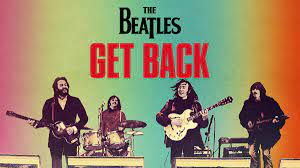
But Alan Arkin is a phenomenal actor, so I was willing to give him a bit of my attention. (Being talented makes you wise?) I only remember one thing he said, but I’ve remembered it for over a decade. I believe he was answering a question about working on Catch 22. He said something like, “of course we had a good time. We were making a movie together. How lucky are we? I find it so upsetting when I hear that The Beatles were fighting when making Let It Be, that they were angry and didn’t want to be there and hated each other. I mean, they were the most popular band of all time making some of the best music ever. If people can’t enjoy that, what hope is there for the rest of us?”

Please don’t hold me to the accuracy of that summary. I’ve likely made up 90% of it in the many times over the years I’ve recalled it.

Accurately or not, it stuck with me.

So, yeah, I watched all of the nearly 8 hour documentary series, and it was revelatory for me in many ways.

I first saw Let it Be as a kid. The Parkway Theatre in Chicago would show double or triple features all the time, and I’d frequently go for a cheap day out with my sister or my mom. They were typically grouped by theme – Westerns, horror movies – or creator – a Marx Brothers day, a Charlie Chaplin day, a Beatles day. I saw Let it Be when I was still in the single digits, and had a child’s view of the adults in the film: adult men at the end of a long, successful career. That was the first illusion pleasantly shattered by sitting down to the documentary tome. When was this made? I asked The Guy (a Beatles fanatic). “1969.Wait, so how old were they?

Ringo Starr was 28 when they recorded Let it Be. George Harrison was 25.

They were fucking children.

I had always remembered Let It Be as The Beatles in their 40s (as kids typically inflate adults’ ages), starting to settle down, ready to move on. While the latter may have been true, they were doing so with almost the entirety of their adult lives ahead of them. It must have been terrifying, the thought of walking away from the most successful musical act ever, the only thing you’d done as an adult, to see what else was out there. I think this can explain a lot of the tension and conflict that did exist in the crafting and recording sessions, though it seems, in the Get Back documentary, that tension was wildly exaggerated.

So many spiritual lessons can be taken from this. I’ll start with the most obvious: the reality presented to you by another person is only their reality, or the one they’ve chosen to present. It is not Truth. I’ll extend that to say that no one’s reality is the ultimate reality; reality is only the perception of reality. There is no secret actual reality untouched by perception or context. The effort to approach an unbiased picture of an event is important and admirable, but reaching that objective goal is impossible, just as perfection is impossible. Nothing but the ultimate Truths are truth, but that doesn’t mean we don’t keep striving towards a compassionate, comprehensive perspective. Get Back is not Truth, either, but in giving us more time with the band and their collaborators, we have more space to form our own truth. It is less curated and far more ambiguous; there are fewer heroes and villains and far more people involved.

But that’s just the beginning of the wisdom Get Back has to offer, folks.

First, and oh-so-illuminating for me, for me particularly as a writer, and not a collaborative one: the generosity and egolessness with which all the band members gave of their work, asked for help, offered suggestions, admitted frustration was just fucking gorgeous. The song and the quality of the song is what matters, not whose name is on it (or not so much). Maybe this wasn’t a big deal to you, but people raised by parents/siblings/etc. with narcissistic traits often have a greater need for approval – the approval is a measure of the self worth – so giving up credit or allowing others to contribute to something I do, with or without credit, can feel like failure. To just keep on giving and giving up like Lennon, McCartney, and Harrison do – I hope I reach that level of maturity someday. Both John and Paul later said they could never write as well without the other – that they “filled in the gaps” as Rocky so brilliantly described it.

Second, because it has to be said, is how little Yoko had to say or do with anything. She basically just sits there next to John whenever she’s around. Now to my tastes, that’s a little clingy and intrusive, but the intrusiveness never seems more than physical, and honestly the others in the band don’t seem bothered by it. Lots of people stop by during the recording sessions, and sometimes they’re right in the mix as well. As for her distracting qualities, Paul excuses John’s frequent guest and occasional disinterest with the patience of an elder: John’s in love and wants to spend time with Yoko. Again, this isn’t a middleaged, grizzled man who’d found someone to carry him through his twilight years – John was a young man in a new relationship.

Speaking of love, McCartney married Linda Eastman later the same year, and the mutual love and joy between him and his soon-to-be-daughter Heather is impossible to ignore. In so many ways, McCartney seems like the father of the group, moving them forward, bearing responsibility, and negotiating conflict with far more care and maturity than I can typically muster.

But to the point I started on, Alan Arkin, and most of us, had the wrong idea, cultivated from the previous documentary. These men clearly cared about each other, but beyond that they really enjoyed working together. They had fun. Playing songs over and over and over, they have fun; performing in front of an audience (if safely distanced), which they’d avoided for years, they had fun. Messing with lyrics and music and each other, they had fun. Joy is generative.

back to 2023…

I was, as Alan Arkin must have been if he joined us in this viewing experience, so happy to see how these guys actually were with each other. To see how much they clearly loved each other, and others. And to see the creative process – how they worked together and made suggestions and fucking played together. I don’t know that I’ve ever been in a space like that. Maybe some of those really good Steven Book improv classes – but that was at best, like, 5 minutes a week. These guys were grooving for months. And you do see the love, and patience, and forgiveness – that’s what most of it is. The animosity was the exception, as far as you can tell from this EXTENSIVE recording. The album did come out of love, and the performance on the roof was, just as you can see in the photos on the album, full of joy (and cold).

Can you create beauty out of hate? I suppose someone might toss up anti-war art or paintings as works of hate. But even if you look at Guernica or Wilfred Owen, those are works of love – love of the lives devastated and obliterated. The hate is a byproduct of the love. I’m not sure where you go with a band like Oasis – clearly great pop songs from miserable, hatefilled people, but is it beautiful? The Hare Krishnas, among others, believe that the state of mind or spirit with which the food is prepared becomes part of the food, so you should only prepare food with love and joy and eat food created in the same spirit. So also with art? I think, mostly? Give me anyone’s artistic inspiration and I can probably find a way to turn it into love, but that doesn’t mean I’m right. Is revenge art, heartbreak art, guilt art really out of love for what was lost more than hatred for what was left?

I suppose there are no absolutes. But art and joy and love feed off of each other more often than not. As much as I support the financial goals of SAG/AFTRA and the WGA, art is not about money. Money is a vehicle to support the creation of art, and generate more love and joy and understanding in the world.

Faith and The End

Faith and The End

There is a lot I don’t say when it comes to my, for lack of a better word – and I really wish there were a better word – faith. It’s hardest to keep my mouth shut when it comes to our mortality. I wish I could tell friends who are closer to death that I know they will be okay, even when they are no longer they. That this life is a temporary experience, and maybe not as terribly serious as we make it out to be. That shaking off our physical existence allows us to reunite with the – whatever you want to call it – universal consciousness, the One, the eternal; like the wave returning to its natural state of ocean-ness.

Not that it’s not okay to be afraid of death, or the prospect of death, or the pain that inevitably accompanies dying, whether brief or drawn out. My sole purpose would be to let them know that it’s going to be okay in the end. In the actual End. That we will be okay in death. That we will become what we already are; that, as Ram Dass’ friend Emmanuel says, death is “perfectly safe.” I would give so much for everyone to believe this, to have faith in this. But I don’t want to push anything that they would reject, and I don’t want them to reject me when I could otherwise be of assistance, and I certainly don’t want to minimize their suffering. I just want to talk about my (gag) faith because if they could believe it, I think it would help.

So many of us (my former self included) interpret faith as the absence of fact, as a kind of fantasy, but it’s more than that. It’s the presence of something that passeth understanding. Many of us who have taken deliberate psychedelic journeys believe or have faith in consciousness beyond material existence. in a way that cannot be debated, defended, or denied. It just is. I didn’t decide to believe that having a body is just one part of existence. I didn’t decide to believe that there are other levels of consciousness. I didn’t choose to believe that there is another, different experience of Being beyond our material death. Honestly, it was so deeply implanted in me that I didn’t even realize I believed that until I found out an old (young) friend was in hospice care. I was surprised to find that I didn’t feel bad for her, because I knew as much as I know anything that her death was a transition to something not better, not worse, but other and utterly real and integrated with the universe. I felt bad for those of us who would be denied her unique presence and for the pain she had to go through, but not for her. I know this may not make sense. Which, back to my original point, is why I don’t talk about it.

I have spent most of my life thinking that there was nothing after death, and being okay with that. My psychedelic experiences have overwhelmed that thinking to the point where I cannot pretend that nothingness is a viable option. I cannot think about death without feeling that soupçon of universality and love. I don’t long for death, because I do adore this earth and the vagaries of being in this body, but I don’t fear it. Worse yet, I believe in reincarnation. I don’t know how it works or what brings you to one form or another or if they’re all on earth or if we have “time” (though that word is pretty much meaningless when you’re not mortal) between lives, or any of the details. I just know that when I think about my life as me and what might be different, the words “in my next life” take shape, and I’m not joking. I DO NOT WANT TO BELIEVE IN REINCARNATION. I don’t like a lot of the judgment and binary thinking in the religions that believe in it. I don’t like what it says about who we are as humans now and how we got here, and I REALLY do not want to live through another childhood, even though I understand that many people really enjoyed being kids. If I could skip to adulthood in my next life, that might be okay. Jump right into the work of figuring shit out again, instead of all that mucking about under the heel of others.

I have not said any of this to my friends with terminal illnesses because I know how I have felt when people talk about heaven or say, “they’ve gone to a better place.” Angry and annoyed, that’s how I’ve felt. I even feel that way now, most of the time. I wouldn’t call the “place” I’ve visited better or worse – it’s so different, I can’t compare. It’s like saying creating art is tastier than a mango, or sth. When one of our much loved community members at The Gathering Place died a few weeks ago, there was a lot of that better place going around (lots of Christian volunteers). Maybe it’s true – she lived a hard life, she’d been beaten recently – but I still don’t like it. It seems childish, pacifying, and fake. I don’t want others to react that way to my theory.

And of course, there are other things to worry about. The people left behind – the children and parents and partners and beloved friends. There’s no comfort that alleviates that except, perhaps, that this is what life is; that loving another human being brings pain to one or the other person or both; that we still believe it’s worth it, most of the time. I also cannot pretend to know what anyone is going through as they are gravely ill or dying, and don’t want anyone to think that’s what I’m doing. On top of their fear and pain, there are the practical issues of kids and parents and property and goodbyes. I haven’t had to do any of that yet.

I really wish I could not just tell, but truly convey to everyone who fears death that it’s going to be okay. That we will all really be okay in the end, because the End is always death, and death is okay. Hell, even if I’m wrong – if I could get others to believe as fully as I do, it could ease a lot of suffering. And the good part about my afterlife, unlike others we’ve all heard about, is that you don’t have to pass any test to get there. You don’t have to perform a penance or start hating your own actions or other people. You don’t have to say anyone’s name or renounce anything or even pray. All you have to do is die, and all of us are going to do it.

Maybe someday this will actually help someone.

Until then, I wish you all joy in this existence and love always.

That’ll Teach ’em

That’ll Teach ’em

Sometimes it’s hard not to hate. The horrid irony of hating haters.

States are passing laws that prohibit cities from opening safe injection sites for users of illegal drugs. Vandals slash water bottles that people leave in the desert Southwest for desperate migrants. Public policy or private action – they both say the same thing: You’ll learn your lesson when you’re fucking dead.

You can write off some opposition to safe injection sites as ignorance. You say “using drugs” and people freak out about their neighborhood, their kids, their safety. Most Americans don’t have the time or interest to dig into the details and evidence around much of anything that doesn’t directly impact their day to day actions or finances. But when politicians (Republicans and Democrats) whose job it is to understand the consequences of the laws they choose to pass choose to ignore the facts, that says to me that they don’t give a fuck or they have chosen to represent the cult of those who don’t give a fuck about people in order to get votes. And to that I say, Fuck Them. To remove a lifeline for addicted people in the midst of a national crisis in which, according to the latest data available, 290 people are dying every day is about as unethical as it gets. Not only do safe, supervised drug use centers keep people from dying, they provide a resource in which many people eventually choose to stop using. But only if they live. Perhaps even worse (it’s hard to rank atrocities), Idaho is restricting funding for Narcan, a drug whose sole purpose is to reverse drug overdoses and prevent people from dying. How can you just not give a shit about people dying unnatural deaths?

Look, I can understand that people don’t get drug addicts. There are probably some people left, somewhere, somehow, who have never known (or admitted that they know) someone with an addiction. But I really thought that things might turn around once the overdose deaths became overwhelmingly, undeniably White. We certainly didn’t go after prosecuting opiate addicts the way we did crack users in the 80s. Maybe we’d learned our lesson. But no. We still consider death a reasonable lesson plan, a responsible way to treat a condition that literally changes your brain. We, some of us, would rather that people die than be provided a safe place to use, or a safe way to recover from unregulated drugs that are more dangerous than ever.

Slashing water bottles in the desert comes out of the same philosophy. You shouldn’t come here without explicit permission, so you should die here. No matter if you’re running from the threat of death, torture, rape, or being forced to kill, torture, or rape others. No matter if you’re a child or a grandmother. We will teach you how to obey “the law” if you have to die to learn it.

I’ve othered people myself. I started hanging out at the Gathering Place because I realized I was othering homeless folks. Not in a way that made me wish them harm, but in a way that nonetheless diminished their humanity. I didn’t like that, so I decided to confront my bullshit by facing reality.

I know not everyone has the time for self-analysis and volunteering that I do. When I cut past the disgust, I have to see these demonic actions as symptoms of a mindset from which almost all of us suffer to one degree or another: the idea that we are separate, isolated individuals or groups, with no impact on the lives of each other. If we could truly accept our interdependence, our Oneness, our mutuality as human beings, at least, though the connection with other living beings is no less crucial, then “inhumane” policies like these would never pass, they would never even be suggested. How do we learn to see our fellow beings as a mirror to ourselves?

A Taste of Freedom

A Taste of Freedom

Every once in a long while, I get a glimpse behind the curtain.

It smells a bit like the first whiff of lilacs in spring. It looks a bit like a sliver of sunshine from a door inched open from darkness. It feels like featherweight joy. The casual, quotidian joy of what life could be if I truly recognized it as the experiment it is, a world in which the title I carry, the job I go to, the investment I make or house I buy has no more significance than the paper on which those accumulations are recorded. A world in which the only real consequences lie in how my actions resonate to my fellow Earthlings, human or other. A world in which there is no boredom, no routine, no apathy, but perpetual recognition of the everyday glory of engaging with it as a human being in this moment.

Of course I can apply for that out-of-my-league job or connect with that out-of-my-league person because the leagues are an illusion, They’re part of a bullshit, manufactured hierarchy intended to keep us isolated from one another so we don’t recognize our interdependence and the shared goals of love, happiness, and peace that would allow us to stand against any autocratic, selfish, destructive entity.

Failure is a lie because it implies an end state, a state of perfection not reached, as opposed to an experiment, Every time something doesn’t turn out as expected, that should be a celebration of change and education and novelty. Success is okay, but it carries the delusion not only of achievement, but of Arrival – of an ending. Failure reminds us that we just fucking around trying to get our bearings here, people in a world that is (in my country) constantly mocking, denigrating, obscuring, and flat out denying the truth that there is another option, a more joyful path, a lighter way to live. Sometimes I can see that path, when the fog clears.

And then sometimes I’m burdened with the pointlessness of existence, a heart-heaviness that makes everything seem useless, every meaningful action impossible: a trap of swampy ick that I know I will ideally just acknowledge, not give it unearned importance or attach any other unpleasant emotions to it, but which instead I often wind up waiting out, holding on til bedtime and hoping the next day will be springier, sunnier, better. I will have moments of thinking I am in much worse shape than I thought, that maybe the miasma of loathing is thicker, deeper, more insidious than I choose to acknowledge, that this is not a moment, but a step down to a pit of ever-increasing bleakness.

And then the normal comes back, and sometimes the special.

The brain is a terrible therapist. Much better the body. Sit. Recognize. Breathe. Carry on. This moment doesn’t need a story or a prognostication. It just needs to Be, with the inevitability of change as it’s lowkey mascot.

You thought this was going to be all about awakening and awesomeness, didn’t you? Well, SO DID I. Once again, things have not turned out as I had hoped or expected. C’est la vie.

Anyway, that’s my Sunday. How are you?

Better Living With (someone else’s) ADHD

Better Living With (someone else’s) ADHD

As a meditator, it’s easy to get down on your brain. At least for me it is. The brain is so proficient at distracting and entertaining and protecting you from yourself, from knowing yourself, from perceiving reality. The brain doesn’t think you can handle it. The brain wants to make to-do lists and analyze episodes of Succession and replay interactions with your boss and even wax on about the benefits of meditation – as long as it doesn’t have to shut up an meditate.

Oh, Brain.

Despite its many shortcomings, the brain is a glorious, creative, plastic, infinitely complicated organ. It can even be put to excellent use in service of liberation, freedom from aversion and attachment.

Marvelously mundane case in point:

I was hunting for the remote control in order to watch my kickboxing video, and found it on the couch, along with a guacamole lid, three balled-up paper towels, a lighter, and several crushed corn chips. I threw it all away in frustration born of repetition and futility. After exercising, I made myself a sandwich and, reaching for a plate, found bowls stacked on top of them. I then went for the cheese slicer and found it in the wrong drawer. Frustration bordering on anger again.

Before you start identifying with my plight, let me color in this sketch.

My partner is afflicted with significant ADHD. His everyday life made a sharp turn for the better once he was finally prescribed treatment in the form of a Schedule II drug. It improved my life, too. Particularly in his willingness to engage in various activities, errands, etc. But he can’t take the drug every day, for fear of addiction, and he still struggles with completing tasks that most of us non-ADHD folks do without thinking, or with minimal effort.

The problem from my perspective, as the partner of an ADHDer, is not knowing what I am allowed to expect and what I am allowed to get pissed at. What is reasonable when interacting with someone whose brain does not work the way mine does? When am I being unreasonable and when is my compassion being exploited (if unintentionally)?

And how can I help him? I got him a Tile, an alert that can find his keys, wallet, and phone. But other than that, there’s really not much I can do. And that is very hard to accept. We’re conditioned to believe that correcting someone’s actions will produce a change in behavior, but our conditioning is based on a certain type of brain functioning that simply doesn’t apply to everyone. We find that hard to believe, so we look for an explanation we can control: they’re lazy, they’re being deliberately intractable – mal intent is more welcome than an inexplicable inability to do things the way we want them done.

I’ve tried to moderate my expectations. As long as the bowls are in the right cabinet, even if it’s the wrong stack, I won’t get annoyed. I can let go of not composting the ubiquitous paper towels, if he at least throws them away. As long as I can find all the shower stuff he moves when he takes a bath, there’s no reason to mention it.

Reasonable, right? I mean, right?

I felt the spark of an alternative as I tossed the couch garbage this morning. Hang on tight; it’s a doozy.

What if none of it upset me?

What is the fucking point of all this aversion?

If I thought it would do any good, it might make sense to hold onto some of it, just long enough to bring it up with him. But we’ve lived together for almost a decade. We’ve been over and over these things. Most of this stuff is a weekly performance. Why do I bother? I don’t mean that in the shaming, irritated sense. I mean, literally, why am I getting bothered about this bullshit?

Yes, I’d rather not have to pick up garbage, and rearrange dishes and utensils and such, but getting bothered about it doesn’t make it any more pleasant. In fact (you know it!), it always makes it worse. If the task is actually difficult to do, I can ask him to take care of it, absent the tone of frustration or resentment that creates more pain for him, which inevitably creates more pain for me. The only justification for the anger has been refuted above. I know it’s not deliberate and I know it’s not antagonistic. I know he cannot correct this with grit and determination. But some part of me still wants to believe there’s a logic to it, something I can fix. I can’t fix it, or him, or anything. I can just do what I do, and try to do it without attachment to outcome.

Does it seem impossible? It’s not. If you have a young child or a dog, you organize their everyday chaos without inflicting guilt or preaching, because you accept both their guilelessness and your role as caretaker. There’s no reason we can’t extend that to everyone. It’s just a matter of letting go of what doesn’t serve you. I don’t like getting pissed off about this bullshit. I know that. I don’t like being a nag. I know that. In these situations, there’s no reason not to stop causing myself and others pain. Stop clinging to the way I want things to be; stop freaking out when they’re not.

See? Brain sees problem, Brain traces cause, Brain remembers 4 Noble Truths, brain proposes practical solution.

Yay, Brain!

We’ll see if it can stick the landing. I’ll keep you in the loop.

Thoughts from a Fool

Thoughts from a Fool

It’s the anniversary of my birth again. So many times…

I’ve told y’all before that, as much as I try not to, I still have a childish sense of /hope for heightened spiritual sensitivity on certain otherwise arbitrary occasions: birthdays, new years, etc. Whether anything below is meaningful or not is unknown to me, and really unimportant. Here’s what I’ve gathered today, while we desperately try to claw our way out of this season; hit instead with a pretty huge snowstorm at the end/start of the month.

Firstly,

Winter in April
Boulevards heart-heavy with
Broken little trees

I was close to tears as I drove past all the young trees along Hiawatha that had been broken in half by the wind, the weight of the snow, the endless, if not exceptional, cold. Meanwhile, I’ve barely reacted to the most recent school shooting. Teared up a little as their names were read on the radio, but not enough. Not nearly enough.

I think it’s more a matter of proximity in space than any desensitization to my own species. If the children were nearby, they’d be ripping me apart. Proximity and attention, which I have not granted the 6 people murdered in Nashville. Is it possible to love all our fellow earthlings more or less equally? Is it Right?

Opening the heart to anything creates more space for every thing.

Anyway…

Peter Gabriel is touring. I won’t go, because the venues are large stadiums – not my thing; and because it seems like an “all the hits” tour, and even though I do love some songs on So, etc. My favorite Peter Gabriels are the unnamed albums he crafted after he left Genesis (mostly #3 & #4 – I’m not that alternative). They were an essential part of my late teen years – driving freeways endlessly, towards San Jacinto, listening to San Jacinto; drinking alone in my apartment, blasting No Self Control. His early work (in particular) has such a deep understanding of isolation, craving, and the desperate need for connection and empathy. Through the Wire is a great song for the social media world of today, even if “wire” is dated. Today I rediscovered an all-time favorite, I Have the Touch, as a perfect post-pandemic and Buddhist anthem. Drove around screaming it, in joy and love and pain. Enjoy, friends.

How Not To Be Good

How Not To Be Good

I got the greatest compliment ever at The Gathering Place Friday. Our lovely Sister was leading discussion, using idioms as a jumping off point for participant opinions and experiences. I was sitting next to L, the older (but not that much older) Native guy who has become one of my favorite parts of The Gathering Place. He’s full of wisdom and teasing and bullshit and generosity, and is clearly a model of stability and decency for many of the folks who hang there.

The idiom was “don’t judge a book by its cover.” A few folks offered their agreement (I objected only on the literal topic of books, since I’ve found several favorites that way.) L raised his hand. “Yeah, I totally believe that. Because this one next to me, when she came in, I looked at her and thought she was what we call a do-gooder. But I got to know her these months, and she’s a real person. She thinks about things and listens to people.” I tried not to tear up and briefly touched my head to his shoulder in gratitude. “Hey, now she’s head-butting me!”

I know why this was such a big deal to me, but in case you haven’t struggled with this dichotomy, I’ll try to lay it out for you. In Buddhist dharma (and, certainly, elsewhere), donating your time, money, talents, skills should never be an act of charity. If you’re not doing it for your own benefit, you probably shouldn’t be doing it at all. Give til it hurts doesn’t fit in this philosophy. You may give everything you have, but if it hurts, you’re doing it wrong.

You may peg this uncharitable charity as (White) saviorism, or noblesse oblige, or do-gooderism. One of the best descriptions does not come from Buddhism (though it has been promoted in contemporary Buddhist circles: https://ny.shambhala.org/2018/05/20/rev-angel-kyodo-williams-why-your-liberation-is-bound-up-with-mine-podcast-194/) but from the Aboriginal Rights movement in Queensland, Australia.

If you have come here to help me, you are wasting your time. But if you have come because your liberation is bound up with mine, then let us work together.

delivered by Lilla Watson at the UN Decade for Women Conference, 1985

You can see parallels to Dr. King’s “injustice anywhere is a threat to justice everywhere. We are caught in an inescapable network of mutuality, tied in a single garment of destiny.” I deeply believe that as well, but I feel the first quote speaks more intimately to our personal, rather than political or economic, connection. It’s not only that we are dependent on each other, it’s that we are each other, or rather that there is no other. It’s the Buddhist-inspired closing of a recent novel that made me weep: The core delusion is that I am here and you are there.

No person can save another, and none of us is deficient or in need of fixing. (That illumination came largely from the disability justice movement.) Providing for the needs of others should be like your left hand scratching your right: you aren’t debating whether your left hand should waste its energy, or thinking of how benevolent you’re being towards your right hand, or expecting thanks or praise from it. You’re just doing what needs to be done, doing what comes naturally.

I mean, that’s the goal.

I’m not even within shouting distance of that yet. Despite the words of my buddy.

The Gathering Place presents me with a particular dilemma, because it’s the only volunteering I’ve done in which there is no particular task that needs to be accomplished, no thing I’m supposed to do. I may help clean up, or restock supplies, or try to answer questions, or dish out or hand out lunches, but my “job” is to talk to people. It took me a while to accept that interaction as my primary task, but once I got comfy with it, I was faced with another quandary.

I love going to The Gathering Place. I mean, I love going to The Gathering Place, even though that love is not unaccompanied by less salutary feelings. Most days, it feels like Cheers. People greet me as I walk in each week, and seem genuinely happy to see me. Some hug, some elbow bump, some wave from across the room. Someone might engage me in intense conversation for an hour, or I might shoot the shit with 4 or 5 people on the patio during lunch. The problem is, it doesn’t feel like volunteering; it feels like I am the one being cared for.

I’ve had similar dilemmas at other volunteer gigs. I love the time I spend doing food prep for the meal delivery nonprofit – the kitchen is bright and sunny, everyone’s almost always in a good mood – but I see the results of my work. I’ve cut this many veggies, sealed this many meals, labeled this many cookies. There was no doubt I was accomplishing something. I could check that off the list. When I edit loans for Kiva, it’s almost nothing but checking off the list – I’m asked to edit 40 loans a month, and I do.

Completing the assignment clearly does not fit in with the philosophy I supposedly ascribe to, but as a citizen of capitalism it is the language I understand. It’s hard to shift to a different idiom. I struggle both with the purity of my intentions and the worthiness of my feelings of belonging and joy. If I were ascribing to the strictest Buddhist teachings on volunteerism and the like, I would not engage in any of these activities at all, not until I had reached some stage of enlightenment – the idea that the best thing you can do for the world is to work on yourself. I can hang with that to a point. I do believe that there are massive amounts of harm done when people engage with social or political causes out of anger or self-righteousness or ego. (Look at the racism of various Feminist movements, the violence of some people who stand in opposition to violence, the infantalization of group after group of exploited people that we seek to “help.”) But let’s be realistic: there are, what, 7 or 8 enlightened people in the world? And so much work that needs to be done.

For me, it’s a matter of continually checking in on my motivation, and trying to adjust when it veers into icky territory. The work that I value and enjoy the most is also the most emotionally risky. When I first started at The Gathering Place there was an encampment across the alley, and a lot more fights and antagonism and overdoses. Even now, it scares me to some degree to engage with people I don’t know, because of the ego hit if they don’t respond or respond with disdain; and I feel helpless and useless in the face of others’ pain and delusions. When I participate in Restorative Justice conferences (elsewhere), I always have to prep by telling myself I can only do the best I can, I’m not going to ruin anyone’s life, etc. But I still have that fear that I won’t really contribute to their personal or community healing, that I’ll sound preachy or out of touch. I’ve learned to simply accept my apprehensions and dive in.

A recent Restorative Justice participant shined a light on the purpose beautifully. He said that in all the months since he’d been arrested and interacted with his lawyer and made trips to court and paid fines, this was the only Human element of the process. He felt seen and heard for the first time. I think that’s the point of The Gathering Place, too. It doesn’t seem like much, but for some people – poor people, incarcerated & post-incarcerated people, addicted people – their humanity is undermined daily. Somewhat ironically, loosening my grip on the ego that sets me apart from these folks is the path to helping them get a better hold of their own individuality and humanity. Not so ironically, when they can see their own value, they may be more likely to value the humanity in others.

books: I am a fan both of How Can I Help? by Ram Dass & Paul Gorman, and, for different reasons, How to Be Good by Nick Hornby.

The Origins of My Misogyny*

The Origins of My Misogyny*

Women like me: middle-aged women who spent much of their youth around men and boys; who viewed ourselves as strong, feminist, independent; who were tomboys; who could “take a joke”; who could tell harassing strangers to fuck off, but took shitty comments from our male friends as good-natured verbal roughhousing; women who rolled our eyes at women who were offended by those friends, who rolled our eyes at women who complained at all; who looked down on girls who dressed “like sluts” and got drunk alone at parties – of course they weren’t asking to be assaulted, but they weren’t doing themselves any favors; women who saw it as our duty and privilege to put up with men’s shit, to not let it bother us, to be strong and impermeable and masculine … we were not only terrible bitches ourselves. We were fucked over more than anyone could have convinced me at the time.

How does an educated, leftist, feminist artist from an activist family learn to hate women? Pervasive, systemic, toxic male supremacy, baby!

I had many fascinating discussions with friends who fit the description above after the #metoo movement took hold. Stumbling in the light after the obscuring veil was ripped off our heads, having to cope not only with our own experiences of harassment and assault, but our own practices of misogyny and complicity with abuse is an ongoing struggle. I talked about this a bit in a previous post, but this time I’m indulging my curiosity about the foundations of that misogyny. And I’ll have to start with my poor, blog-abused father (who is still not ready to face the realities of history that I highlight in this blog, though he has come a long way. I’m thanking age-induced diminishing testosterone.)

My dad wanted a son. That was clear to my mother, and clear to me once I was old enough to get it. But he didn’t complain when a second young girl entered his life; he made the best of it. And making the best of it meant believing in my ability to do anything. That is, to be as good as a boy. Being a superior woman in my own right wasn’t an option – women could only be exceptional by being like men, or my being exceptionally beautiful and regal, which wasn’t really an option for me. Did you all see this Super Bowl ad in 2006? B & I were half-watching the game for the commercials with another cis, hetero couple, all sex-positive and socially conscious people, but none of us particularly focused on feminism or sexism at the time. And every one of us cried when this aired.

Why? What did this tell us that hit so hard? I think for me, at least, it was the de-normalizing of something I had simply accepted my whole life. My dad was continually coaching me not to throw or catch or run like a girl, and it didn’t take any explaining for me to understand what that meant – doing anything like a girl was the shitty way to do it; thus behaving like a girl or, later, a woman, was to be avoided at all costs.

When the Wonder Woman movie came out, the first big female Super Hero movie, less than a decade ago (where I again was again crying, crying over the glorification of, respect for, and deference to, female strength, skill, determination, and reason), there was plenty of backlash over her depiction as a person with feelings, as a person who loved nature, as a compassionate human being. This made her inferior to male superheroes. Those who wanted her to compete with them were let down by her feminine qualities. They wanted her to be a female superhero who was the same as the male superheroes, but still female. What makes her female, then? Her tits? Her outfit? If there is no difference between male and female superheroes, why do we even give a shit if she’s a woman or not?

This, in a nutshell, was my dilemma. I wanted to fight for women’s rights. I wanted to be a great woman. But I didn’t want women to be any different than men. Except – physically? You can understand why I was so thrown by the idea of transgender folks when I was young. But… but… if men and women are the same except in the stereotypes imposed by society, why would anyone need to change genders? I’ve been fascinated with body dysmorphia since I first heard about it, in large part because I thought it might help me – help us- understand the TRUE differences between men & women. (In some ways, it has.)

It’s just like Whiteness. If there is only one standard by which behavior is measured, then anything non-White (collaboration, expressiveness, oral tradition, integration with nature) is inferior, laughable, or aberrant. If Masculinity is all there is, then both femininity and any mashup of the two, or other gender performance, is necessarily inferior. So why would I want to be Feminine? Ever? I allowed myself to exhibit some feminine qualities considered acceptable if inevitable, some things that women contributed to society to soften the male edges. But even those never seemed right because they were fucking FEMALE. Though I never questioned the gender I was assigned or the body I was in, I rejected everything female except those characteristics most prized by society – beauty and sexual attractiveness. (Not even sexuality, necessarily. I definitely got enough slut-shaming media to fear my own needs & desires.) Why did I still care how I looked, while rejecting so much of the rest? Because I needed to be validated by men, and that was the easiest way for me to do it. If men are superior, the approval of women hardly matters. Do you see how confusing this was for me?

And then there’s the more obviously destructive distinctions. Women are more physically vulnerable than men. We like to pretend that this is because they are naturally both weak and seductive and men more naturally aggressive and aroused, but it is at least as much because we are fed those very “facts” and ingest that bullshit as a society. I was regularly harassed on the street from the time I was 7 years old, and thought that looking, acting, being tough would help protect me. It seems laughable now. My body and strength were indistinguishable from a boy’s when I was seven, and that didn’t keep me protected then. How would anything short of drag or steroids, if even that, help me as a developed woman?

Men don’t have it easy either. The Masculine standard fucking sucks for everyone. But at least they don’t identify with the category they are trained to loathe. They may come out of the programming broken, miserable, depressed, and filled with unquenchable rage, but they’re not typically going after other guys for being what they are supposed to be. Not so for women! We’re taught that we need to compete with each other for the attention of men, and that we are petty and materialistic, so the choices are either to join that group or reject them. I did the latter, preferring groups of boys to groups of girls, though my closest friends have almost always been female. In practice, I loved women. In theory I didn’t. Just like the White guy with the Black best friend who still thinks African-Americans are more naturally inclined towards crime and laziness than Whites are.

It’s so clever, though, isn’t it? I didn’t even realize that I hated women because the characteristics assigned to them were both legitimate and contrived. I thought I was rejecting the bullshit, but I didn’t know what was bullshit and what was real. To be honest, I still don’t. I think it’s healthier to discuss Feminine and Masculine traits as a yin/yang separation, rather than features exclusively found in the biological/hormonal/psychological gender. No one is all Feminine or all Masculine, but we generally associate these characteristics with Girls & Women. Best guess, here are some legit ones:

  • Compassionate
  • Caring
  • Gentle
  • Patient
  • Forgiving
  • Loving
  • Supportive
  • Generous
  • Collaborative
  • Nurturing
  • Intuitive

And here’s some bullshit imposed by society:

  • lazy
  • materialistic
  • quiet
  • seductive
  • stupid
  • weak
  • competitive
  • petty
  • selfish
  • vindictive
  • irrational
  • submissive
  • unfunny

I threw out the baby (and having babies) with the bathwater. (No regrets on the childless part, BTW.) If women were materialistic, submissive, and stupid, then I didn’t want to be collaborative, gentle, or patient either. Hell, I also threw intuition, emotion, body consciousness, and self-respect on the fire. It’s not easy to pick the desirable charred remains out of the ashes.

I was a scarf knit together from a dozen different gauges of yarn. The color and overall shape might look alright from a distance, but if you examine it up close, there was no consistency. Or not to anyone but me. I felt fairly comfortable with my vaguely defined gender theory until I was forced to examine it not only in the face of #metoo and discussions of gender identity, but perhaps even more through my anti-racist education and Buddhish spirituality.

More on that next time.

*image from https://www.flickr.com/photos/christopherdombres/15106273965

Woman Hating and Hatefilled Women

Woman Hating and Hatefilled Women

I was going to do a confessional post about my personal history of sexist, borderline misogynist thought and behavior, and I will, soon. But I have been confronted again by a me-averse woman in a position of power, and this history deserves its own investigation. Doubtless some of the same fucked up motivations will stand out when I turn the light on myself.

I’ve experienced plenty of sexism in my life, but all of the blatantly punishing sexist behavior I’ve been forced to put up with has come from women. Once in high school, once in grad school, and now at my job.

When I was a Junior in High School, our retired, male drama teacher was replaced by Ms. Martin, a bland, mostly forgettable blond woman in her 40s. I was disappointed by the previous teacher’s departure, in large part because he clearly liked me, and as a junior, I might now (juniority!) have a chance to earn good roles in the school plays. The now departed senior class was filled with talent, but this crop of seniors didn’t have a lot of dedicated actors. This was my chance! Yay, ME!

Or so I thought. After a semester of me working my ass off (you ask for a monologue, I’ll give you a one woman play), and of course trying to get Ms. Martin to like me (because that is a weakness of mine), I auditioned for the musical, Oliver! I knew it well because I’d been one of the urchins in a production when I was a kid. I’m not a great singer, but since we were an all-girls school (my two year punishment for skipping much of 8th & 9th grade), there were plenty of roles open. And we didn’t have great singers. After a long audition and callback process, all my classmates agreed that I would surely be Dodger or Nancy and I was antsy with excitement on the day the cast was to be announced.

But before that happened, Ms. Martin asked me to come to her office. She closed the door. She said, “Z, before the cast list goes up, in case your name isn’t on it [she was the one and only person who put the names on it], I want you to know why.”

“Oh. Okay.” I was already hurt, but curious, and took the “in case” seriously. Was there something I could do now, here in this office, to earn that spot?

“Well, even if you did give the best audition, I feel that if I cast you, you would rile the troops against me. I mean, why would I cast someone who’s great who I can’t control, when I can cast someone perfectly good who I get along with fine?”

“Oh. Okay. Thanks.” (Yes, I said thanks. I was in shock.)

I walked upstairs to my Physics class and told my best friends, my drama friends, what had happened. They all agreed it was awful. I had never “riled the troops” against her, or anyone. I had asked questions in class, I had wondered why we were doing things – the kind of behavior that made confident teachers love me, and the kind of love that made me feel comfortable in school in a way I never had at home or, since, at work. In school, in the schools I went to, good teachers genuinely wanted students to question them, challenge them, bring in new ideas. I’ve never consistently experienced that in any other type of institution.

So the cast list went up, and the friends with whom I had sought comfort were on it, and I wasn’t. And they stopped talking to me. Junior year was miserable. When I finally got one of them to communicate, late in the second semester, and asked why they cut me out, she said she didn’t know. It just happened. But I knew when it started. And, ridiculous as it was, my existence apparently undercut their talents. If I hadn’t told them, they wouldn’t have rejected me. But I had to tell them, because when you have been targeted you feel alone and you feel a little like you’re losing your mind and you seek solace in your friends. Ms. Martin didn’t just take away a stupid performance, she indirectly deprived me of my support system. Fortunately, I had friends who weren’t actors, in the class above me. I made sure to get the fuck out of that school once they graduated. I even moved across the country to do it. I took my chance making friends in a new state my senior year over staying with a bunch of lost souls who left me to drown alone. I don’t hate them, but their weakness was a crushing revelation.

Over a decade later, I was happily studying literature in a small Graduate program in Southern California. It was intimate and the professors were challenging and smart and I was super excited about my second semester, because I’d decided that 20th century American lit was my true love and I’d be able to take two classes in that genre. Both with the same professor, it turned out, who was also the head of American Lit in the tiny department, which had only 3 full professors. The first day in my first class with her, she asked a question about something in the play we were reading. It wasn’t a very good question, and the dozen folks in the class met her with silence. I have always felt bad when teachers are met with apathy, deserved or not, so after a minute I took a stab at it. She was unimpressed with my answer, and responded in a way that misinterpreted what I had said. I attempted to clarify, and was met with

“Z, you shouldn’t be so contentious.”

Again, I was stunned into silence. Was I picking a fight? I thought we were just having a discussion. I was thrown and dizzy and didn’t say anything else. She rambled on with her theory. No one responded. At the mid-class break, a half dozen people, most of whom I didn’t know, surrounded me outside the building.

“What was that about?”

“Do you have a history with her?”

“Why is she after you?”

I was so grateful, again, to have my perceptions and my sanity validated. I told them I had never met her before that night, and there was a lot of head shaking. As I trudged on through the semester, two of my three classes with this so called Feminist, Ms. Martin (I am not shitting you), I found out that no one thought she was a good teacher, and legend was she found a female student to pick on every year. Though no one directly stood up to her behavior (it was hard, because it was subtle), I was still comforted when classmates, some now friends, confirmed that she regularly dismissed my contributions as irrelevant or offbase, then attributed them to other students with praise. She gave me A minuses on every paper, and when I would ask what was missing, where I could improve, she never had an answer for me. Her class was the only one in which I received less than an A for my semester grade. (Why did I keep making comments in class? Because I love discussing literature with others more than I hated validating her leadership by actively participating)

But the greatest comfort (and most shocking part of this story) was when the head of the department and my randomly assigned advisor, an equanimous, brilliant little woman with whom I had taken a few Early Modern Lit classes, met with me to discuss my current classes and plans for the next year.

“So, how are things with Ms. Martin?”

I was a bit surprised by the question. “Well…” how much could I tell her?

She got up and shut her door, then returned, sat down, and waited. I told her just a little of what had transpired between us. She told me that Ms. Martin tended to feel intimidated by certain female students. She said she thought Ms. Martin was “not very smart” and “not a good teacher” and was probably threatened by me. She said she was sorry that my interests lay in Martin’s so-called area of expertise. But she was a full professor and there wasn’t much that could be done. Maybe I could avoid her classes going forward?

But she taught most of the American Lit classes, and if I attempted to earn a doctorate I would have no choice but to have her on my committee. So I completed my Master’s and left. At the top of my class, despite Martin’s machinations to cut me down.

Most of my teachers and bosses have been female. Some were good, some weren’t; but until recently, I’ve only had clear, personal problems with those two. Most of my close friends are female. My beloved online sangha is almost entirely female. My fortifying DEI Officers were, until recently, all female.

So it was shocking to get hit with another vindictive female authority figure, at my age. Or not so shocking. The head of HR definitely falls into that pseudo-feminist, going after women, category as well, but I’ve dealt with her for years now. As much as I wish she weren’t there, I at least feel like I’ve seen her worst and can handle it. But now there’s this new CEO. And it is so hard, friends. It is so hard feeling hated and gaslit.

And alone. I attended a training today where the CEO sprayed her hypocrisy all over the Zoom, talking about how important it is that we talk about things in the open and have difficult discussions. Meanwhile she is actively blocking my work and excluding me from opportunities because I’ve questioned her decisions and stood up to her abusive behavior. And none of my like-minded homies were there to text our frustration at each other. I was literally screaming at the screen, with my video and mic off, while she blathered on with her lies. Could you hear me? I’m sure my neighbors could.

So what’s the lesson in this moment? I can find at least a couple.

  1. I gotta get out of this place. Every time I’ve been fired (once) or laid off (once) or quit a job, it’s always pushed me in a better direction. I have to trust that it will likewise do that this time.
  2. Being covertly targeted feels awful. It’s been so long, I had forgotten what it feels like. It is a form of gaslighting and even though I know that term comes from the titular play/movie, it is far more apt than that. It burns and consumes. I feel it eating away at me, and feel the self I bring to the workplace markedly diminished, weakened, charred. Not having allies present to confirm the behavior makes it worse. As I sat writing, burning up in the glow of hypocrisy this week, I thought about all the women and Black and Native and LGBT and other members of non-dominant groups who have been disbelieved and ostracized and shamed and laughed at and had their stories and their feelings dismissed as fantasy or paranoia. My heart opens to them. I don’t like being back in this space, but it does me good to get another taste of their pain and recognize my own complicity in some of that marginalization (again, Feminist Failure blog to follow).
  3. Being decent, honest, well-intentioned, or even right does not mean people will like you. At times it is precisely why people won’t like you. And you gotta decide what you’re willing to risk to keep doing what you think is right, and what it is in your nature to do.
  4. Nothing is certain. You can’t control anything but your own reactions.

I keep telling myself that. One day it will sink in.

Thanks for letting me get this off my shoulders. I’d like to keep it there.

Why Work, Anyway?

Why Work, Anyway?

As I struggle with when to leave my job, what I’m qualified to do, and what I want to do, and my partner/roommate deals with the same, I am haunted (or is it distracted?) by the bigger issues. The personal is political.

I don’t need to make a lot of money. I don’t have huge expenses; my mortgage payments are low; I don’t own a car; I don’t have a kid; I’m not paying off college loans and haven’t been for years. I am lucky/privileged/whatever you want to call it to the extreme. If I just had to earn enough to live on, I’d have lots of potentially fun options to choose from – freelancing, working book or grocery retail, working part-time somewhere that doesn’t bore or hate me. But, of course, we aren’t working to earn a living, We’re working to be able to live. Work has to provide not just enough to pay for my necessary and quality of life expenses: I need supplemental income to contribute to my retirement, because social security ain’t gonna cut it; to provide for inevitable major expenses (like replacing my roof), and likely expenses (like treating the illnesses of an aging dog or buying a car); and, of course, in the United States, I need for my employer to provide health care, because in this country medical care is only a given for the rich, the well-employed, the old, and some of those with disabilities. And if you don’t agree to bring the government into your relationship, you can’t even rely on your partner of 13 years to share their benefits, because since the legalization of gay marriage most companies no longer allow employees to pay for the care of their non-spouses.

[Of course I support and supported the legalization of same-sex marriage, but there were several predictable downsides to the legislation. The first, and more minor, was giving companies a good excuse to remove domestic partnerships from benefits packages. The greater issue was the reduction of the gay rights movement to a desire to be just like straight people. Some LGBT+ folks are undoubtedly happy with that, but the more radical and transformative folks were looking towards a future beyond the nuclear family, beyond domestic comfort, to a world of mutual support as well as individual freedom. And that was largely swept under the rug when Gay Marriage became the Gay Cause Celebre.]

Beyond the fucked up political forces that force us into work, or into more work than strictly necessary, there is a culture of work in Western society that I find, frankly, toxic and malicious. According to our culture, Work

  • gives my life purpose
  • fills my otherwise dull and empty days
  • makes me a good citizen
  • is the center of my social life
  • is where I learn new things

Most jobs don’t do most of this shit, and many jobs don’t do any of it. I know this. And yet even I, the enlightened one, buy into so much of our work-obsessed culture. I feel guilty about leisure, especially anything I can’t clearly tag as helping others or educational. I feel guilty about working less than 40 hours a week, and have to supplement my paid work with enough time volunteering to make up the difference. I feel guilty for being in a financial position where I don’t necessarily need to work 40 hours/week. I will do mind-numbing, soul-sucking data cleanup for hours rather than take time off because who am I? too special to do shit work? I feel I haven’t lived up to my potential because I don’t have a career. I feel unsuccessful because I can’t easily categorize my work with an admirable label. I won’t pull every trinket out of the box of bad thoughts, but you get the idea.

The tragic drama of the pandemic created a crisis response that had so much potential to change this country (all countries, probably, but I’ll just speak to the US) for the better. We could have come out of it with

  • universal health care
  • universal sick leave
  • a universal basic income (UBI)
  • flexible, or at-home work for many jobs

Instead, we only got the latter, and only because companies realized it was a great way to save money. Child poverty plummeted during the pandemic. People were able to pay off haunting debts. Workers were able to step back, take a breath, and look for better – more remunerative or more satisfying – employment. People took classes and pursued degrees. Parents were able to spend more time with their children (and children were sometimes traumatized through social isolation from their peers – that’s another story being told by other people).

But we obviously don’t value wellbeing, family time, health care, financial security, education, or children, because we did not, as a voting public, prioritize policies that would allow these basic benefits to continue. I think this is emblematic of our obsession with work. We actually believe that paid work bestows value on people. That belief has allowed us to diminish the value of at-home moms (and, now, dads), to create sweeping “welfare reforms” that take away people’s ability to buy groceries if they’re not working, to see disabled citizens as a burden, to shut the unemployed elderly away from society in facilities where they wait to die, and to mark any other officially unemployed folks as lazy, greedy, stupid, and generally worthless, whether that state is due to mental illness, lack of opportunity, time consumed with providing unpaid work to others, or simple choice. We talk a good game about individuality and personal freedom in the good old US of A, but woe be to they who do not tow the capitalist line. You are here to earn money, and then give that money to others (ideally large corporations) in exchange for things you need and, most importantly, things you don’t need but which will make you feel better about yourself, since you spend most of your time working or exhausted from work and can’t actually live a life that would be sufficiently fulfilling to you.

Allow me to correct myself. We did get more than the *freedom* to work at home. We got lots of exposure to the culture of young adults who have not been fully indoctrinated, have learned from changing ideas of relationship and gender to question everything, or have just been through enough economic instability to challenge the expansive depiction of work. Whether its the refusal to stay *loyal* to the unfeeling entity that is a place of employment, an insistence on more flexibility and free time, unionization, doing only what is required of your role, or simply extracting their identities from their jobs, I applaud all of it. I hope the movement is understated in the media. I hope we keep calling attention to it. Because if we deprogram ourselves from the cult of work as a society, it could move so many other things in the right direction.

For example, if we stop buying into the lie that work makes us full members of society, we might rebel against the American standard of tying healthcare to work – we might reject the idea that we are only worth caring for if we are bringing home a paycheck. People who don’t spend all their time working might have more energy to invest in their communities, their kids, their interests. Do we want more mediocre, amateur guitarists cluttering our neighborhoods with Friday night porch concerts? I fucking do. A recent Harvard study determined that deep relationships are the key to happiness. How much time do we commit to them?

Yes, of course we need some workers. And some people truly love their work. I know teachers and PCAs and computer programmers and construction workers and entrepreneurs, and of course the lucky artists who get paid, who would do what they do regardless of respect or compensation, but most of the folks I know are either neutral or averse to their employment. And yet they have to keep going.

I can’t tell you how many unfunny jokes I’ve recently heard from broadcasters about Chat GPT taking over their jobs. Do I want a robot as a news anchor? No. And they probably don’t want to leave. But how many jobs do people actually want to do? Why are we fighting over AI replacing grocery store checkout workers and fast food cashiers instead of asking whether those workers really want those jobs and giving everyone a universal basic income instead, and letting them figure out what they actually want to do? No, I’m not an economist and I don’t have the deets on how we could pull this off, but if we sufficiently taxed the companies that replace workers with machines in order to support those who’ve lost their jobs because of automation, we might do alright. The CEOs could still make a fine living. Tim Cook just took a widely lauded 40% pay cut, and this year will earn only…

$49 million dollars

Who needs that much fucking money? People with lavish lifestyles, multiple homes, etc. Of course. What if we lived in a world that just didn’t allow quite that much excess? What could we do with the rest of that money? What if we kept CEO salaries to 20 or 30 times more than the median worker instead of 350 (average) or 3500 (high) times more? What if workers were paid a good wage that allowed more of them to own homes, take vacations, work little enough that they could pursue hobbies or supplemental education? I have certainly been less irritated by unexciting jobs that paid well than by the same job where I was scraping to get by.

Sorry – off track again. I’m not saying it will be easy or quick (barring an apocalypse!), but I do think it will serve us all better – the employed and the unemployed, the abled and the disabled – if we stop tying our self-worth to our employment. It’s an oversimplified and ridiculous point system, where workers are valued more than non-workers, but workers who put in 70 hours a week but can’t pay their expenses are valued less than people who, with a few hours a week shuffling investments, have money to burn. We value workers who literally keep people alive and healthy – nurses, PCAs, hospice workers – less than people who spend their time making more money for rich people. We value people who spend their time doing petty, mindless, paid tasks more than people working for free to improve their communities. How long can we keep going like this? Who does this serve? Who does it harm?

And yet I keep putting in my hours and hoarding my PTO that I may well wind up cashing out. Out of fear. Indoctrination is hard to overcome, friends. One of my favorite Ram Dass anecdotes: he comes back from India, a guru in his white robes, very high on the spiritual plane, teaching and lecturing and being a Karma Yogi. And then he goes home to visit his dad, and his dad asks, Do you have a job? and everything falls apart. He’s defensive, he’s irritated, he’s not loving or forgiving in that moment. If Ram Dass, post Baba Neem Karolyi, can get thrown by the culture of employment, I guess I can give myself some grace in crawling out of this mire.

Work Drama!

Work Drama!

My excuse for my uninspiring job (defensively crafted in case anyone asks) has always been that I work for a company that isn’t doing harm, the work is fine, I like the people, and it minimally infringes on the things I care about more: volunteering, writing, my spiritual growth, my peeps, my life in the world. My theory is that doing plain old work can be as good & ethical as a mission-driven career, and that the nature of the work itself does not determine the Rightness[i] therein (e.g. there are public school teachers who enshrine racist treatment of their students; there are sexist and unethical environmental lawyers). All of this was true for many of my years at Nonprofit, but it has not been true recently. The work is no longer fine: I have been underinvolved in engaging projects, so I find necessary but mindless and soul-sucking data cleanup work to fill my hours. I search for problems to fix. I spend time on my DEI Committee work and documentation of that work, which has been the most important part of my job for the last five years, even though it’s not actually part of my job. I keep being told that I will soon be utilized on various projects which need my considerable expertise, but they keep being pushed back. During a three week, at-home, meditation intensive in April, the downside of spending 1-2 hours every day paying close attention to reality forced me to concede that I have got to leave this job. Not urgently, but eventually. I can no longer pretend that I can hang on until retirement. The work is now doing harm – to me.

And in the last few months it’s been doing harm to others. Our new CEO has demonstrated a firm commitment to toxic masculine leadership. They [CEO referent from this point forward] have led a massive structural transition in the organization with the compassion of Elon Musk, and it no longer feels like a good place to be (though it has, like most tragic events, brought much of the staff closer together, if covertly).

I am committed to being compassionate at work. It is part of my spiritual practice. I do get annoyed when someone sends the same question multiple times or phrases a request in a way that seems demanding or rude, but I recognize my own snobbery and defensiveness and remember my goal of kindness and empathy, and always try to respond with open-mindedness and supportive pleasantries. As far as I know, no one has complained about me in any way for 5 years (prior to that, my directly worded emails were a bit much for some Minnesotans. I checked my communications ego and started adding 😊s and !!!s. It worked! 😉)

The focus of my DE & I work has likewise shifted to the I part lately. As much as I want to push changes in the equity of onboarding and stakeholder analysis and conflict management, since COVID shook up the world I am most concerned about how our employees, in particular, are being treated and included every day. It informs how I run meetings and trainings and facilitate any discussion. I am far more aware of taking the needs not only of BIPOC and LGBTQ+ folks, but neurodivergent employees, including those who exhibit characteristics as common and ignored as introversion, into account.

This commitment to compassion & inclusion, and knowing my days at Nonprofit are numbered, has put me on the CEO’s shit list. When I see Them dismiss employees’ feelings as irrelevant; or take over other people’s meetings to demand that every participant make a verbal comment about an insignificant topic; or accuse Committee members who do not behave, process, or communicate exactly like They do of incompetence, I have felt it is my responsibility to speak truth to organizational power. I am willing to lose my job and other people at the organization can’t afford to do that, because they may not have the financial safety net, minimal familial responsibilities, or other privileges that I do. The times that I have felt compelled to do this (twice in my analysis, but as the CEO may perceive every disagreement as insubordination, maybe 6 times), dozens of staff have reached out to thank me, express their concerns, or share their plans. I won’t say I don’t appreciate that, but that’s not why I did it. Being engrossed simultaneously in my spiritual responsibility to my fellow humans and issues of equity and inclusion for years now, the urge to bring the darkness to light comes naturally. I am as propelled by ego as anyone, unfortunately, but I don’t believe ego compelled my actions in this regard. They were organic, and with the fear of job loss removed, the barrier between desire and action dissolved.

I have zero criticism of any regular staff who haven’t spoken up (though I am disappointed in some of the leadership). Jobs are important. I haven’t heard of many instances of people standing up to Them. One who did, quit. Another was quickly shut down and their competence questioned. So I shouldn’t have been surprised when my supervisor told me, a few months ago, that the CEO was questioning what I actually do in the organization. Or when he confessed yesterday that They told him They don’t want me added to any projects. They are actively limiting what I am allowed to do in the organization, apparently in retaliation, since there is no evidence anywhere of me being bad at my job. No one from HR or anyone, including the CEO, has openly responded to, questioned, or formally disciplined me for anything I’ve said or done either – presumably because the objections are ego-driven and indefensible. Instead, the plan is apparently to shut me down or make me miserable or in some way push me to the point where I quit. Because Nonprofit doesn’t want to pay for my unemployment. Or get sued for wrongful termination.

Of course a person without the compassion to care about people’s feelings and relationships and fears, and a person without the humility or self-awareness to apologize or course correct when an error is called to their attention would hold a grudge and use their power to put that grudge into action. It should be no surprise, but it still hurt. Because, let me repeat, I take kindness very seriously, and even though wanting to be liked is a definite weakness of mine, if being liked comes out of an acknowledgement of decency and respect, why should I dismiss it?

So here I am. The new CEO of the company I have worked at for 8 years wants to push me out. It’s weird to know that. It feels so unjust. I was riding an anger rush for an hour or so after I found out (and anger fumes for a few hours more). I don’t love this org, but I like it, and I care about the people in it. And it breaks my heart that in an effort to increase profits at Nonprofit, the board has brought in a person who has built her management philosophy on … I don’t even know enough about this shit to give you another example … how about Gavin Belson from Silicon Valley? … but in an organization where most of the staff makes less than $25/hour. Not to mention the backsliding on goals of universal inclusion. I’m not sure what to do. Part of me wants to hang around indefinitely just to annoy her – to show up and comment on every insensitivity at every open meeting and force her to fire or confront me. Part of me wants to fuck off with all my exclusive knowledge of systems and processes and leave the whole damn place in the lurch. But neither of those is in my nature. I will probably stay for a while, see if my job gets any better, maybe cut my hours, work on my resume, and make a promise to my worthy self that, barring Their departure and other massive changes, I will get out by 2024. I will also, after the next meeting where I ensure that our plans for the future get heard, step away from the DEI Committee entirely. I’ve simultaneously resigned/been forced out of my leadership role on the DEI Committee, which would be fine except that the way it was done felt punitive, and now I know why. Knowing that the DEI Director (a competent and kind woman, but in a role created without consulting or even informing the grassroots DEI Committee) is reporting to Them and their toady, THE ONLY TWO PEOPLE IN THE ENTIRE WORLD WHO DON’T LIKE ME 😉, it might inhibit the advancement of good ideas if there is any suspicion they are coming from *this bitch*.

In honor of my Life Themes, I made myself take a moment after the anger subsided to ask what this series of events was teaching me. Even though I grew up with activist parents, one of whom was repeatedly beaten and thrown in jail for their activities; even though I refer to John Lewis as a personal hero and have undying admiration for anyone who sacrifices their wellbeing for the greater good, there is some weird little thing inside me that seems to think I will be appreciated for doing the right thing, who believes justice will prevail, and who somehow, bizarrely, thinks that the world in which I move carries more or less the same make of moral compass as I. I can’t defend this position intellectually or historically, but perhaps because I sometimes view the world from a place that is beyond human frailty, that higher, irrefutable, eternal truth may get blurred into the realities of our fucked up world. If I am generous to myself, I can put myself somewhere in the ranks not of Gandhi & MLK (topical reference!), but of those who point out that maybe we should make the effort to caption this meeting for folks with hearing loss, or say, hey, Bob, do you realize that you just repeated what Ngozi said without acknowledging her? or suggest that we provide a range of times for Parent-Teacher conferences, so that parents can attend regardless of their work schedules. I see you, friends. You may be punished directly or indirectly or not at all or praised for your actions, but they matter. Moments of deliberate kindness and inclusion matter. I hope you know that.

[i] In the Buddhist sense of Right Livelihood; much more on this in an upcoming post.

Theme(s) of the Year(s)

Theme(s) of the Year(s)

I can’t help it. My little human brain loves the idea of fresh starts and propitious dates and all that bullshit, no matter how much I try to ignore them. I don’t make insanely detailed resolutions like I used to (terrifying lists of quantified, specific behaviors designed to make me more likeable to myself), but as a human clawing my way to enlightenment, I also can’t pretend that I’m fine with the way things are. The great dichotomy: everything is perfect and things are fucked.

… which brings me to my theme of the year. 2021’s was the embrace of Non-binary truth and Not Knowing. Of all my Buddhist study in 2021, the many talks I listened to, all my own practice, that was the lesson that resonated most with me. As an Western intellectual (in focus, if not … intellect) who is primed to seek non-ambivalent answers, it was clearly a lesson I needed to learn, and continue to learn. It’s drawn me further away from politics (not that I needed much nudging) and closer to people, and has helped me dismember a lifetime of shame around any ignorance I have around any topic on which I think I should be well-informed. So fucking liberating, y’all. When I admit to Not Knowing the answer to the urgent question of the moment, I feel the spine-crushing weight of identity-based inadequacy falling to a harmless heap at my feet. I feel my mind open up and my curiosity let loose. This Not Knowing was the foundation of what became my spiritual theme of 2022: The lesson you need is always right in front of you. More about that here. I’m not entirely free of the burden of intellectual pride, but I know how utterly useless it is in moving me forward on either spiritual or intellectual paths, and I recognize how gross it makes me feel.

Ah, feelings. The first play I did in Minneapolis was called Why We Have a Body. I loved the script, but couldn’t answer the implied question until a few months ago. We have a body to experience the world. And yet so many of us, me foremost in my mind, go through our lives not trusting the messages of our body. Or, rather, we believe the messages we shouldn’t, and ignore the messages we should. It’s understandable that we would trust what our eyes tell us they see, and our ears tell us they hear. We don’t witness the intense work that goes into crafting our visual or aural experience, the interpretation that precedes our perception, creating the illusion of reality when what we are actually experiencing is the filter our brain has chosen for us. No judgment here, I know we’d likely be overwhelmed into a silent, frozen scream if we perpetually absorbed all of the stimuli available to our senses. But what we perceive is not an objective reality, and it’s not really trustworthy.

Meanwhile, our body regularly sends us essential messages which we generally ignore, or only acknowledge in the form of emotional reaction, bypassing the message itself and skipping directly to the response. We don’t do this consciously, either. Those of us caught in this cycle of obliviousness (which I’m guessing is most of us) think we’re having reasonable, defensible reactions to the given situation. My spouse is home late, so I’m angry. Makes sense, right? Not to everyone. There are plenty of rational people who don’t get angry when their spouse is home late. If I recognize that, I might be tempted to follow that logic: if everyone doesn’t get angry when their partner is late, then I don’t have to be, either. This is not a universal response; this is not the fear that rushes through my body when I slip on ice. So, do I want to be angry? Maybe in the past; but nowadays, No. So where is the anger coming from? If I stop, if I slow down and honor my body when the clock ticks past the presumed arrival time, I might notice a tension in my gut, something I can recognize as fear. I’m afraid that he’s dead. This is not his problem, but mine. I can acknowledge the feeling and move on without a reaction that would make me tense and make my partner unnecessarily chastened once he arrives intact. (How dare he.)

But how? How did I exercise this magical power? Same boring answer: MEDITATION.

I don’t think meditation is the solution to every problem. I don’t think it will bring enlightenment (though I still hope!) and I’m sure there are other ways to achieve similar ends. Yoga may do it. Breathwork. Reiki. Psychedelics. I really don’t know. I can only speak to my own experience, and meditation has trained me to be aware of my own body and to pause before blindly reacting to an impulse. These have been essential to my PRESUMPTIVE THEME OF 2023: My Body Knows Shit.

I’ve been an Instinct Denier for most of my life. I witnessed the fucked up magical thinking that people attributed to instinct, and I decided that, while good instincts may exist, they are so muffled by our own biased thinking and life experiences that we don’t have the ability to access them in an unsullied form. But with years of meditation and study and most recently the book The Extended Mind, I see that the body doesn’t actually lie. That the body is not subject to the same biases and fears that our brain (protectively) forces upon us. That if we actually stop and listen to the body, it can often move us in the right direction. (Not always, I’m sure. Physical addictions definitely bring this theory into question, though I don’t know that somatic awareness would never work even in those extremes.) It’s giving me a trustworthy message, I’ve just been interpreting it all wrong. I’ve been playing with this new way of living, and it’s been magical. I find myself in situations I’ve probably repeated thousands of times (the late partner example, to wit) where I can now stop, feel what’s happening, and bring some wisdom into the scenario before I go off on some reactive tangent. It’s a pretty impressive superpower, folks. And one I’ve only begun to explore. I can’t wait to see what my body tells me in 2023. I HAVE INSTINCTS! It’s really exciting. Like having a supersmart, inspirational new friend. And, despite the Minnesota ethos, everyone can use another good friend.

Jesus Gets It

Jesus Gets It

I pulled the Bible off the shelf a few months ago, with the goal of finding all the awesome Jesus stuff that led Neem Karolyi Baba to weep when asked about him, the stuff the Buddhists and Hindus and, yep, even some Christians, talk about that actually speaks to me. I haven’t entirely given up yet, but Jesus, that book’s a slog. “It’s just so poorly written,” says B. Maybe that’s why the Catholics went the authoritative interpretation route: if they let too many people try to read the Bible themselves, they’d bore them out of the religion. I haven’t entirely sworn off it yet, but for now I will let wiser, more patient interpreters call my attention to worthwhile passages. It’s not like I don’t have enough to read.

For example, I’m halfway through a collection of Dr. King’s writings. In the piece Love in Action, he begins with Luke 23:34.

Then said Jesus, Father, forgive them; for they know not what they do.

The Reverend is most impressed with the Then. That after he was condemned, tortured, mocked, and left to die, he begged for God’s forgiveness when he could have asked for revenge, for obliteration; for anything, really. I mean, it’s his dad, and he’s dying, for Christ’s sake.

But Jesus doesn’t do that, because he’s not like his dad. There are so many times in the Bible when that God took the low road, when he destroyed his own people for disobeying him, or others for inflicting harm upon his chosen ones.

If I look at the Bible as a work of literature (focusing on the content, not the godawful style), a noteworthy difference between Father and Son is the difference between Judgment and Empathy.

And I thought, if there were a distinct entity that were the God of the Bible, and Jesus was his son, that father had a fuck of a lot to learn from his kid. And why? What was the ultimate difference between God and Jesus? Jesus was human. God may have loved his people, in a way. He may have pitied them, and occasionally others. But he had no empathy, because he had no idea how hard it was to be human.

Jesus lived as a man. I find it so odd that some Christians honor the divinity of Christ at the expense of his humanity, because it’s his humanity that makes him exceptional. I assume most Gods could endure torture and opprobrium and temptation pretty easily if they really wanted to, because they’re Gods. Certainly there are Greek & Roman & Hindu and other gods who exhibit human frailties, but the Biblical Judeo-Christian God, omniscient and omnipotent, doesn’t have those problems. So how could it have real compassion, real understanding, for its people? How could it forgive them, when it had no idea what they were going through?

The more simplistic Christian evangelists who’ve testified to me over the decades love to pull out John 3:16 as if it will make me fall out in tears and praise: For God so loved the world, that he gave his only Son, that whoever believes in him should not perish but have eternal life. I never understood why this was such a big deal. Again, God doesn’t connect with other humans the way we do, doesn’t feel pain the way we do, doesn’t suffer the way we do, so watching his son die doesn’t seem nearly as bad as it would be for us, especially since God knows he’s not really gone, and is quickly reunited with him. Maybe the big change here is that he now loves the world, and not just the Jews? That eternal life is now open to all, not just those who lucked out through culture or heritage? I guess that’s nice, though “believes in him” is sooooo ill-defined that it could mean almost anything, and does.

It seems to me that the exceptional part of God giving his son to humanity is that God now has to learn from his son’s experience and play by his rules going forward, or even step aside to let the youth assume power. Jesus is so different from the God of the Old Testament that it’s sometimes hard to believe they’re related. And they’re really not: less than the relationship between an absent biological father and the son raised in an entirely different family and culture. Jesus’ culture is largely material, his dad’s is strictly spiritual. So it’s not that the Biblical God changed his mind about how people should act & treat each other & how he would treat them in return and decided to plant a kid on Earth to impart his new message. It’s that living in his adopted family, the family of humans, Jesus gained a completely different understanding of the world, which led him to the philosophy of universal love and forgiveness and interdependence and generosity. Living as a person and with people guided Jesus to a kind of wisdom that the immortal God could never achieve on its own. Christians believe that this newfound grace then became the spiritual law, which would mean that Jesus either changed his father’s perspective, or his dad stepped down and ceded power. Either way, the Biblical God then recognizes the limits of his knowledge or power or both, and must have operated with some level of humility.

It’s not dissimilar to Buddha’s story. While Siddhartha Gautama was not the son of a God, he was a prince, and with his rich and powerful father blocking his exposure to any suffering, the future Buddha lives much like a god. Once he is exposed to death, illness, and aging, his curiosity leads him to escape his confinement of comfort. Only then, living among regular people, experiencing their suffering and their attempts to cope with it, does he come to his understanding of how to live in the world.

Of course, one thing that Gautama’s and Jesus’ humanity implies is that we, fellow humans, could be as good as them. This is a hell of a weight for the true acolyte to carry, even if it is occasionally fortifying. I prefer viewing it from the flip side, knowing that without the hell that being human can be, those dudes would never have cultivated the wisdom they did. They knew how hard it was not to cling to the beautiful and terrible things of this world, which was how they could offer parables and paths to help us out of that attachment. It helps me better understand why we meditators use the body, the breath, sounds, all the things offered only to to the creatures of this earth, as a way to connect with the eternal, the infinite, the entities not of this earth. This fucked up, breathtakingly gorgeous, heartrending, boring, overwhelming life is not a pit stop on the way to enlightenment, it is the only vehicle that will get us there.

Finding Refuge

Finding Refuge

If you’ve studied any Buddhism, you may be familiar with the concept of Taking Refuge. If not, don’t fret! This is not a post about formal Refuge or any formal Buddhist practice. Refuges are everywhere, and it is our skillful or unskillful use of those that intrigues me most.

Buddhists take refuge in the Three Jewels: the Buddha, the dharma, and the sangha. This is done as a formal ceremony, but can also be performed as a private practice or affirmation. If you know my blog, you know I gravitate towards the informal route.

I’ve mulled over the three treasures on occasion. It’s not much of a stretch for me to get there, depending on whose interpretation I adhere to. The hardest for me to get behind, ironically, I guess, as a Buddhish type, is the first. What does it mean to take refuge in the Buddha? For me, it is either the idea that a being without illusion and attachment could exist, which is heartening; or the idea that Buddha nature is in all of us, which is even better. The dharma, the teachings, are obviously instrumental in guiding my life and decisions; and the sangha, which for me is my community of like-minded practitioners, be it the Western Buddhist leaders whose writings I rely on, my online sangha left over from the UPAYA Socially Engaged Buddhist group, or just the world of fellow meditators who are trying to live a life free of inflicting or indulging in suffering.

Nonetheless, when the Refuge-focused, 3 week intensive with my local meditation center started, I didn’t really have any idea of what Refuge meant outside of these strictures and the dictionary definition of the word. When we were encouraged to consider where we find refuge and where we don’t, I really didn’t know where to begin. A lovely Buddhist teacher couple whose daylong retreat I attended in November came to mind — they had asked us to find a place in our experience or memory that we could turn to when times were difficult. I have good, safe memories, but none that stood out as worthy of developing or grasping, and isn’t the point to be good with where we’re at?

So now I was being asked to look at my places of refuge again. Have I completely misunderstood Buddhism? or are we, mere mortals, being invited to indulge in stopgap measures while we float in the moat outside of enlightenment?

I eventually listened to the talks we were assigned (usually a good idea) and realized I was more aligned than I had thought. The idea was not to find more places to take refuge, but to recognize the ways in which we try to find safety in helpful, impermanent, silly, or even destructive things. I have plenty. Here are some choice ones:

  • food – a constant battle: eating out of boredom, depression
  • filler noise – podcasts while I do repetitive, mindless work
    • What’s the harm there, you might say? Well, one, that I stay in a job in which I am regularly bored; and, two, there is ample evidence that when humans try to distract themselves from unpleasant tasks, they always feel worse, not better: the task is more demoralizing the less you engage with it. This also gels with Buddhist beliefs
  • drama – there’s been plenty of that at work lately, and I can feel myself being energized, maybe made frantic, by it. The drama is destructive. It is causing real practical and emotional harm to many people, and I don’t like that, but I do like how it makes me feel. I am not bipolar, but I have so much sympathy for folks who don’t want to give up the mania in order to mitigate the depression. It’s enlivening.
    • I used to feel this way about anger – what is more invigorating than anger? – but I couldn’t handle the hangover. I couldn’t control it, so it controlled me. It was so destructive that I couldn’t help but recognize the harm it was doing and to loathe the feeling it generates in me. But I still like drama.
  • sleep – not a bad thing, but in winter I can prioritize sleep and just lying in bed over pretty much anything, if I let myself
  • reading – again, not bad in isolation, but as a substitute for doing things that need to be done it’s still an issue
  • gossip – I don’t think of myself as a big gossip, but it’s been tied up with the drama at work. If only we got the same thrill in praising others as we do in talking shit about them…
  • exercise and cleaning are both immensely beneficial to my wellbeing; I don’t know how I’d get through winter without them. I suppose they only become a false refuge if used as a substitute for facing up to truth. I believe even meditation and retreats can be false refuges if done for any reason other than awakening. There’s a New Yorker cartoon I saw long before I started meditating that still sticks with me: a man meditates, looking peaceful, while a closet bulges off the hinges behind him. I couldn’t find that one, but there’s some gooood meditation comedy out there. Here’s one (courtesy of Ginny Hogan & Jason Chatfield).

I have certainly used sitting to avoid one thing or another. One challenge for me is distinguishing a false, harmful refuge from a simple, mostly harmless, or even beneficial, distraction. If I sit now instead of doing that work thing, won’t I approach working more mindfully? Eventually? If exercise staves off depression, doesn’t that help me update my resume? Someday?

The truth is, I’ve been doing this for long enough to know when something I’m doing is avoidance disguised as meaningful action. I may not know why. I may not be able to stop it. But I can feel it when I’m efforting all around the problem and pushing life further down the road. Ugh. Consciousness is hard.

Even harder is forgiving yourself and letting your fuckups just be. The oxymoron is almost as confounding as the belief of the Socially Engaged Buddhist: nothing to do in a world that is fine just as it is, and everything to do in a world of prevalent injustice.

I haven’t committed to this intensive practice period as much as I would have liked – there are so many things going on this time of year, and so many things going on in parts of my life, that I’ve only gone a wee bit beyond upping my daily meditation time. But it still helps. It helps me deal with the demands for attention and the temptations and the cold and the sadness for the people in the cold. I’m grateful for all of it. And for all of you who let me write about it. This blog is definitely a refuge for me.

How to Be Depressed

How to Be Depressed

meanwhile, two weeks ago…

I used to be good at being depressed. I knew what to expect from myself and others knew what to expect from me. I was that girl. It was almost a joke, although I was miserable and did feel truly alone, worthless, and angry.

I don’t know how to do it anymore. Monthly, when my hormonal changes peak, I just try to get through the day or days, knowing it’s temporary, knowing I haven’t fallen into a pit, but just tripped on a gopher hole. Allowing myself a little more distraction or a little more morbid indulgence than usual: dark fiction, climate reports, BoJack Horseman.

This week has been different, because it’s just not ending. I wake up in literal and figurative darkness – not despair, just not really looking forward to anything. That’s really rare for me, and it is a bit scary. I really think that’s the worst part of depression. No matter how bad things are, either because of brain chemistry or actual horrific life situations or both, the worst part is never the thing or feeling itself, it’s the fear that you will always feel like this. Like Kimmy Schmidt said, “you can do anything for 10 seconds.” Just keep restarting at 1 and you might be able to trick yourself that it hasn’t been so bad for so long. And since our slow-to-adapt brains are wired for patterns, we can tell ourselves that since it hasn’t gone on forever, it won’t last forever.

And then, of course, the occasional depressive looks for answers. Explanations. I’ve gathered a few: my job is boring me into an existential crisis. The additional job I’ve agreed to take on for the next 9 months is feeling like a terrible idea and gives me anxiety whenever I’m reminded of it. I seem to have finally entered recognizable peri-menopause, much later than my peers, after skirting around the edges for years, which may be the chemical cause of 90% of this current state, or the sugar I’ve been eating more of lately. And then there’s winter: white and greyness everywhere, shocking cold for this early in the season, concern for my homeless friend and discomfort with my own comfort; the isolation of being carless most of the time, of working alone from home everyday. And as supportive as my partner is, he’s the one with chronic mental illness. He’s not accustomed to being the light in the room. He asks if he can help, and I have no idea what to suggest.

I know it will pass, or at least change. I am an acolyte of impermanence. But it’s hard. It’s not as hard for me now to shed the identity by which I usually define myself (able to find the beauty in everyday moments), as it is to see the world so differently. How can the stupid shit that brought me joy yesterday leave me dry today. Why do the tricks that usually perk me up for hours (exercise, human interaction, good music physically enjoyed) now just serve to remove that weight for the duration?

Next week is Thanksgiving. I’m sure it will be lovely and I’ll feel fine. And after that I’ll adjust my diet and either tackle the tasks that make me anxious or give myself permission to let that go for the rest of the year and give myself some grace. As much as I don’t want to be in this place, I don’t want to have this perspective, I don’t want to feel like this, I am grateful. I do forget what it feels like to feel like this. While I’m sympathetic, I can find it hard to relate. How can others not see the beauty of life? the game of life? the joyful ridiculousness of life? the impossible connections we still manage to find among each other? The how doesn’t matter. The why only matters to the extent you can change the why. The isness is all there is when you’ve tripped on that hole, or fallen into it.

What remains? What wisdom can I carry from brightside Z to darkside Z? Just the impermanence and the not-knowing. I’ve done a bit of curling up and indulging in the surrounding darkness – I read Sabrina from start to finish on Tuesday night. But I am trying to stay open and let the cold sunshine in. I don’t know when this will end. I don’t know what will bust me out of it, or if it will just go missing some morning, but I am trying to stay open to the possibility that something might help. I go out. I volunteer. I watch sitcoms. I will do something very scary this morning that might do wonders or might leave me anxious, awkward, and alone. But I’m going to try it. Because something’s gotta give sometime. It always does.

later that day…

The scary thing was Dance Church: an unstructured, come as you are, leave when you want, pay what you can, DJ-accompanied space for people to move on a dance floor. Maybe it was that, maybe the philosopher I watched on YouTube, maybe reading part of Dr. King’s Strength to Love, maybe just the passing of time. Probably a combination of all those plus something unquantifiable. In any case, I’m out of the pit for now. And hopefully a bit more empathetic for it.

(Photo by Jez Timms on Unsplash)