Old Dogs and Dying

Old Dogs and Dying

In Spanish and other languages the parts of the body aren’t possessive. It’s la mano, la cabeza – not my hand, my head. In the meditation practices I follow, we are asked to do the same with thoughts: noting “thinking;” not “I’m thinking”. Most helpful for me: labeling sensations in a disinterested manner. Not, my foot’s numb, my knee hurts, but pain is being experienced. That’s a bit long for me, so I tend to go with pain is happening, boredom is happening or numbness exists, tension exists. It’s a deliberate method not to defer the feeling, but to universalize it. When we attach to our pain, it isolates us – whether it sets us apart as uniquely victimized or uniquely ignored, it sets us apart. When we use our pain to, if subtly, acknowledge the experience of pain everywhere, at the very moment that it’s manifesting in us, it has the opposite effect of opening us up to the world and our place in and with it, and simultaneously, if subtly, transforming our interpretation of the sensation or emotion from something negative into something that simply is.

In one of the books on dying that I’ve consumed (maybe Atul Gawande’s Being Mortal), a man who had lost his oldest son to a genetic condition in his late teens was asked how he got through that tragedy, how he could stand losing a child, he simply said, “He was a wonderful person, and it was an honor to have known him.”

This response, or my memory of it, has stuck with me for years. It comes up almost every time I think about the death of someone I care about – past or eventual. There’s so much in this simple answer. I think it struck me first because it didn’t seem like a response to the question asked. (Something I tend to notice because of my ridiculously literal approach to conversation.) No judgment! I mean, look what this guy had to suffer through. But in fact, it is an answer to the question, and there’s no suffering in it. He “gets through” it because it’s a privilege, it’s a gift. While I have no doubt that this man himself felt as much pain as any of us would in losing a child, it’s not about him. It’s about them as a mutualistic partnership, of shared love.

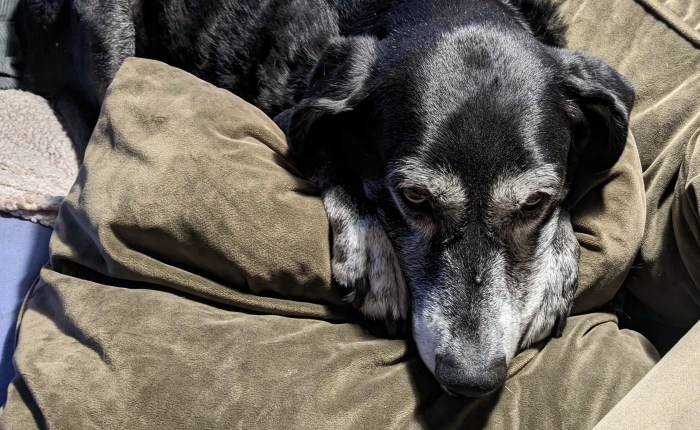
Our dog, Vicious, is old. Not crazy old, but she’s outlived the average lifespan of her major breeds, she’s quite deaf, and she has issues with her back legs (alleviated by some great drugs – science!) B & I both struggle with our fears of losing her. I see it in him and myself, whether we put it into words of not – the way we stare at her when she’s sleeping, the excessive concern when she simply trips or gets up a bit more slowly than usual, the occasional moment of panic after being particularly delighted with some weirdness of hers. When I joke that “it will kill us when she dies” I’m not joking. A part of us – individually and collectively – will die, and something else will likely replace it – the shared sadness, the shared loss, the shared history. I’ve had to talk myself down many times over the past year or so … finding myself obsessing about losing her, working myself up into a frenzy, and then confronting myself with the simplest, most obvious truth, one I’ve been studying for nearly two decades: be here now, bitches. And instead of lying in bed thinking about her being gone, I go downstairs and cuddle her on the couch – whether she likes it or not (she’s neutral). Sometimes it’s hard for us humans to truly understand why living in the future is such a waste of time; it’s so much a way of life that it doesn’t seem harmful at all. But when confronted with a future loss it becomes so fucking clear. I can experience the pain of losing her once she’s dead, or I can torture myself by experiencing the pain even longer! Right now, when I could be appreciating her! Awesome!

Of course we can’t stop ourselves from thinking about the death of loved ones, especially if they’re old or ill, but if we can redirect whenever we catch ourselves – just like coming back to the breath in meditation – life is so much better. We can’t prepare ourselves, emotionally, for tragedy. We can make practical plans, whether logistic, financial, what have you, but the pain you feel when they’re gone will not be lessened one iota by the anxiety you invested in the loss beforehand.

So that’s helped. But then there’s this additional element introduced by that incredibly equanimous parent. The thing that strikes me most about his response is his detachment – not from the experience, but from ownership. It wasn’t that is was his son, his loss: his son was a person in his own right – a wonderful person – who he was honored to know. As I’ve been mulling this over in relation to V, it’s amazing how much spaciousness it gives me. When I think of her as my dog, she begins and ends with me, with our introduction to her existence. But when I think of her as the highly specific, weird freak that she is – one born before I knew her and perhaps inhabiting some kind of consciousness before then; one who has moved countless people and been idolized by the occasional dog, one who will continue to live on in all of us, in our memories and the feelings and experiences she inspired – (in exactly the same way she lives on now when I’m not in her presence), one who makes choices and has preferences unrelated to me or what I want of her – then losing her is painful, devastating, but not catastrophic. She will have left us, but she hasn’t left. Everything dies, but nothing ever leaves. We are all literally made up of the same particles that existed at the beginning of matter as we know it. Vicious is just a sedate, introverted, tolerant, yardwork-loving, floppy eared version of a particular collection of elements and, if you believe as I do, a particular manifestation of consciousness. This understanding won’t make me any less sad when she dies, but when I think about her inevitable departure from that perspective, I feel less suffering, less individual attachment to her and more, like that enlightened father, a feeling of unbelievable luck. I got to care for this exceptional creature. I got to spoon her in the morning; I got to stare into her beautiful brown eyes and wonder what she thinks when she looks into mine; I got to watch her prance like a horse and chase turkeys and lie in the sun with her eyes closed and her head in the air. Particularly knowing when I took her in that she would, barring some anomaly, die before me, how can I regret her loss? If I see her as a visitor, as a gift, it’s all good. Everything is impermanent. Everyone leaves us, or we leave them. It’s all just a matter of how much presence and gratitude I can bring to her right here, right now (when she’ll let me).

If we can do this with our loved ones, it may be a better way of honoring their existence, their journey on this planet, and help us let go a little more easily when they leave.

(I write this now, of course, because I won’t be able to write it when she’s actually gone, but I may be able to read it).

Faith and The End

Faith and The End

There is a lot I don’t say when it comes to my, for lack of a better word – and I really wish there were a better word – faith. It’s hardest to keep my mouth shut when it comes to our mortality. I wish I could tell friends who are closer to death that I know they will be okay, even when they are no longer they. That this life is a temporary experience, and maybe not as terribly serious as we make it out to be. That shaking off our physical existence allows us to reunite with the – whatever you want to call it – universal consciousness, the One, the eternal; like the wave returning to its natural state of ocean-ness.

Not that it’s not okay to be afraid of death, or the prospect of death, or the pain that inevitably accompanies dying, whether brief or drawn out. My sole purpose would be to let them know that it’s going to be okay in the end. In the actual End. That we will be okay in death. That we will become what we already are; that, as Ram Dass’ friend Emmanuel says, death is “perfectly safe.” I would give so much for everyone to believe this, to have faith in this. But I don’t want to push anything that they would reject, and I don’t want them to reject me when I could otherwise be of assistance, and I certainly don’t want to minimize their suffering. I just want to talk about my (gag) faith because if they could believe it, I think it would help.

So many of us (my former self included) interpret faith as the absence of fact, as a kind of fantasy, but it’s more than that. It’s the presence of something that passeth understanding. Many of us who have taken deliberate psychedelic journeys believe or have faith in consciousness beyond material existence. in a way that cannot be debated, defended, or denied. It just is. I didn’t decide to believe that having a body is just one part of existence. I didn’t decide to believe that there are other levels of consciousness. I didn’t choose to believe that there is another, different experience of Being beyond our material death. Honestly, it was so deeply implanted in me that I didn’t even realize I believed that until I found out an old (young) friend was in hospice care. I was surprised to find that I didn’t feel bad for her, because I knew as much as I know anything that her death was a transition to something not better, not worse, but other and utterly real and integrated with the universe. I felt bad for those of us who would be denied her unique presence and for the pain she had to go through, but not for her. I know this may not make sense. Which, back to my original point, is why I don’t talk about it.

I have spent most of my life thinking that there was nothing after death, and being okay with that. My psychedelic experiences have overwhelmed that thinking to the point where I cannot pretend that nothingness is a viable option. I cannot think about death without feeling that soupçon of universality and love. I don’t long for death, because I do adore this earth and the vagaries of being in this body, but I don’t fear it. Worse yet, I believe in reincarnation. I don’t know how it works or what brings you to one form or another or if they’re all on earth or if we have “time” (though that word is pretty much meaningless when you’re not mortal) between lives, or any of the details. I just know that when I think about my life as me and what might be different, the words “in my next life” take shape, and I’m not joking. I DO NOT WANT TO BELIEVE IN REINCARNATION. I don’t like a lot of the judgment and binary thinking in the religions that believe in it. I don’t like what it says about who we are as humans now and how we got here, and I REALLY do not want to live through another childhood, even though I understand that many people really enjoyed being kids. If I could skip to adulthood in my next life, that might be okay. Jump right into the work of figuring shit out again, instead of all that mucking about under the heel of others.

I have not said any of this to my friends with terminal illnesses because I know how I have felt when people talk about heaven or say, “they’ve gone to a better place.” Angry and annoyed, that’s how I’ve felt. I even feel that way now, most of the time. I wouldn’t call the “place” I’ve visited better or worse – it’s so different, I can’t compare. It’s like saying creating art is tastier than a mango, or sth. When one of our much loved community members at The Gathering Place died a few weeks ago, there was a lot of that better place going around (lots of Christian volunteers). Maybe it’s true – she lived a hard life, she’d been beaten recently – but I still don’t like it. It seems childish, pacifying, and fake. I don’t want others to react that way to my theory.

And of course, there are other things to worry about. The people left behind – the children and parents and partners and beloved friends. There’s no comfort that alleviates that except, perhaps, that this is what life is; that loving another human being brings pain to one or the other person or both; that we still believe it’s worth it, most of the time. I also cannot pretend to know what anyone is going through as they are gravely ill or dying, and don’t want anyone to think that’s what I’m doing. On top of their fear and pain, there are the practical issues of kids and parents and property and goodbyes. I haven’t had to do any of that yet.

I really wish I could not just tell, but truly convey to everyone who fears death that it’s going to be okay. That we will all really be okay in the end, because the End is always death, and death is okay. Hell, even if I’m wrong – if I could get others to believe as fully as I do, it could ease a lot of suffering. And the good part about my afterlife, unlike others we’ve all heard about, is that you don’t have to pass any test to get there. You don’t have to perform a penance or start hating your own actions or other people. You don’t have to say anyone’s name or renounce anything or even pray. All you have to do is die, and all of us are going to do it.

Maybe someday this will actually help someone.

Until then, I wish you all joy in this existence and love always.

Memorial for a Drunk

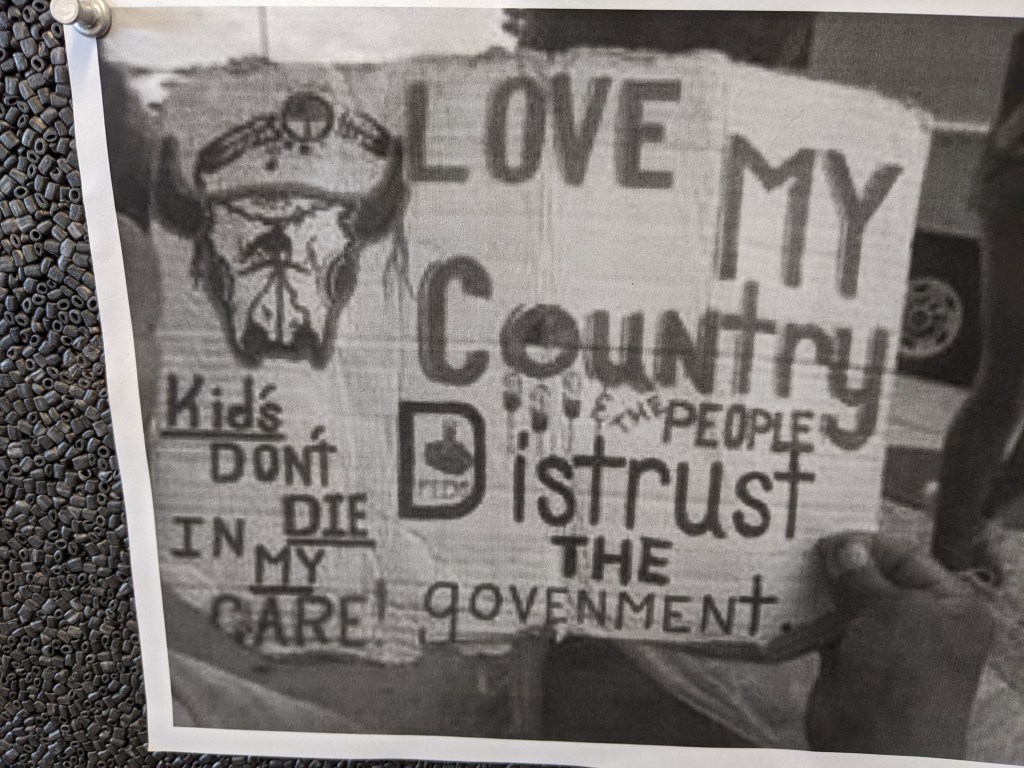
one of Frank’s memorable signs

The center where I volunteer on Fridays – let’s call it The Gathering Place – held a memorial for one of our community members last week. The Gathering Place serves a hot breakfast & lunch M – F, but more importantly serves as a place for low income, and unhoused, and other folks in the area to hang out, get some coffee or Gatorade, and be in community with each other. Being there has become my favorite part of every week, and I feel more welcome there than pretty much any other place in my life right now. More about that another time.

Today I’d just like to share a bit about this memorial for a man called Frank. I’d only seen him twice – my guardian volunteer tried to introduce me to him but he was pretty drunk & disengaged both times. She told me made great cardboard signs, but the one he attempted when I was there was incomprehensible. She also told me that there was a period of time when he would regularly lie down in the very busy street outside of the center, and the director & other folks would have to stop traffic & get him back on the sidewalk. And that he currently had a place to live, which was “a miracle” given how hard it was for non-sober people to get stable housing.

So that’s all I knew about Frank.

He was hit by a car & died last week. He wasn’t much older than me. And they held a memorial for him.

K suggested that folks write tributes on pieces of cardboard, since he was famous for his signs. (One offered “Ble$$ings” for donations on left side, and TRUMP STILL SUX on the right.) Many did. Signs like, everything is free in heaven, but you can come back here anytime, and you are so loved and already so missed/ your spirit is with us forever in your Gathering Place community, and my prayer for you is good food for lunch every day in your afterlife. Many people spoke – some of the volunteers who had known Frank for years, some of his friends among the community members at the center, and some of his loved ones from elsewhere who had come to share their grief with others who knew and loved him.

L talked about how Frank helped him when he got out of prison, how much L’s family cared for him, and the ritual he and his brothers had performed for him earlier that week. He also said he’d spent the night crafting a beautiful cardboard sign in tribute, but as he got up to fetch another marker, he’d knocked his coffee all over it. He decided that was appropriate, because Frank’s signs were never too neat.

“Frank spilled the coffee!” someone offered. Laughter.

K talked about how kind Frank was – how he never had a bad word to say about anyone, and “I wish I was like that.”

“No you don’t!” from a neighbor. Laughter.

“It takes all kinds” from another.

The guy who currently runs the center told us that one day Frank was hanging out, drunk, and getting a little belligerent. He was thinking he might need to ask him to leave when Frank said, “I gotta go to detox.” He & K walked Frank the two blocks to the familiar treatment center, and while they were waiting to get checked in, Frank was telling them a story. About breaking into San Quentin. He was slurring his words, so they weren’t sure they heard him right. “Breaking into San Quentin prison?” Yep. He managed to pull it off, but “getting in there’s a lot harder than getting out.”

He then read us a letter from a family member, talking about Frank’s relatives, his youth breaking horses in South Dakota, his many skills, and the people who loved him.

A friend who came with her two young children spoke softly about how Frank was more than a brother to her, that he was kinder than her own family, and how important he was to her kids.

C read a poem about the last time he cut Frank’s hair – cut it all off at Frank’s request, after a period of sobriety when he wanted a new start. He spoke of how we all try to be better, and how often we all fall short, and try again. And he spoke of Frank’s hair falling to the ground and being carried by the wind to line the nests of birds. Tears.

A volunteer painted a cardboard sign, “Spirt of Frank – Living on in kindness and humor and all his many friends,” and said she realized after she finished that she had left an “i” out of Spirit, but Frank often had misspelled words, so she decided to leave it. She remembered how Frank would bring his signs to J and ask if words were spelled correctly, and once J said, “no, but leave it; you’ll get more money that way.” Laughter.

J is possibly the least liked of all the regular participants at the center. He’s narcissistic, rude, and shows signs of Oppositional Defiant Disorder. He’s a hoarder who lives in his car, parked in front of the center, and pisses and throws garbage all over the front lawn, then complains about the volunteers who clean it up. He rubs grease on the pole where another member parks his bike. He’s full of conspiracy theories, particularly about how the government and law enforcement conspire against White men (LOL). He’s not threatening, as folks there occasionally are, he’s just, as a sweet, older volunteer there summarized, a jerk. I’ve never seen him say or do anything considerate since I’ve been showing up, and he’s always there. But not only did he, apparently, help Frank out with his signs, he actually raised his hand to speak kindly about him during the service. He had to be a bit of an asshole – saying that Frank just wanted people to care about him and no one did, despite ample evidence from the previous hour of testimony that many people cared for him. Regardless, he recognized Frank as a funny, honest, and admirable person – a loving guy who was kind to others, and that more people should be like him.

I mentioned my shock to the two lovely ladies I volunteer with later in the day. They pointed out the irony of that last statement, which of course was not lost on me, but I had to persist with my own recognition that he had the capacity to be kind, caring, and respectful, which I had thought far beyond his reach. Not that I had any high hopes for J or his future potential, but just that there was something there which I hadn’t seen, something Frank had gently dragged out of him.

Every day at the center teaches me something, opens my heart a titch more.

One of the volunteers suggested we sing a song to close the ceremony. When no one else had a suggestion, he started I’ll Fly Away, a spiritual I only know through Oh Brother Where Art Thou? and which I had just listened to for the first time in years on our road trip last week.

I sang for Frank, wherever he flew, whatever culturally appropriate song accompanied him there. I felt honored beyond description just to be there and listen to this tribute. No one denied he was a drunk, no one judged him for it, and no one gave it any more weight than it deserved – as a part of his human identity. A part he tried and perhaps failed to let go of, but a piece of the funny, kind, creative, generous, beloved man he was.

She Always Brushed Her Teeth

Hello, lovelies.

I have neglected the blog lately not because I have nothing to write about, but because there is too much. And writing feels so petty. And what does it accomplish. What does anything accomplish?

So here we are.

I have so many thoughts about the recent killings, and I have my opinions on solutions like everyone else, but for now, a heartbreaking moment of connection.

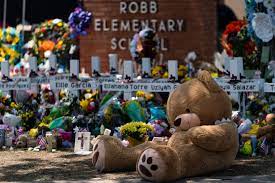
About a week ago, there was a clip of Amerie Jo Garza’s stepfather talking to a reporter on NPR, crying as he spoke, grasping at narrative.

She was the sweetest little girl who did nothing wrong. She listened to her mom and dad. She always brushed her teeth. She was creative. She made things for us. She never got in trouble in school. Like, I just want to know what she did to be a victim.

She always brushed her teeth.

That gutted me, and I spent the next several minutes sobbing harder than I had during this entire ordeal.

A few days later, our little Socially Engaged Buddhist group met online, and our facilitator referenced the exact same line.

What is it about that sentence?

In a different context, it might even be funny. Some joke about a guy being dragged down from the locked gates of heaven, yelling, “I always brushed my teeth!”

Is it the clash of the mundane with the profound?

Is it the conflation of obedience with the Goodness? Practicality with morality?

Is it that we all can relate to it, down to the feel of the brushes on our living gums? That we ourselves avoided it, whined about it, that we were worse kids than Amerie? That we could, if we chose to, be reminded of this little girl every morning, every night?

Is it the amorphous agony of hearing this man try to understand the incomprehensible? He wasn’t trying to paint a picture of his daughter for the reporter; he was searching for meaning, for an explanation. Here are the facts – how can it come to this conclusion? How could this happen to her?

It’s such a simple question, such a standard accessory to any crime against an innocent victim that we barely notice when people ask it. She always brushed her teeth forces us to consider it again, puts us face to face with the horror of loss and injustice, makes it real and specific in its universality.

It’s a piece of instrumental music that leaves you in tears without knowing why. It draws us together like a manifestation of our interconnectedness. We bear witness to all of it – the love, the pain, and the confusion.

You can leave it there, with that man, with all of the people who loved all of those children, with all of the people who loved the victims in Buffalo, in Tulsa, in Ukraine and Syria and Yemen and anyone who has ever lost anyone. You can sit with it and let it break your heart open.

That may be enough for now.

What We Sacrifice: Wynn Bruce

What We Sacrifice: Wynn Bruce

I have been trying to spread the word about Wynn Bruce, and whenever I do I get choked up and blurry eyed. So it seems I should write about him. Wynn Bruce set himself on fire in front of the Supreme Court and died a few days later, a few days ago.

Wynn Bruce was a Buddhist and he cared about the warming planet and he set himself on fire. He was not explicit about why, or only in a coded way, but his father and his friends believe he was intending to call attention to climate change. He would not be the first to do so. I fear he may not be the last.

It’s hard to know how to feel about this. That is, it’s hard to have one feeling about it. It’s horrifying, brave, ridiculous, extreme, understandable, admirable, and frightening. As a pseudo-Buddhist, I rest primarily on honorable and heartbreaking.

Bystanders said he didn’t scream as his skin burned.

I can’t say this is the wrong thing to do, if he wanted to do it. It appears that no one ever suggested it, so there is no fault to be laid. I can’t say it’s the right thing to do – causing pain to loved ones in a deadly act that will have little, or any, impact. Removing yourself from the playing field, instead of staying in the loving fight. I wouldn’t argue with a chronically, fatally depressed person who took their own life.

Is it even suicide?

The only thing I can say, the only thing I may know, is that if he burned himself alive in order to call attention to Climate Change, we owe him the honor of paying attention to Climate Change. I don’t know what paying attention means to each one of you; I just believe that we bear witness to his death by bearing witness to the deadly changes in our living environment.

He attributed this beloved quote to Thay:

The most important thing, in response to climate change, is to be willing to hear the sound of the earth’s tears through our own bodies.

thich nhat hanh?

There is more than one way to do that. It will be painful, but it may also be generative and invigorating. The end is uncertain, but despair is not an extreme reaction. I hope we can move past it.

Off the Cliff

Off the Cliff

I died in my sleep last night.

Driving a precarious 2-lane mountain road, as I have done countless times in the West. Always that fear that something could go wrong – a wayward driver, a fallen rock, ice. You expect it for so long without incident that you start to believe it can’t happen.

And then

An animal. So fast and my reaction likewise that I couldn’t identify it

And I was over the edge. No guardrails on dream highways. Light gravity and intense propulsion as well, since I did not crash flipping painfully and gracelessly over the lip as would have doubtless happened on Earth roads. Instead, as if shot out of a cannon, I flew….

Three phases hit in blinkingly fast succession, each cresting before surrendering to the next overwhelming wave.

One: Panic – oh fuck, I might die. The shortest phase, since as soon as I left that road, the end was inevitable, clearing the way for

Two: Oh, I am definitely going to die. This one packed a punch, filling me with sadness and loss and a pleasantly wee soupçon of vague regret. It only lasted a few seconds, but holy shit was it real. I was absolutely done and there was absolutely nothing I could do about it. It was visceral, literally in my gut. The end of my life on Earth. But because it was a dream or because it was not intentional or because I am an enlightened being (*kaf kaf*), I didn’t experience The View From Halfway Down that surviving bridge jumpers and Secretariat on BoJack Horseman seem to relate without fail. No big should’ves or could’ves or whys. Just a transition to…

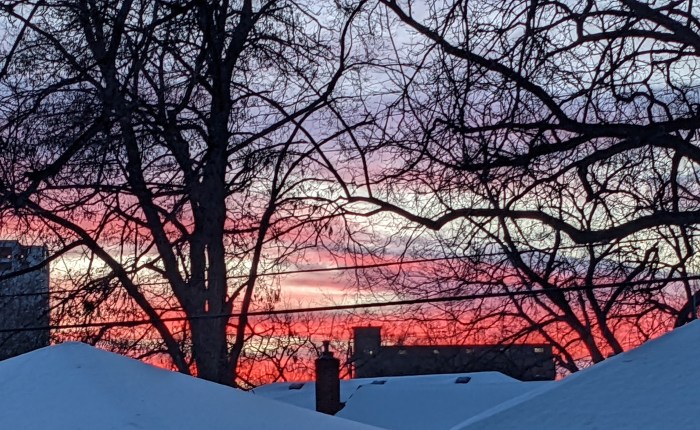
Three: Well, we all want a good death: let’s get to it. I flew into the stunning sunset, backdrop to a scene of lush pines below, cliffs all around, and mountains in the distance. Definitely the kind of place I’d like to die. The only thing missing was the ocean, but oceans have always signaled an edge for me, a boundary, and here I had to create my own edge – that of my human existence. The sunset was inspired by one I’d seen a few night previous from home, sloppily captured in the image above – roiling rose and bright magenta, with lavender highlights. I got to it posthaste, projecting, as well as I could, love to my partner and my dog, attempting to transmit my lack of fear and my total okayness with dying. I would have, doubtless, moved onto other folks, but my car had finally begun to arc downward, and as I pondered the gorgeous, jagged trees below me I had a gasp of, “what if I don’t die instantly” and a quick flash of me crushed in my car, in the middle of nowhere, with bones impaling organs, but not deeply enough to kill me, leading to a slow, agonizing bleed out. (What I should have done at that point was follow the advice of the adept die-er in Palm Springs: take off your seat belt to propel you into a quicker demise.) I shook it off: unlikely scenario, given the height I was falling from, and I was still bound to die eventually, if more slowly and painfully than I originally anticipated. Change. Impermanence. The car’s downward decline accelerated and then

I woke up.

Which was a hell of a thing in itself, being thrust back into life after fully accepting death. But I wasn’t unhappy about it. I make no secret of my love for this planet and my ambivalence about leaving it, despite the indescribable experience of true Knowing and the freedom from human and corporeal concerns I’ve had in other consciousnesses.

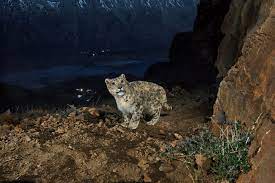
I went on with my day, working at my non-inspirational job, for fuck’s sake, and at one point distracted myself with an email from National Geographic: animal photos of the year. I quickly stumbled across this stunning creature, who broke my heart with that look.

I read the description accompanying the photo and found that this older male (looks like a kitten!) had been followed by the photographer for two years and died not long after this was taken, chasing an ibex off a cliff.

We had the same death!

I wondered what it was like for the leopard – if it got to feel the fall. If so, whether it tried to fight or let go, if it recognized and accepted its inevitable death. A far fetched, but not insane idea: non-human animals seem much better at predicting and accepting their own deaths than we are. My favorite example was that of Buster, the surly cat that served as the mascot at the old bookstore where I worked for a decade. He hated almost everyone, and rarely put up with any affection whatsoever. One day he came into the mail order department and lay down on the center of the sorting table, letting anyone pet & speak sweetly to him. There didn’t seem to be anything wrong, other than the change in personality. Two days later, we found him dead in the alley next to the storage shed. Buster’s gorgeous, wild cousin could certainly have at least that much self-awareness, after a lifetime lived in that landscape. Either way, I hope he didn’t suffer. I hope he got to enjoy flying for a second or two.

I hope that for all of us.

How to Reify Half a Million People

How to Reify Half a Million People

500,000 dead.

The number itself is beyond my capacity for imagining. I assume others have the same problem. Reporters and folks in the public eye sometimes do a good job of contextualizing it- how many deaths per day, per second; what cities have comparable living populations; how COVID mortality compares to cancer, heart disease, car accidents; or, as the President did, how the number compares to war dead: more than American deaths in WWI, WWII, and Vietnam combined – in less than one year. He listed American war dead because that 1/2 million, remember, is just American deaths. The worldwide total is now nearly 5x that.

Compassion is a special interest of mine and how we avoid or draw out compassion/empathy is fascinating to me. I found Biden’s speech quite moving when he talked about the pain of loss, something we know he knows intimately.

For the loved ones left behind, I know all too well — I know what it’s like to not be there when it happens. I know what it’s like when you are there, holding their hands. There’s a look in your eye, and they slip away. That black hole in your chest, you feel like you’re being sucked into it. The survivor’s remorse. The anger. The questions of faith in your soul. 

For some of you, it’s been a year, a month, a week, a day, even an hour. And I know that when you stare at that empty chair around the kitchen table, it brings it all back, no matter how long ago it happened, as if it just happened that moment you looked at that empty chair. The birthdays, the anniversaries, the holidays without them. And the everyday things — the small things, the tiny things — that you miss the most. That scent when you open the closet. That park you go by that you used to stroll in. That movie theater where you met. The morning coffee you shared together. The bend in his smile.  The perfect pitch to her laugh.

Beautiful. Truly. What it did was artfully done, in the best sense of the word. Even those of us who haven’t had a loved one die could connect with the specificity of the images of love lost, and effortlessly intuit the pain of eternal loss, if just for a moment. Nonetheless, it connected us with the pain of the people left behind, not with the people themselves lost to COVID. “There is nothing ordinary about them” didn’t sit right with me. It may be more true that we all are ordinary, and perhaps thereby even more worthy of love and compassion. Poor, messy, fascinating, trudging little humans. I came out of that tribute with great feeling for those left behind, but only a generalized sorrow for the dead, nothing specific or tangible.

Of course, that wasn’t the goal of that address and of course, the answer to the question of how to humanize the dead is easy – listen to the people who loved them as the specific, ordinary humans they were. There’s no shortage of that if you’re willing to look for it. And there is something special about the series that NPR’s morning edition is doing. Songs of Remembrance gives one person a chance to choose a song that reminds them of their beloved and then talk about whatever they want – sometimes the song was what she always sang at karaoke, or what they danced to at their wedding, or what he taught to his choir students, or just a song that recalls that human for that particular individual.

I think the song idea is so brilliant and effective because it’s again connecting the specific to the universal, as Biden did for loss. You get funny or admirable or romantic details about the person themselves and what they meant to the speaker, but you also get to hear a song through their story. If it’s a song you know, you can see it from a different perspective or connect to the shared familiarity. Some of the songs I don’t know, but I know they are known and shared across countries and cultures and political beliefs. The contributors and their friends and family members all took the universal – a song, heard millions of times – and crafted it into something unique. We can accept the offer of that inimitable experience and make it universal again.

That is what compassion is, after all, right? That’s why Metta meditation starts with wishing yourself well, happy, safe, enlightened – starting with someone you know well, even when you pretend you don’t – and expanding out a bit more – a good friend, an antagonist; followed by someone you don’t know well, but interact with. From them you expand your good wishes out to your neighborhood, city, country, world, picking up animals and plants and such along the way. And the next time you sit, you start the same way. We don’t pretend that we can easily access a genuine concern for the great abstraction of “everyone’s” wellbeing. It takes time and work. Eventually my hope is that it will be easy, because the distinction between the specific and the general will fade away; the arbitrary, imaginary line between myself and the rest of life will blur and love for anything will be love for everything.

Until then, I am grateful to read and listen to these tributes and cry for the beauty and loss of the achingly human connection to another human, and recognize in their words and music that the love doesn’t die when the body does, and hope that they hear it too.

Death from Another Life

deadOne of my best friends from high school died last week. It was shocking – we’re far too young. Shocking, too, how many of my small social circle then have died. I feel for those who know him now, those who knew him well, and the loss of him in the world. But it’s so freakishly distant from me. I moved to the town where I lived then at the beginning of my senior year, knowing no one, and said goodbye the following June to the best group of friends I’d ever had. Most of the people who befriended me had known each other for years, some since they were kids, and many went on knowing each other after I left the state. Other than for a wedding that December, I never really went back. The magic door opened, the music played, mountain pine and pot filled the air, I was loved and given a family and a wondrous & challenging year, and then it was gone. It’s the cleanest break I’ve ever had. Not that I wanted it that way, and I definitely suffered the loss of some of those people, but college engulfed me and soon enough I was swept up in another world. Continue reading “Death from Another Life”
Loving Autumn is a Buddhist Act

mono-no-aware“I’m loving autumn this year.”

“I thought you didn’t like autumn.”

“Yeah, that’s what I’m saying. I’M GETTING BETTER.”

Global warming helps. We haven’t had a really bad winter since 2013-14, in which a handful of terrifying commutes left me in tears more than once. Cold-induced death doesn’t feel as imminent now as it was then, but it was never logical anyway. The odds of me dying in an icy car crash in the winter are no greater than the odds of me dying of heatstroke in the summer. (I’m not going to reference that; just go with me.)

Driving was only one road of terror. I think there were some times as a kid when I was not allowed to dress as warmly as I wanted to, and I know there were times when I was outside and cold against my will, so there’s some lingering emotional memory there. And then there was the winter of 2009-10 when I worked as a door-to-door canvasser. I had regular afternoon panic attacks as I tried to will myself out the door to face another night of begging in the freezing cold. It wasn’t just the temperature (walking around in winter at night isn’t so bad if you’re dressed right – and we fuckin knew how to dress right), but being repeatedly rebuked by strangers as I interrupted their evenings to resiliently pitch environmental causes and ask for money iced over my core, and the windchill dropped with the added pressure of having to hit a financial quota every week or lose my job, leaving me so bone-cold that I couldn’t get warm enough to sleep at night, no matter how thick the down comforter.

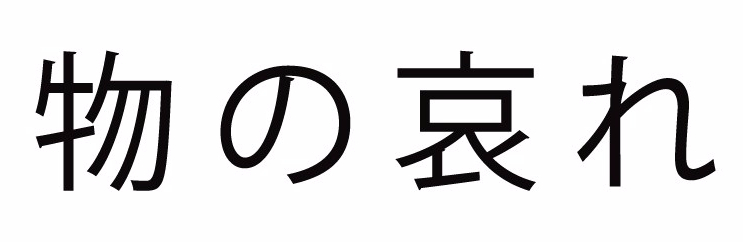
I’ve never loved fall because I fear winter. And I fear winter, clearly, not for the cold. What I really fear is being out of control in the cold, as if I weren’t out of control year-round. And when you carry that fear, fall is just an opening act for winter. Literally the calm before the storm. But fucking A, autumn is gorgeous. Such beauty in the transition of death and dormancy. I learned the concept of Mono No Aware while doing a play about Japanese art. That’s what those characters in the headline image above stand for. (Supposedly. I don’t read Japanese. The internet could trick me into promoting elephant tusks as an anti-depressant for all I know.) You can look it up yourself for an accurate definition, but to my understanding it is the ambivalent appreciation of the inevitability of transience, the wistful recognition of the passing of everything, the idea that all things are more valuable because they do not last, which is artistically expressed in the trope that things are most beautiful as they are dying. Nothing exemplifies that more perfectly than autumn.

I’ll throw in Jason Isbell here, too. I don’t know what it is about that guy, but I have fallen in love with no less with three of his songs on first listen, which almost never happens to me. I don’t know if I’ll love those songs forever, but that kind of brings me back to the point. In his most recent single (on The Current anyway), which had me tearing up on the way to work, he sings that “it’s not” (referent poetically absent) all the amazing things about “you,” but the inevitable end of their time together that makes it special:

If we were vampires and death was a joke
We’d go out on the sidewalk and smoke
Laugh at all the lovers and their plans
I wouldn’t feel the need to hold your hand

When I’ve locked in on the coming cold and dark, I’ve missed the inconceivable colors, the smells, the softening air on my ever decreasing spans of exposed skin, holding hands without gloves or discomfort. I’ll dig out my thigh-high socks, add another cowl to the collection, and gather new soup recipes for the long months ahead, but I’m lucky enough to be here now this season. I can’t promise another day of black ice won’t pull me back, but it’s really, really nice to love fall.