Life Lessons From a Mouse

Life Lessons From a Mouse

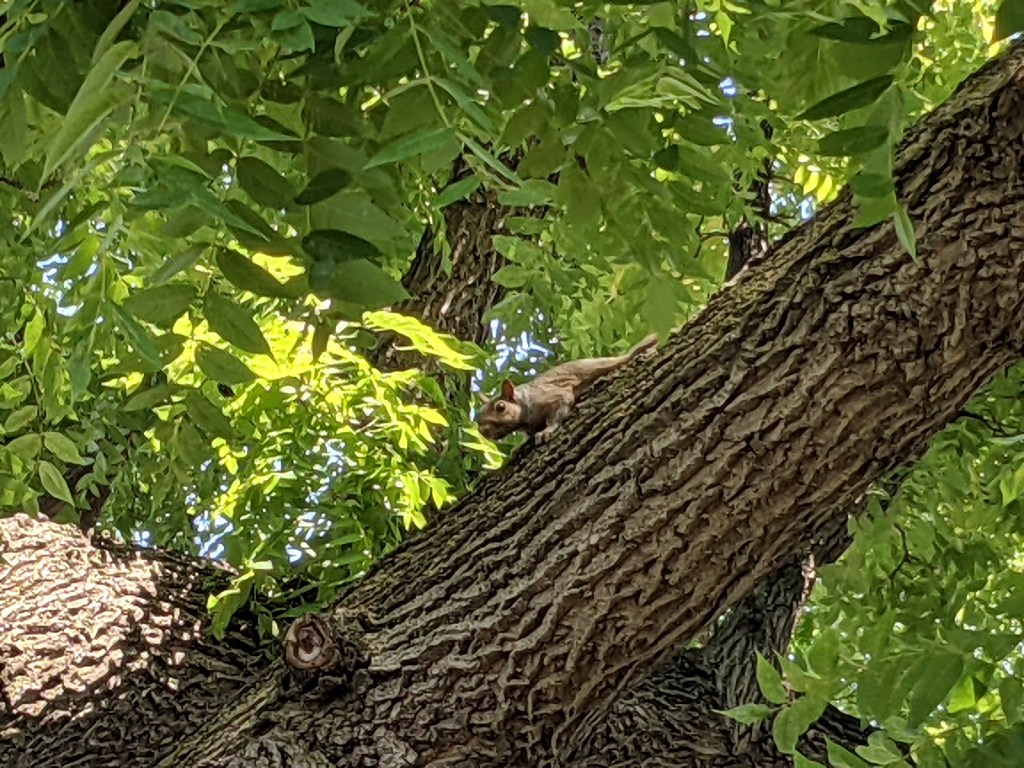
Mice, really.

It’s been a good year for mice in the Twin Cities. Are the raptors in bad shape? Are mice fucking more than usual? It hasn’t been a particularly frigid winter (79th most cold, which hardly seems worth mentioning), so it doesn’t seem like their survival is under unusual threat, but many people we know in the area have had exceptional mouse problems this winter.

Ours has been a blessing.

You’d think we’d be a rodent nirvana, here. We are both messy and Buddhish. We are a philosophically and temperamentally no-kill family. Yes, we still eat fish (for the time being) and I honestly have no problem killing mosquitoes, or the wasps that have come after me that last 3 summers (because wasps are all-around fuckers and mosquitoes are humans’ most powerful enemy) but other than that, we remove insects from the home rather than kill them and try to protect the baby bunnies that their shitty mothers dump in our dog’s yard. Even the dog is exceptionally gentle. She observes and lightly bats at beetles, and tries not to drool when the bunnitos emerge. Mostly she squishes them. I think she likes the sound. 😦

We have occasionally had A mouse over the last decade. They say you never have A mouse, but since we never saw more than one at a time, we could convince ourselves otherwise. But this year, we had to face up to it. Unless they were teleporting, we had mice. The good thing about being messy is that it was easy to know where to first address the issue: we cleaned. That is, we started cleaning. We (my partner mostly, far messier than I and afflicted with ADD) are still cleaning. Because of some dabbling with diffusers and lotion-making years ago, I already had plenty of clove & peppermint oil, which I scattered all over the house (peppermint in the living areas; clove in the sleeping areas). We cleaned areas we’d never cleaned before, we shoved steel wool in anything that looked like a hole, we started picking up the dog bowl when she wasn’t eating, sealing her food in a plastic bin, not leaving plates on the floor for her to lick for longer than a few minutes, sweeping regularly.

I knew this wouldn’t fix it – most of our friends with mouse problems were clean people – but it was a start, and it was a life improvement, regardless. We were also very lucky. The mice never got on a counter, never got to even the second from the bottom shelf of the pantry, never got into the dog food or any food container. (I started keeping all my bottom-shelf food in glass or ceramic jars ever since the first mouse appearance way back when.) so when people laughed at us when we said we weren’t going to put down poison (Big No) or even traps (death isn’t the worst, but having your face or leg scraped off is), we would explain that they weren’t more than an inconvenience. Then came the emailed articles on hantavirus and other hazards. We kept cleaning and hoped the critters would find the living situation unpleasant and leave … from wherever they came … which we still haven’t figured out.

They had made it upstairs (shiver) to the bedrooms (shiver), so I thoroughly cleaned out my tiny shoe closet for the first time since we moved in, jettisoning some heels I will never again wear in the process. For a month, I refreshed the water and dropped clove oil into my diffuser every night; folded my clothes and put them on a shelf, tossed them in the laundry, or draped them over the hamper for reuse. I did not leave an AlterEco truffle or peanut-butter filled pretzel on my bedside table in case I woke up in the middle of the night and needed a snack. I (sloppily) folded up my meditation cape and blanket after I sat every morning and placed them on the designated ottoman instead of leaving them on the rug.

The mouse has done wonders for us, honestly. It told us to get our shit together and we’ve done our best to comply. We are still not clean by many standards, and we will probably never be neat, but we are so much cleaner. I have been disciplined about my bedtime habits for the longest stretch of time ever. That’s right, I have never consistently put my clothing, etc. away in my life. Better still (and YES, I AM AFRAID TO SAY THIS BECAUSE DESPITE EVERYTHING I AM STILL STUPIDHUMAN SUPERSTITIOUS), with all of these changes, and perhaps with the help of the meditations I have devoted to asking them to leave, there have been only two mouse appearances in the past month, and none upstairs, even though we’ve had some very cold days. It seems almost unbelievable. I find it hard not to believe it is a combination of right effort and right thought and right intention and … I know it sounds ridiculous, y’all, but I have learned over the past few years that there are more things in heaven and earth […] than are dreamt of in your philosophy and that it is possible that the winning combo of changing our habits and asking the mice to leave so that we didn’t have to kill them to protect the health of our dog & ourselves may have sent something out into the universe that encouraged them to find another home. The mice told us to get our shit together and we’ve done our best to comply.

Whatever it is, I hope it all continues. Not only the absence of the little guys, but my discipline, our increased cleanliness, the commitment to close up potential house holes in the spring, our squishy no-kill policy, and my spiritual concern and attention to the little guys. All of that is good, and more than that I am so happy that the path of compassion appears to have won out over the path of fear or aggression or convenience. I don’t begrudge those folks the killing of their invaders – we all have our stuff, and mice can be scary – but for us, it looks like it’s working. And I’m honestly a little astounded that I have kept up the new habits for so long. Really, I’m pleasantly surprised that I have adopted any new habit, at my age. Folks used to think that the we were far less flexible as we age, but studies of meditators, in particular, have shown remarkable plasticity. I’m not an example of a great meditator and this isn’t an example of an exceptional change, but I have to say I’m really enjoying it.

Tell Me I’m Wrong

Tell Me I’m Wrong

I like it.

I do. It’s new – maybe a few years that I’ve had positive reactions to being accurately corrected – but it feels so good when I do. It actually gives me a physical rush. Maybe rush isn’t the right word. It’s like a piney breeze softly winding through my body. It feels like freedom.

When I find out I don’t know shit…

I don’t know why, but it feels like Freeeeeeeeeedom

(thank you for the only upbeat popular songs of 2021, Mr. Batiste)

Oh, don’t think it’s always been this way. It definitively ain’t. I’m one of those people who has had a lifelong embarrassment of showing ignorance. Not any ignorance: I allowed myself some realms of detached unknowing. Mostly in realms I didn’t care about. You could tease me relentlessly about never having seen a full Star Trek episode or most forms of etiquette or different cuts of meat or fantasy novels and I’d laugh it off. But for a shockingly, shockingly broad swath of topics, not knowing something churned up not interest, but shame. Even some things I didn’t give two shits about, like the names of different kinds of rocks. I’d still feel stupid because I know we covered that at some point in grade school. So I should know it. Different kinds of architecture? Never studied it, but I know educated people often do, so I should know it. Damn near every event in history, every geographic location, every word in Spanish, every philosopher, every person who ever accomplished anything noteworthy, every non-obscure scientific theory.

Everyone who shares this affliction has their own unique backstory, I’m sure. As a child I was shamed and sometimes psychologically tortured for hours if I failed to define a word correctly or adequately explain why a race riot somewhere in Asia was noteworthy. And it wasn’t just facts or intellectual prowess I was expected to excel in, but physical activities as well. If I didn’t rapidly learn how to hit a tennis ball without lobbing it over the fence or catch a baseball thrown with some velocity at my face, I was met with anger and heaping gobs of disappointment. Is it any wonder I mournfully sat out softball while my BFA class got to know each other on the field my freshman year in college? Or wouldn’t partake in any new activity until I had already practiced on my own beforehand? There was also a fun little twist in that my abuser often accused me of “pretending not to know.” I really wonder where the hell he got that one. What kind of masochist did he think I was, to invite hours of soul-crushing confusion and barely contained violence just for fun?

Weirdly, or not, I have treated myself with much the same bad logic. I put a slightly different spin on it: knowing that I don’t know an answer, I’m clearly not faking it, so at least I don’t have that bullshit to contend with. Instead I see my ignorance as a personal failure. For someone who considers herself logical, it really doesn’t make any more sense than my dad’s accusation. If I don’t remember something from high school, did I choose to forget it? Obviously not, so how can I blame myself? More things are forgotten than remembered by every person, every day. And even more things are never acknowledged in the first place. We’d be unable to function in society otherwise. Perhaps I didn’t study hard enough, but considering the overwhelming mass of things I expect myself to remember, “enough” is an unreachable goal. Many crucial facts are things I didn’t even learn in class, things that might have been casually referenced in passing. If I had worked to commit to memory every stupid tidbit I’m expected to know, I wouldn’t have lived a life.

What if my ignorance is, Buddha forbid, just plain old stupidity? I certainly can’t blame myself for that. And if I am intellectually stunted, I’ve done remarkably well for myself.

Why does knowing things even matter? What wisdom or insight or empathy or connection is gained simply by carrying oodles of items around in your head? What real knowing comes of it?

Of course, if talking oneself out of bad habits were enough to erase them, we’d all be a whole lot healthier. My intro was an optimistic exaggeration. There are still too many areas or scenarios in which I feel that shame creeping in, and one of them will be put to the test yet again for the umpteenth time next week. I’m taking a Spanish class for the first time since 2019, and as much as I love the language, relish speaking it, and crave fluency, practice has always been an opportunity for me to start waving that flag of self-loathing. I can rationalize my way out of the wise analysis of previous paragraphs with the simple fact that I have been studying Spanish off and on for decades, so obviously I should know it perfectly by now. I will also be participating in an Mindfulness Intensive program during part of the semester, so I’m hoping that will help me process any fucked-up feelings I’m experiencing.

The irony (so often with the irony) is that I may be right about my language expectations. It is entirely possible that someone who has been studying as long as I would know the language at least comfortably, if not fluently. According to language experts, the main reason I haven’t gotten there is because I don’t spend nearly enough time actually interacting with people in Spanish. And why? Because I’m afraid of being wrong. You see here, that old Buddhist mantra creeping in – you can’t really love others until you can love yourself. Our fears create the scenarios we fear.

Alan Watts, apropos of I don’t know what, once said that the Japanese in Japan were generally excellent English speakers, but an Englishman had to get them drunk to hear them talk because they were too afraid of embarrassing themselves to try when they were sober. I empathize, mis amigos. Your culture of shame is far vaster than my culture of one, but I feel you.

I have come up with a procedure that would get rid of all these self-positioned and self-perpetuating obstacles: just detach the identity from the emotion. Because it’s not the embarrassment that kills you, it’s the shame – it’s the attachment of the embarrassment to one’s sense of self that creates the shame. I deal with this whenever I try to get White people to talk about race and racism, and it does get frustrating. At times I just want to shake them and say, “your ignorance is not your fault/you didn’t choose to be raised under White supremacy/you’re not doing anyone any good by hiding from it/ you can make things better for yourself and others if you just open up, allow yourself to be wrong, and grow.” And of course, I recognize that I am in the same boat, just on a different river.

So I am not there yet. But feeling that freedom of openness, of detaching my mistakes from my identity, of just letting them be and moving on, should make it easier to welcome that liberation with my Big Enemy of the language I should know. We’ll see. I’ll keep you in the loop.

Purpose

Purpose

Anyone out there feeling strange feelings in response to Putin’s invasion of the Ukraine? I’m not talking about anger or fear or frustration or dread. Those are all media-friendly and acceptable in wartime. I’m talking about jealousy.

Part of me envies Ukrainian residents right now. I admit it. Hiding my feelings has never done me much good, so fuck it: I am jealous. This doesn’t mean I don’t fear for their safety or mourn their innocent (all innocent) dead. It doesn’t mean I minimize the agony and losses that will only accumulate as this continues. But, as Chris Hedges reluctantly argues in War is a Force That Gives Us Meaning, our pleasant or unpleasant daily existence cannot compare with the addictive urgency of fighting or running for your life. Former war correspondents and soldiers don’t suffer from depression just because of the horrors they’ve seen or done in combat, they are also depressed because they are not in combat. What could be more real, more present, more in the moment than constantly being on guard for your very life, and the lives of those you feel compelled to protect? It’s physically and emotionally unsustainable (ask a pandemic nurse, if you don’t know a soldier), but it’s hardly depressing.

There are convincing theories, too, that the more comfortable we become as humans, the more anxious and lost we are likely to be. Those of us who have benefited from capitalism, etc. are only forced to face our own mortality on rare occasions, whereas our ancestors were up against it daily, either via hunger, predators, or deadly illness. Look, safety is great. It paved the way for all the things that fill our existentialist lives now. Art and philosophy and love replaced running for our lives and making babies so our species doesn’t die out as ways to give our lives meaning, and I would never trade them for the adrenaline of war.

Not permanently.

Victor Frankl believed that a sense of purpose made the biggest difference between surviving and slowly dying in the concentration camps. Some speculate that the invasion on our Capital last year, the growth in QAnon conspiracy followers, the need to believe in the Big Lie comes largely out of boredom. That those folks have manufactured something that threatens their country, their children, their democracy in order to feel that rush of purpose. I’m not desperate enough to go that route, but I sympathize. I try to redirect my inherent need for meaning, if it does exist, into approaching the world with a relatively passive commitment to kindness and compassion. I try to resist the compulsion to find a villain and a position on which to hang my focus.

But, damn. Can the enemy, the goal, and the urgency be more clear than today in Ukraine? I know it’s never as simple as it seems, but what it seems is that a ruthless, murdering, amoral dictator is attempting to take over an independent, Democratic country in an attempt to restore a long-dead empire and increase his own power. His rhetoric attempts to erase the strong cultural identification of Ukrainians, and he flat out lies about the government and the people. I admire the civilians who are taking up arms to defend their cities, but I don’t find this surprising in the least. What greater purpose could you ask for? Not just protecting oneself or one’s family, but one’s cultural brothers and sisters, land, way of life, political freedom, language, heritage, etc. etc. I heard on the radio this morning that folks who had left the country when war started to look inevitable are now returning to fight. Volodymyr Zelensky adds more fuel to the righteous fire in his refusal to leave or be cowed by Putin. A great purpose and an honorable leader? I mean, come on!

So, yeah. I’m jealous. I don’t know if there are atheists in a foxhole, but I’ll bet there are no depressives. All the systems that our body employs to respond to a clear and present danger preempt depression. The floating anxiety that seems to crave a target, and which our systems seek to fill with abstract, random, manufactured worries transform in battle into real, tangible concerns, ones we can prepare for and fight against.

There are real devastating and apocalyptic things happening all around us in this century. The pandemic and global warming, to name a few. But climate change doesn’t present us with a clear way to stand up to it, not one that is inspiring and motivating, anyway. And the pandemic doesn’t present a way for most of us to contribute, other than by isolation and inactivity, which feel purposeless and depressing. Some do a good job of forcing urgency – chaining themselves to pipeline construction or even less extreme protests – and that can help both society and the individual involved, but when your community continues to roll along as if nothing is wrong, it’s very difficult to sustain motivation there, either. Medical professionals on the aptly named “front lines” of the pandemic have more than enough purpose, but it’s not just the excess that is wearing on them; it’s the disconnect between the war they face at work, and the obliviousness outside of the hospital. Some drone operators may suffer more psychologically than soldiers on the ground, because they likewise inhabit a world in which the battle they are fighting is invisible once they step off base. That is certainly not the situation in the Ukraine.

Look, I advocate for nonviolence, and my inclination is toward nonviolence, but it is not a ride or die position for me. And I can’t say for sure that it is the right answer for every person in every situation. I don’t know what I would do if I were a Ukrainian in the Ukraine right now. Most of those Russian soldiers probably don’t want to be there either, and could be the victims of reactive Ukrainian violence that is yet another element of the injustice seething from every pore of this attack. I am not minimizing the horror of this situation. But I don’t believe in binaries anymore. It is frightening and monstrous AND it would be really nice to feel, in my body, that I truly mattered to something greater than myself, that I could make a real, life-or-death difference in my community, that I could make a meaningful sacrifice.

Blessings to all those good people, regardless, as I sit here with the luxury to ponder, and critique, and analyze, and envy. May you be well. May you be happy. May you be safe.

Ram Ram Ramy

Hi, y’all.

It’s been very hard to write this week. Feeling blah and everything I write seems to go nowhere and the post I’ve been working on for Out of the White Nest for months is just hard and sad. Not your concern; but I’ve committed to averaging a post a week in 2022, so this is why you’re getting…

a TV show review!

Sort of. There’s a vague spoiler or two in this, but nothing you couldn’t see coming once you jump into it. Ramy is such a good show, and so groundbreaking for Muslim-centered media, that I strongly recommend you give it a try. If you hate vague spoilers, go ahead & skip this in lieu of the show itself.

Is Ramy the first TV comedy centered on spiritual development? I think it’s the first I’ve seen. Of course there are sitcoms that deal with spirituality in an indirect manner – there are spiritual elements to some of my faves, like The Good Place and BoJack Horseman, but any centered on spirituality? Enlightened! Yes. Excellent show, but it wasn’t a sitcom. I’d heard good things about Ramy (awards, etc.) but it wasn’t until a friend told me that the spiritual quest was the plot of the show that I started watching. The Muslim focus was also intriguing for me, because I know so little about the religion, because I do have some Muslim acquaintancefriends, and because I lovelovelove irreverent approaches to any religion that outsiders perceive as arbitrarily rigid.

Ramy is a 20-something second generation (American born) Egyptian-American Muslim. Neither his mother nor sister wear hijab, no one in his family prays regularly, his parents drink wine and bother him about marrying a Muslim girl in the same way a high-holy-days-only Jewish family would harass their kid about marrying a Jew. Ramy dates lots of Jews. And others. But not Muslim women. Except his cousin. He’s admittedly fucked up, but not exceptionally so, and not in any exceptional way. He’s very American: hungry in the midst of plenty, unable to be satisfied with what he has, and looking for answers. What’s exceptional about him is his persistent attempt to not be fucked up, to do the right thing, to be a better Muslim.

This fixation doesn’t stop him from sleeping with married women, lying to his Imam, offending his parents, neglecting his friends, and compulsively masturbating. In fact, almost everything he does wrong is the result of a messed up attempt to do the right thing. Some of these mistakes are laughable, some have serious consequences. Almost all of them are understandable, even if you are shaking your head in frustration as he falls into yet another ironic predicament.

The show is very funny, very educational for the non-Muslim, and just a quality piece of work all the way around, but what has me so excited about it (enough to share it with my Socially Engaged Buddhist group, appropriate or not) is how the show demonstrates, again and again, that there is no Answer. The Ramy on the screen is ignorant of the lesson he is teaching (at least so far – I’m only partway into season 2).

His attempt to remake himself during Ramadan reminded me of my desires around meditation retreats. I feel for him when he tries to “do good” and ends up in a morally questionable situation. I, too, have tried to get the people around me to dwell on spiritual matters when they had no interest in doing so. I have thought myself both better and worse than my peers in focusing on spirituality more than other elements of life. I have thought that a change of environment would get me up the next rung of enlightenment, that a different kind of practice would move me forward, that deprivation would help, that the right teacher is all I need, etcetera. That’s all fine. In fact, it’s all good, but it’s not a solution. As the Sheik says, “Nothing in and of itself is haram [forbidden]. It’s a matter of how we choose to engage with it.”

Those of us with a spiritual drive so often hope for that One thing that will solve it all or us, or enlighten us, or make us less irritable, more focused, less egocentric, “better” people. But we know, and we are forced to see again and again, that it’s a continual process. It’s day in and day out practice, returning to the cushion again and again, returning to the present moment, returning to love and empathy again and again, the pausing and listening and letting go of our ego and recognizing our interbeing moment after moment after moment. It’s not easy. And I love how the relatable mess of young Ramy demonstrates that again and again.

2022: The Path So Far, So Furious

2022: The Path So Far, So Furious

I suppose 6 weeks is plenty of time for a little self-assessment, especially as I’ve noticed some … wandering, I guess you could say.

Meditation has been good so far this year – consistent in the mornings, which is always best for me. The quality of the sit varies, naturally. Sometimes I can barely manage two minutes of actual focus. Sometimes it’s more. Sitting before work is crucial to my overall wellbeing and I’ve recognized and therefore been disciplined about that, but it seems wellbeing without wisdom and oversight is not quite enough.

I’ve been an Officer at my employer’s Diversity, Equity, and Inclusion committee for years, almost since it was initiated. It’s probably time to step off, and I will in 2023, but we’ve always had trouble recruiting officers (few people have enough breathing room in their jobs to take on the commitment, company support for the roles is limited), and it is my favorite part of my work. It is also the place in my life where I have the most direct impact on the education of White people. Our staff is composed of lots of well-meaning White folks, many of whom have limited experience with different cultures and an unintentionally parochial worldview. The trainings we’ve commissioned and led, on everything from White Cultural Supremacy to Islamophobia to Indigenous Approaches to Disability, really seem to have opened people up, and rarely freaked them out enough to get defensive.

Nonetheless, more substantive Committee proposals have made painfully slow progress. We have been asking Leadership for an Inclusion Statement for 3 years, and the only movement in that direction has been from the committee itself. We asked for a policy on responding to Tragic Events (a weak email about George Floyd’s murder came long after he was killed, and only after the DEI committee had already communicated with staff – and been admonished for doing so), and were eventually told that Leadership would only respond to events that directly impacted operations. We have no people of color in leadership, and only two BIPOC supervisors in a 200+ employee nonprofit. There have been some improvements – a greater percentage of BIPOC employees and Board members, some other accommodations for non-European cultures, religions, etc. but the Committee’s frustrations are manifold.

Another Officer reached out to me about our antagonistic relationship with Leadership, with a goal to mitigate that this year. I wholeheartedly agreed. And then I fell into the seductive arms of collective anger.

Leadership had us amend our Black History Month post not because anything in it was inaccurate or offensive or inappropriate – they couldn’t call out a single word or line – but because it made them feel, let me translate: icky. A week later, they “asked” us to host a “space” for staff to talk about the police killing yet another Black man in the Twin Cities, and when we explained that a group of White DEI Officers should not hold space for Black people who most need that space held, they announced that to the organization that we would do it anyway.

Do you feel it? That delicious distemper? That noble nastiness? That righteous rage? They’re clearly wrong, right? And they’re not wronging me. They’re wronging others. Better still, I have a cohort that agrees with me, who will bring their own passion and lift up my own. People with whom I can, if not demonize, at least criticize and somewhat vilify our primary antagonist.

Many of my teachers in last year’s Buddhist training talked about anger. How could they not, since they were promoting mindful social action in a program imagined while Trump was still in office. There was a lot more ambivalence around this fiery emotion than I had anticipated, however. More recognition of its power to motivate and even purge. And I have much more to learn about it, undoubtedly. My relationship with anger is largely one of dismissal.

Unlike many women, apparently, I have never had difficulty expressing anger. For whatever sexism I was raised with (less than many, more than some), anger was not discouraged in my household. I couldn’t get angry at my father – that was not allowed – but I could get angry at the world, at people we disapproved of, at the police, at politicians. I had no problem pulling off theatre performances as an enraged wife, director, prostitute, actor, medical student. (Apparently I have a very scary glare.)

I couldn’t turn it off, though. I was an angry, angry person. My cohort in acting school was, for whatever reason, chock full of angry, angry people. In our group of ~25 students there were a half dozen guys periodically flying off the handle, and me. I chain smoked and drove dangerously fast and drank a half dozen cups of coffee every morning and slept very little and in the rare times I noticed my body, it was like every blood cell was a whirling dervish of rage. All the pain I had been unable to express to the people who had hurt me perpetually simmered under the surface, spitting out steam at my fellow drivers and uncooperative retail employees, through sing/screaming to loud music, and onstage.

Once I got beyond that turmoil and saw it for the grating, exhausting force it was, I became vigilant about avoiding that state of being. Weirdly enough, it’s not that hard most of the time. I don’t worry about screaming at the radio when a politician puts their own reelection ahead of the lives of other human beings, or any of the other countless injustices that happen every day. Because I don’t hold onto it. I yell, I let go, I move on. (Meditation can take much of the credit.) I try to redirect any lingering energy towards something positive, or at least neutral. I remember that we are all flawed, fucked up little humans.

But that righteous group anger …. mmmm-mmmmm. It doesn’t feel bad. It feels delicious. When the DEI Officers got together to air our grievances about Leadership, it felt like getting together with a group of close girlfriends to talk about an overlooked artistic triumph. There was camaraderie and passion and pride and joy and frustration and fun. I didn’t feel like I was crawling with subdermal fire ants; I didn’t feel the need to scream to a Hole song. And there was something valuable and perhaps spiritually neutral in it: sharing frustrations, validating perceptions, and discussing & interpreting behavior aren’t inherently negative or destructive. But retrospectively, I saw that we had simplified the matter; that we had concentrated the complicated world of White supremacy down to a single point – the messenger for the organization; that our focus had subtly shifted from doing the right thing to winning. I did not have the courage to address an unearned insult thrown at the absent messenger, because I had been walking that unethical, cruel line in my own speech. Once the conversation was over, I had to take a good look at myself.

Right speech is hard. Our culture subtly and incessantly encourages talking shit. There is community to be found around naming a common enemy, around demonizing the other, around denying their humanity. I’ve been able to recognize it and avoid it on the large topics of the day – I don’t call all anti-vaccers idiots; I don’t call all Trump supporters Nazis; I do my best to look for a reasonable explanation for behavior from the right wing, and when I can’t find it, I look for the source of the behavior in the system, not in the “evil” of specific individuals. I try to practice my favorite cheesy aphorism: Don’t get furious, get curious. Why did I fall off the wagon at work? It’s not the first time. Groupthink has definitely seduced me before, and it’s so much easier to get sucked into it when COVID has left so many of us so lonely. But it is truly icky. It goes against what my Buddhish heart and mind believe, and it simply doesn’t help me be a force of love in the world.

So, 44 days into 2022, I guess the resolution that has forced itself upon me is to practice Right Speech, and hope it wriggles on down into my thoughts and bones. I will doubtless fail again and again, but they say the path, like the precepts, is not a do or die. Just as you haven’t failed if you get caught up in thoughts while sitting, you haven’t failed if your speech lacks empathy once in a while. It’s a practice, it’s about returning to the commitment again and again. Sometimes method acting is just too hard, sometimes you have to work from the outside in.

Off the Cliff

Off the Cliff

I died in my sleep last night.

Driving a precarious 2-lane mountain road, as I have done countless times in the West. Always that fear that something could go wrong – a wayward driver, a fallen rock, ice. You expect it for so long without incident that you start to believe it can’t happen.

And then

An animal. So fast and my reaction likewise that I couldn’t identify it

And I was over the edge. No guardrails on dream highways. Light gravity and intense propulsion as well, since I did not crash flipping painfully and gracelessly over the lip as would have doubtless happened on Earth roads. Instead, as if shot out of a cannon, I flew….

Three phases hit in blinkingly fast succession, each cresting before surrendering to the next overwhelming wave.

One: Panic – oh fuck, I might die. The shortest phase, since as soon as I left that road, the end was inevitable, clearing the way for

Two: Oh, I am definitely going to die. This one packed a punch, filling me with sadness and loss and a pleasantly wee soupçon of vague regret. It only lasted a few seconds, but holy shit was it real. I was absolutely done and there was absolutely nothing I could do about it. It was visceral, literally in my gut. The end of my life on Earth. But because it was a dream or because it was not intentional or because I am an enlightened being (*kaf kaf*), I didn’t experience The View From Halfway Down that surviving bridge jumpers and Secretariat on BoJack Horseman seem to relate without fail. No big should’ves or could’ves or whys. Just a transition to…

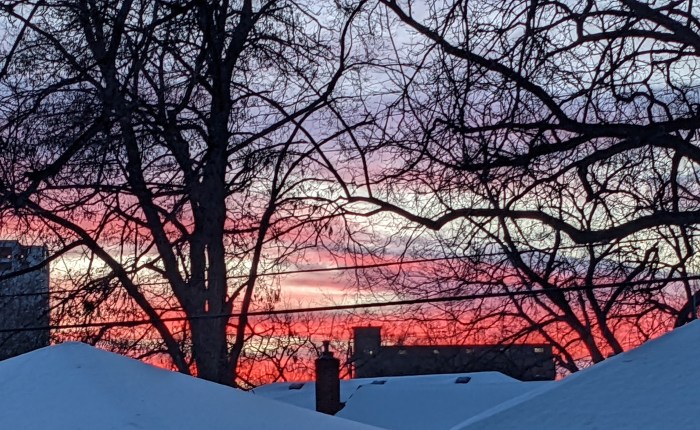
Three: Well, we all want a good death: let’s get to it. I flew into the stunning sunset, backdrop to a scene of lush pines below, cliffs all around, and mountains in the distance. Definitely the kind of place I’d like to die. The only thing missing was the ocean, but oceans have always signaled an edge for me, a boundary, and here I had to create my own edge – that of my human existence. The sunset was inspired by one I’d seen a few night previous from home, sloppily captured in the image above – roiling rose and bright magenta, with lavender highlights. I got to it posthaste, projecting, as well as I could, love to my partner and my dog, attempting to transmit my lack of fear and my total okayness with dying. I would have, doubtless, moved onto other folks, but my car had finally begun to arc downward, and as I pondered the gorgeous, jagged trees below me I had a gasp of, “what if I don’t die instantly” and a quick flash of me crushed in my car, in the middle of nowhere, with bones impaling organs, but not deeply enough to kill me, leading to a slow, agonizing bleed out. (What I should have done at that point was follow the advice of the adept die-er in Palm Springs: take off your seat belt to propel you into a quicker demise.) I shook it off: unlikely scenario, given the height I was falling from, and I was still bound to die eventually, if more slowly and painfully than I originally anticipated. Change. Impermanence. The car’s downward decline accelerated and then

I woke up.

Which was a hell of a thing in itself, being thrust back into life after fully accepting death. But I wasn’t unhappy about it. I make no secret of my love for this planet and my ambivalence about leaving it, despite the indescribable experience of true Knowing and the freedom from human and corporeal concerns I’ve had in other consciousnesses.

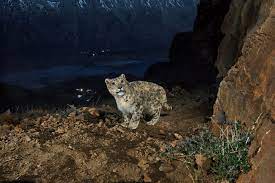
I went on with my day, working at my non-inspirational job, for fuck’s sake, and at one point distracted myself with an email from National Geographic: animal photos of the year. I quickly stumbled across this stunning creature, who broke my heart with that look.

I read the description accompanying the photo and found that this older male (looks like a kitten!) had been followed by the photographer for two years and died not long after this was taken, chasing an ibex off a cliff.

We had the same death!

I wondered what it was like for the leopard – if it got to feel the fall. If so, whether it tried to fight or let go, if it recognized and accepted its inevitable death. A far fetched, but not insane idea: non-human animals seem much better at predicting and accepting their own deaths than we are. My favorite example was that of Buster, the surly cat that served as the mascot at the old bookstore where I worked for a decade. He hated almost everyone, and rarely put up with any affection whatsoever. One day he came into the mail order department and lay down on the center of the sorting table, letting anyone pet & speak sweetly to him. There didn’t seem to be anything wrong, other than the change in personality. Two days later, we found him dead in the alley next to the storage shed. Buster’s gorgeous, wild cousin could certainly have at least that much self-awareness, after a lifetime lived in that landscape. Either way, I hope he didn’t suffer. I hope he got to enjoy flying for a second or two.

I hope that for all of us.

Celebrity Deaths

Began to compose social media post about David Bowie dying then thought “the world doesn’t need to hear my thoughts on David Bowie dying”

This gets you +224 points on The Good Place

We, the social media generation, often react to the deaths of famous people (who are, in reality, strangers to us) as an order to sit in judgment over their lives. Often this is positive, sometimes it’s not. Either way, it seems arrogant. I have my own bubble, so I tend to agree with the final judgements passed on the formerly living, but regardless, I’m usually, like, “why?” What is the point of this? Is there anyone reading your post who doesn’t already know why you think Donald Rumsfeld or Rush Limbaugh is a bad person? What’s the motivation? To get more angry “likes”? Or dull hearts? I dunno. Even the generic praise seems boring and unhelpful. I can get interested in people’s artistic or spiritual connection to folks they don’t actually know: the Prince album that got them through their coming out period; the Joan Didion book that weirdly made them feel seen, but more often I just skip over these so-called tributes.

This is, of course, prelude to writing my own…

I rarely respond to celebrity deaths in writing – maybe 3 in the last 5 years – but quite a few hit the press in quick succession last week, and at this moment I feel inspired to celebrate the good they brought into the world, or into my particular little life, now that their active contributions have ended. Yay, humans! In that spirit, here is a tiny tribute to these guys:

  • Bob Saget
  • Meatloaf
  • Louie Anderson
  • Thich Nhat Hanh

Bob Saget’s reputation was huge among comedians, a group with which I’ve had perhaps too much interaction. Folks seem to agree that he was a good guy, and who doesn’t want to know that a celebrity is a good guy? Right on, Bob. I know little of his work, but I lovelovelove good standup comedy, and profane standup is typically my favorite standup. I believe pushing people out of their comfort box is not only okay, but important; that addressing issues and ickiness that people don’t want to talk about opens our minds and even our hearts; that finding the humor in the horror is finding light in the darkness and that nothing is “off limits,” if it’s done right. As Wavy Gravy said, “if you don’t have a sense of humor, it just isn’t funny.” The Comedian as Court Jester has probably never been more important than it is right now. Perhaps never less important, either. When is speaking comic truth to power unimportant? Saget followed in a centuries-old tradition of Jews and others who laugh to keep from crying.

Meatloaf. Ah, Meatloaf. Lots of folks have referenced his embarrassing show of Trump support several years back, but if you’re getting your political guidance from Meatloaf, I don’t know what to tell ya. Let me instead evoke the sweet, goofy, steroid-enhanced, testicle-free, ex-wrestler he played in Fight Club. Robert Paulsen is the most compassionate and lovable character in the movie, and admirable in a sea of toxicity: a burly man who holds space for other men to cry; a goofy and loyal friend; a person who can fight without anger, hatred, or guile; a character whose death is the warning light that things have gone too far, the trigger for the protagonist to battle back to consciousness and self-awareness. (Oh, and a friend in the music business who worked with him said he was a kind man, if you need that topper.)

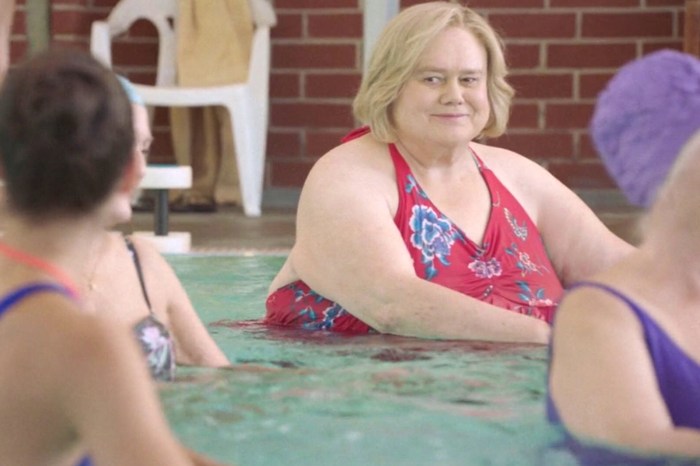
Christine Baskets

I liked what I knew of Louie Anderson’s standup, though he wasn’t one of my faves. I heard good things about him personally once I moved to his home state (good guy!). But he really grabbed me in an interview with Terri Gross several years ago. I just fell for him. There was a sweetness, mindfulness, and openness about him that was so gentle and refreshing, and so aligned with how I want to approach the world. It was that, more than anything else, that led me to start watching Baskets. And Baskets is where I fell in love with Louie, as Christine Baskets, who is one of my favorite characters ever. She is subtly hilarious, but broke my heart repeatedly. She’s bold and strong and sensitive and loving and sometimes misguided; her vulnerability and strange generosity is beautiful and devastating. A less compassionate actor could have easily made her a joke; Louie made her an suburban American warrior.

And then there’s Thich Nhat Hanh. (I think I can leave out the character assessment for this one.) I can’t possibly begin to pay tribute to perhaps the most influential Buddhist monk of our time. (I know most would say the Dalai Lama, but in my spiritual world, Thay was more directly inspiring.) If you have a spiritual practice or inclination and don’t know him, check out some interviews or one of his scores of books. Although I am not a religious Buddhist, he’s been a huge influence on me. Not only through the many teachers I’ve learned from who started their journeys with this sweet-voiced little Vietnamese man, but because he lived the practice of and apparently invented the phrase “engaged Buddhism”, which I’ve been actively studying for the past year, and hope to commit to for as long as I’m still on the list of life. He stood up to conservative and monastic Buddhism before it was fashionable and spent much of his life trying to make the teachings understandable and accessible to the Western world, in a way our ilk could understand. He opened a path to liberation from our materialist, consumptive culture, our mindless anger, and our blind selfishness. To Hanh, mindfulness necessarily encompasses not only our own “selves” but our interdependent world, and right action necessarily includes the work to help alleviate suffering wherever one finds it. I know a lot of people have a hard time with death, and this post is, let’s face it, inspired by death, so let me close with this wise man’s words on the topic:

Our greatest fear is that when we die we will become nothing. Many of us believe that our entire existence is only a life span beginning the moment we are born or conceived and ending the moment we die. We believe that we are born from nothing and when we die we become nothing. And so we are filled with fear of annihilation.

The Buddha has a very different understanding of our existence. It is the understanding that birth and death are notions. They are not real. The fact that we think they are true makes a powerful illusion that causes our suffering. The Buddha taught that there is no birth; there is no death; there is no coming; there is no going; there is no same; there is no different; there is no permanent self; there is no annihilation. We only think there is. When we understand that we cannot be destroyed, we are liberated from fear. It is a great relief. We can enjoy life and appreciate it in a new way.

This body is not me. I am not limited by this body.

I am life without boundaries.

I have never been born,

And I have never died.

Art Hack

Art Hack

I cannot draw.

This is so true it’s not even critique. Playing Pictionary exclusively with non-artists, my work is irrefutably the most distorted, the least comprehensible. A horse may reasonably be interpreted as a capybara, a sailboat as a place setting. It’s one of those failings I’m no longer ashamed of, though of course I’ve always wished I could create a somewhat representative work, even if visual art is likely beyond my reach. Some people have trouble expressing themselves in words. I have not only been lacking in the ability to convey thoughts, ideas, or images in a visual fashion, I haven’t been able to successfully convey anything in graphite, paint, clay, crayon, ever.

Then, last summer, I started getting into trees. Not, like, physically into them (or just barely). But really falling in love with trees. I have to give credit to Richard Powers’ The Overstory, a book I would not have read if the author hadn’t had a remarkably forgettable name (a work I read of his years ago was one of my most loathed novels of the decade). For whatever flaws it has, The Overstory brought trees alive for me in a way that nothing in my child-of-hippies, nature loving, environmentalist past has done. I was suddenly thirsty with the need to know trees.

How does one meet trees? In the beforetimes, one would naturally show up at one’s local arbor social, chat up some tall, deciduous babe, maybe leaf together. But what of these pandemic times? Where does one socialize with a firmly planted, silent species?

Rather than returning to a method of learning that has, I now realize, always bored me, overwhelmed me, and failed me – that of book study and rote memorization (a methodology I think I may have repeated for decades because I saw it as a way to punish myself for my not knowing, ignorance being a sure sign of my laziness, ineptitude, and lack of intelligence, rather than an accident of circumstance), I sought another way in. I had been using iNaturalist at the recommendation of Jenny Offill’s ironically inspiring book, How to do Nothing in an attempt to identify local birds, so I posted some snapshots of trees in my area and begged the wisdom of the app’s community for identification, but soon found that there’s a lot more you typically need to identify a tree than a bird. A clear avian photo or song is likely to produce a positive identification from an avid amateur, but when I tried arborday.org’s tree identification gauntlet after iNaturalist failed to produce results, I found that with ~60,000 species on Earth, you need a lot of info to id a tree – info I didn’t even comprehend, let alone have the ability to produce (pettiole? pinnately compound? lobed margins? did they teach us anything important in school?). I had to gather data, and short of standing in front of a tree with my blech-inducing laptop to document objective information for long stretches of time, the best way to do that was to start sketching.

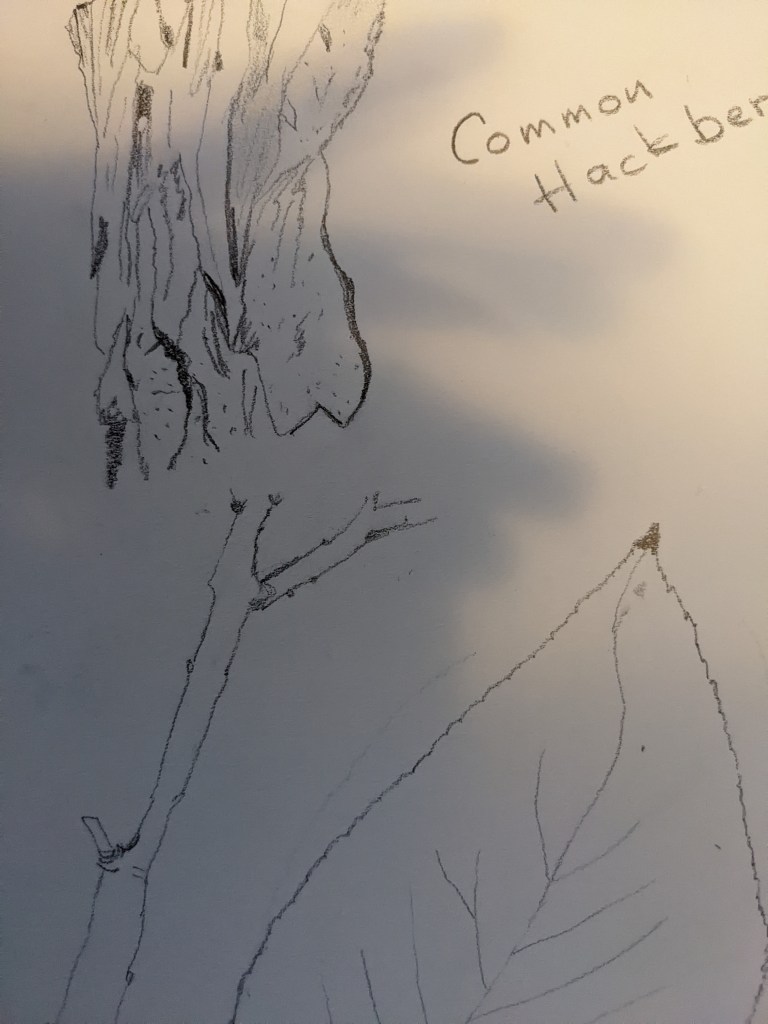
Not the whole tree. Too overwhelming for my detail-oriented brain, plus I am wary of attempting representation, for the reasons explicated at the top of this post. I was focused on essential pieces of the tree: the design and texture of the trunk, the exact shape of a leaf, the pattern of leaf placement on a branch, any acorns or fruits or other adornments.

Begin at home, they say. So I literally did. Not with the Black Walnut in my backyard – a tree I love so much I regularly ruminate on the heartbreak of its eventual demise (likely long after my own), much as I do with my dog (likely much sooner), but not with my partner (weird). I focused instead on the unknown boulevard tree, across the sidewalk from my front yard. I grabbed a camp chair and hauled my small stash of gear outside. I started with the trunk, carefully recreating every swirl, protrusion, and knot as clearly as possible with my new charcoal pencils in my new spiral-bound sketchbook. It didn’t take long to realize that not only was I not going to capture the 2×2′ chunk I had planned to draw, I would be lucky to finish 1/4 that much. It struck me that this was because I was essentially copying the details 1:1, that my brain hasn’t developed the skill to shrink the patterns down. I was literally just drawing what I saw, exactly as I saw it, to the best of my ability.

TREE!

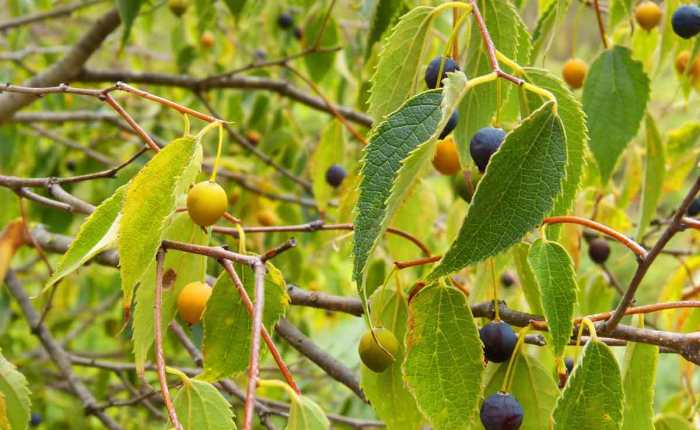
Who cares? The year before, I didn’t think I could draw anything and now I had put something beautiful on paper. The intricacies of the trunk were engrossing. I could honestly have continued getting to know them for hours, if I had enough paper. Instead, I restricted myself to a small chunk of bark and moved on to a branch, being careful to accurately represent the characteristics I had seen on the arbor day site: how the branches grow out of the tree, how the leaves are arranged on the branch, the relative size, color, and texture of the berries all over it. Leaves are, bless ’em, portable, so if you tire of people’s stares, or worry about paranoid neighbors calling the cops, you can take a fallen leaf indoors for the rest of the session. My leaf was covered in little nipples (yep, that’s what they’re called), which I thought were bugs or disease, but turned out to be characteristic of my tree species which, after triple-checking with the Arbor Day foundation, a UMN list of common trees in my state, and a YouTube video for confirmation, I found out was a hackberry. As my first tree it is naturally special, but get this bonus: it has edible fruit! Those little berries that my dog regularly snacks on are tasty little morsels – very little, as the seed takes up almost all the space, but if you get them at the right time of year, the fruit tastes like fig. This was probably the best tree I could have started with, because I love to eat, and because I am always, in the back of my mind, looking for ways I might be useful after the demi-apocalypse. They’ll definitely let me live when I deliver these little delicacies.

Once I got to know this tree, I saw it everywhere. Not only because we were now acquainted, but because my block is lined with hackberries. Stupid human planning, and here’s hoping no hackberry disease comes to our lovely street anytime soon, but now I know.

This is the practical. I now know a tree. Several, in fact, as I repeated this practice some weekends while the weather was good – not as much as I’d like, but, you know, I know some trees, if you get my drift. The unintended but unsurprising bonus was how this intimacy breathed life into my spirit. I see trees differently now. I see the world differently now because I have paid attention to a handful of trees.

It can happen with any element of nature – birds, trees, insects, flowers. Once you really get to know a few of them, you are invited into a world in which the contrast has been turned up at least 100%. Once you know a thing, you literally see it in a way you could not previously. And once you can see that specific category of thing, you can use that awesome brain power to identify difference – how is this tree unlike my tree? What animals like to hang on my tree? What creatures prefer others? Which of my trees look healthy, which don’t? What in the immediate environment might influence that? The wacky thing, for me, is that all of these questions came from a place of curiosity, not of intellectual greed. The more I paid attention, the more my attention expanded. I started boring my partner on walks with my constant, simple observations like, Look at that beautiful trunk! What a scratchy leaf! Why aren’t there branches growing there? I don’t think one needs to know the name of something – cultural or scientific – to connect with it, but I do think I need to know some name, have some way to identify it so that it becomes real to me, and the ecosystem it interacts with becomes like the home town of a loved one – an abstraction now infused with meaning because it means something to someone you care about.

Until I started practicing it myself, I didn’t understand this apparent paradox: how can naming a thing, which is essentially putting it in a box and separating it from myself, bring me closer to it? I think of the neuroscientist who wrote about her massive stroke, explaining that the loss of words for the things around her allowed her to feel fully at one with everything. I don’t have a definitive answer (and don’t have to – I’m all about the nonbinary these days) but I think it has something to do with attention. For example, if we looked at all of humanity as nothing but people, it might keep us from stereotyping them as friend, enemy, good, bad; but if we resist any classification, we are left without an understanding of the whole or any of its parts. Once we start paying attention, we make note of differences, but also similarities and qualities and patterns. We start to see the object in relation to ourselves and other things we know, which connects it to us, even if only in difference and novelty. It’s not a perfect relationship, but it is a relationship.

Once I started paying attention to just the 1/2 dozen trees I’d sketched or otherwise identified in my neighborhood, I was also able to assimilate some of the knowledge I’d picked up from the books I’d been reading to theoretically connect with nature for years. For example, knowing that trees interact and act as communities to protect and defend themselves led me to predict and confirm that none of the Black Walnuts in the area would bear fruit this year because we had a remarkably dry summer and they were collectively conserving their resources. I felt terribly smart.

The living world has come alive for me in a way that is simple and tangible since I started sketching trees. I feel like I’m a part of my species-rich community, that we are actually connected in the sameness of growth and change and struggle and rest, and in the distinctions that live and breathe into and out of each other; our interdependence making each others’ existence possible. Knowing the plants and animals around you used to be essential to human survival in a quite literal way. Now those of us with a mediated relationship with our food and water can live without that, but it’s a lonely existence. As humans have isolated from the life around us, are we not like tourists in a foreign culture? Navigating our way through greenery and fecund landscapes either gingerly, not wanting to stir up trouble; or tendentiously, like an imperialist set only on extraction and exploitation. So many people are feel so lonely and disconnected. I think the massive pet adoption that swept many countries at the beginning of the pandemic was a wise response. Finding a way to connect to any of the infinite varieties of life that bloom in all but the most persecuted communities simply makes all life better.

The House of Write

The House of Write

My partner is currently writing on the couch, while I type at the dining room table.

The dog doesn’t like this. It’s okay for us to watch TV together while she disengages, but two people staring at computers in the same area calls for whining/moaning/crying. Usually at me. I am the head of household and decision-maker, and thus I am the problem.

My partner and I are both writers who don’t get paid to write, or only occasionally. We both have full-time jobs. He has depression, anxiety, and ADD, and thus a real need to create low-pressure environments for himself. In other words, he plays video games in his remaining free time. I have a half-dozen volunteer commitments, and my spiritual practice. (He’s working on the latter.)

I would love to post here or on my other blog once a week. I would love to commit to that. But I have this weird thing about keeping promises, one that doesn’t necessarily jibe with my spiritual beliefs. I know I have no control over the future. I know that the means is the end. I know that I would approach any commitment with the best of intentions, and even if I did fail, who would I be hurting? You, dear readers? Part of my evil self would really love to think that your lives would be noticeably worse if you were denied a piece for even a single week, but we know that’s not true. The only one hurt would be my ego, my high-achieving self, my judging little voice.

But I do want to write. I think about writing all the time – I have thoughts scrawled all over the place, including in the 70+ “drafts” sitting here on WordPress, with titles like The Weight of the World, Sour Grapes Make Fine Wine, and Sucker, and no further content. Did I think I could actually figure out what overwhelming force compelled me to make those notes, and did I think I would actually remember well enough to complete them? Or was I so spiritually advanced that I tossed these prompts out there knowing I could never get back to the place I was when I wrote them, and preemptively accepting the ultimate work as equally valid? Presuming these drafts are all worth pursuing, or reconstructing, I have more than enough content to get me through a writing year, but that’s a big presumption. And even with my anti-perfectionist commitment to not spend too much time editing anything, it’s nearly impossible for me to finish a post in less than 3 sittings. The Didion piece was a rare exception, but it was also written in the middle of a 5-day holiday weekend. Sitting in front of a computer makes me feel gross, and I have to do it all day for work. I’ve gotten much better at caring for myself since working from home – taking breaks to meditate, exercise, go outside – but the last thing I want to do at the end of a work day is sit at a computer and write. Which makes this all … hard.

I’ve relocated to the couch now, next to the guy. Dog then started moaning at us again, so we yelled at her until she joined us. We don’t want to yell at her: this is one of her rules. She will not join us on a piece of furniture unless we demand she does it in an aggressive tone. Then – maybe – she’ll cuddle up. She wants to come up, mind you, she just doesn’t want to show that she wants to come up, so she insists that we verbally abuse her. Fucking freak. And she doesn’t have the excuse of an abusive childhood.

She is now lying all the way across my guy so he can only type with one hand. Mission nearly accomplished.

What if I just commit to posting something every week? Does a Goodreads book review count? What about some fluffy day-in-the-life-of tidbit? What’s the purpose of posting, anyway? To spread ideas? Give of myself? Get attention? WHO AM I ASKING?

My ego, of course. But that’s not all of it. Those of us who write, overwhelmingly, feel compelled to write. As hard as it is to start, and infinitely harder to finish, I feel better when I write. I understand myself more, my emotions are softened, and I take the time to process in a way I don’t always do in the course of a regular day. It does me good.

All of that could happen without a blog, and even without a computer, but I’ve chosen to put writings out into the world on a semi-regular basis. It’s a mixed bag. The occasional feedback is great, but the pressure to publish frequently is sometimes counterproductive. I sometimes envy my partner, who has stopped blogging and is only working on pieces by himself or with an editor. But something drew me to this, and something tells me it might be helpful for others, so I keep going.

I guess that’s my 2022 commitment: to keep going. And lookee here – I’ve finished a post in one sitting (two locations; with canine assistance). Wishing you all joy & wisdom. Until next time.

The Death of Didion

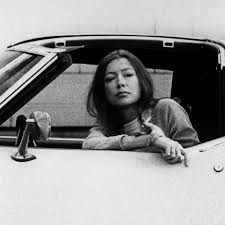
Joan Didion was my favorite writer. That “was” may go back to a time before her death. It may have ended when I read Blue Nights, but I have yet to choose a replacement. Her style was extraordinary in its simultaneous originality and simplicity, and I followed her with devotion, while knowing I could never write like her. Perhaps because I knew I could never write like her: terse, incisive, stark, and stripped of emotion, while effectively evoking it from the reader. She is one of only two big writers who I have gone out of my way to see speak, and meet.

I was introduced to Joan Didion’s work, as I was introduced to so many of my favorite artists, by my college professor/surrogate father/friend who died last year, also of Parkinson’s, though a decade younger than her. He gave me Play It As It Lays in the midst of the drama of my depressed, self-absorbed, self-destructive sophomore year in Los Angeles, where it largely takes place; studying acting, which is the career of the protagonist; chain smoking, like he;, obsessively driving the freeways when I couldn’t sleep, as she did; routinely tearing through specific intersections highlighted in the book. I gobbled it up like it was the one essential nutrient keeping me alive. To this day, it is one of my top 5 favorite novels. That was the beginning of my obsession, which stretched over 12 books. Her memoir Where I Was From is the rare holdout on the shelf, and will now be my holiday reading. Because that’s what we do when writers die. At least I bought it while she was still alive to reap whatever profits were to be had.

I didn’t love all of her books. The political ones, in particular, were too insider-y for me. I don’t know if I’d understand them better now than I did then, and I don’t feel any need to find out. But when she was on … fuck. She had a way of making the ethereal tenable, and making the mundane revelatory. The contents of a purse (The Book of Common Prayer) could say as much as a deep psychological delve into a character. This was a revelation to me.

We tell ourselves stories in order to live.

I don’t think of Didion as a spiritual person, and I don’t think she did, either. But anyone who deliberately digs deeply into their own mind is bound to run up against the boundaries of things, the immaterial. Her famous quote above is right out of Buddhism 101. But rather than trying to escape the narrative and simply be, as Buddhists do, she relentlessly shoveled the shit, which might be almost the same thing, in the end.

Depression, in Didion’s works, is depicted not by talking about it: characters don’t discuss their feelings. They may not say much at all. They exhibit certain behaviors which represent certain states or weaknesses or depressive or anxious characteristics. It is the behaviors that hold their attention, not the motivation underneath. They are trapped in the idea of their own identity, or what it should be, or what they think others perceive it to be. They follow the directions drawn for them instead of being present in their own lives. They are detached to an exceptional degree, so that the protagonists may seem to be narrating their own story as they’re living it, or rather instead of living it, believing that changing the narrative will change the person herself.

She had watched them in supermarkets and she knew the signs. At seven o’clock on a Saturday evening they would be standing in the checkout line reading the horoscope in Harper’s Bazaar and in their carts would be a single lamb chop and maybe two cans of cat food and the Sunday morning paper…. To avoid giving off the signs, Maria shopped always for a household…. She knew all the indices of the idle lonely, never bought a small tube of toothpaste, never dropped a magazine in her shopping cart. The house in Beverly Hills overflowed with sugar, corn-muffin mix, frozen roasts and Spanish onions. Maria ate cottage cheese.  

…she had an uneasy sense that sleeping outside on a rattan chaise could be construed as the first step toward something unnameable …

Play It As It Lays

A journalist and sometime screenwriter herself, her characters seem to also be watching the movie from the outside, narrating the story of their lives instead of living it, moving through a kind of fog or mild narcotic state. And not just in her novels. In her essays, the commentary on her life, her thoughts, seems to her far more real than her life itself.

Something real was happening: this was, as it were, her life. If she could keep that in mind, she would be able to play it through, do the right thing, whatever that meant.

Play It As It Lays

You are getting a woman who for some time now has felt radically separated from most of the ideas that seem to interest other people…. Quite often during the last several years I have felt myself a sleepwalker, moving through the world unconscious of the Moment’s high issues, oblivious to its data, alert only to the stuff of bad dreams.

In the Islands, essay (The White Album, 1979)

Joan Didion, as you probably know, wrote a gut-wrenching book on her reaction to the death of her husband, because she didn’t know what else to do, how to act, how to Be. (I read it in one sitting because it was beautiful and because it was too painful to carry over into a second day.) She grounded herself in curiosity about her own inner workings, and also recognized that she could not hide from grief behind words. That grief was present in a way that she often was not, shrouded in her protective magical thinking. And the uber-narrator is acutely aware of that.

Perhaps the writing brought her some peace. It definitely brought thousands of readers to some understanding – of her, of themselves, of grief. The best artists make the specific universal, and the universal personal. In her analytical way, she turned herself inside out – for us? For her? No matter. We could see ourselves reflected there, in all our gory vulnerability.

Life changes fast/ Life changes in and instant/ You sit down to dinner and life as you know it ends

The Year of Magical Thinking walks us, and Joan herself, through the months after her partner’s death, but it’s not that different from the rest of her writing – writing as both interpreter of and substitute for living, “both a way of keeping a distance and a way of getting close. It’s both those things, simultaneously.” (interview ~2011). Writing is both a way to connect and a way to detach. Look at the lines above – the first words she wrote after her husband died weren’t explaining her own feelings, her own experience: they pulled the lens back on the moment – declarative, conclusive, not even in the first person. It isn’t about her, it’s about LIFE, in the abstract, writ large. She struggles both with the need to write to figure out the story, and with wanting to resist creating a narrative that may not be honest.

I write entirely to find out what I’m thinking, what I’m looking at, what I see and what it means.

Why I Write, NY Times 12/5/76

There is something spiritual about Didion’s work, in its explicit omission. Her focus on behavior and thought and physicality recognizes its own exclusionary nature, thereby opening up the possibility for more. In Play It As It Lays, Maria’s fear of losing herself to inertia and pathos drive her to keep pursuing self-awareness.

By the end of a week she was thinking constantly about where her body stopped and the air began, about the exact point in space and time that was the difference between Maria and other.

There is some terror in losing that distinction, because the character has no resource for dealing with it. She’s surrounded by self-serving, profit and status-driven people in a dry, manufactured, materialistic world. But the pain in living that detached narrative is palpable.

I’ll close this attempt at analysis with as much reportage as I can muster. The scene: a woman, far nearer 40 than 20, waits in line to meet her literary heroine, cradling her favorite novel and the writer’s recent memoir under her arm. As she watches the other attendees step up to the table, she cycles through reasonable, thoughtful, intelligent praise, something that hints at her own mental acuity, and with respect for the subject: that she has read more of the author’s works than anyone alive; that of the thousand novels she’s read, this is among the very best. She looks up as the distance shrinks and decides she doesn’t need to say anything at all. She can just hand over the books for signing. Then she approaches the table, and the tiny, old woman looks up, with eyes that look beyond and through what is in front of her, but stare definitively at her own, and the fan blurts out, “I love your writing SO MUCH.” The author opens the books and signs, saying nothing, and hands them back. Was there a tired sigh? The woman walks out of the theatre and goes on with her life, a new narrative to tell, with a new character under her belt: the fawning fool.

Thank you, Ms. Didion, for all of it.

Rethinking Anthropomorphism

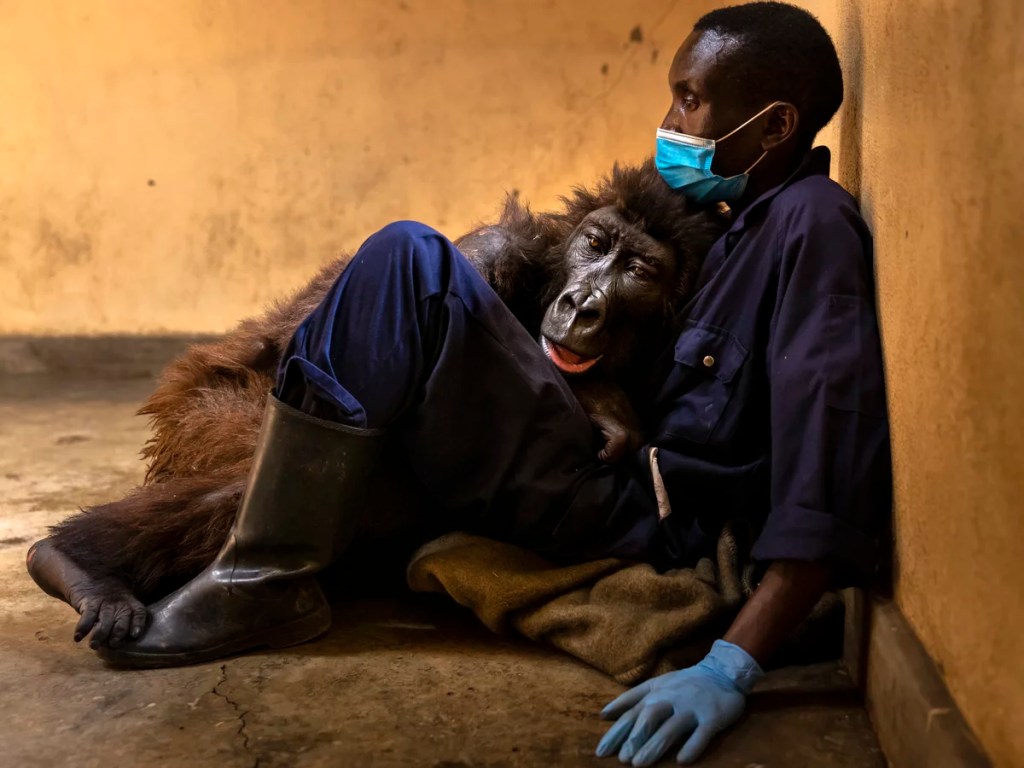
https://www.npr.org/2021/10/09/1044619808/opinion-a-gorillas-life-and-death-in-2-viral-photos

In my too-recent somatic experience of really feeling like a part of a mutualistic, interdependent world of plants, animals, and the constant exchange of electrons, anthropomorphism has come to mean something quite different than it used to. I don’t know if it’s the wider acceptance of Buddhist and Indigenous philosophies or the climate crisis or something else, but I’m also seeing more blurred lines in recent non-fiction books, including pieces about how the brain works, ecology, health, and others.

Here’s my supersimple explanation, based on nothing but my own education, of the evolution of anthropomorphism in Western culture. In the Romantic era across Europe and elsewhere, there was a shift in the intellectual classes towards an appreciation of nature and the other living things in it (some of them, anyway). You see this all over the English and European poetry of that era (late 18th-early 19th century), and the influence on American, especially Transcendentalist, literature as well. In a culture of hierarchies and human supremacy, granting human thoughts and feelings to “lesser” animals seemed a conciliatory and respectful practice. More recently, the ascription of human characteristics to non-humans has been considered childish and aspirational – something fanciful that we do to pretend that animals are more like us and force affinity where there is none. It is this position that is showing some much needed deterioration.

Unfortunately, some of the most habitual line-drawers between humans and others have been scientists. Much of the non-Right in this country is very rah-rah about science these days, and with good reason. But we’re deluding ourselves if we think that the purported objectivity of science precludes the field from prejudicial framing and, thus, prejudicial conclusions (see Braiding Sweetgrass for more on all of this). Naturalists, biologists, and other scientists of the living world have often been the first to dismiss talk of plant intelligence or the attribution of “human” emotions to non-human things. I understand how highlighting shared traits could be perceived as anthropocentric, that we should let animals just be animals. However, we can only understand the world in a context we recognize, and we are not just observers of the natural world, but participants in it. In order to participate we have to connect. In order to connect, just as with humans, we find things in common. If every emotional or motivational or intellectual connection we discover is dismissed as projection, it makes it very difficult to feel an affinity with other life forms. We are a part of this world. And other things in this world think and feel and act in ways similar to us. Trees have elders who help out younger trees, elephants perform ritual goodbyes for dead community members. Many animals hug each other with affection, or for consolation or conflict resolution.

Scientists employ […] technical language to distance ourselves from the rest of the animals. They call ‘kissing’ in chimps ‘mouth-to-mouth contact’; they call ‘friends’ between primates ‘favorite affiliation partners’ [….] if an animal can beat us at a cognitive task […] they write it off as instinct, not intelligence. Primatologist Frans de Waal terms this ‘linguistic castration.

Why Fish Don’t Exist. Lulu Miller. pp 181-2

We’ve hung onto this hard line between human and non-human life as if Darwin and his ilk never existed, as if we still didn’t know that humans are just animals that evolved in a distinctive way. We have been so enamored of our “superior” intelligence that we couldn’t even acknowledge that intelligence is a characteristic shared with other living things, let alone that others might be more intelligent than us in any area. But we are finally starting to give non-human life the credit it deserves, finally starting to talk about the way trees send messages through forests to protect each other, the way octopuses and grouper work together to hunt, or a crow manipulates tools, as intelligence.

When we have acknowledged non-human intelligence, we have judged animals based on how well they can do what we have classified as “human” talents – recognizing themselves in a mirror, performing tricks, remembering where items are placed, etc. Anything that is not an area wherein humans excel is classified as instinct. This overused quotation is still sound:

If you judge a fish by its ability to climb a tree, it will live its whole life believing that it is stupid.

Or we will believe it is stupid. It’s even harder to get people to recognize the intelligence of non-animal life. How can something without eyes or what we call a brain think? Calling trees or fungi smart is almost embarrassing.

We have also held our species up as emotionally superior, capable of a wider range of feelings and sympathies than other animals, despite the at-least-equal amount of evidence that we are less compassionate, more cruel, and indubitably more destructive than any creature that ever lived. We see ourselves as more individually distinctive as well, less of a type and more of a solo creature, even though we are perhaps less able to independently care for ourselves than any other plant or animal, less able every year, it seems. Plus, anyone who’s had more than one dog knows that there is no such thing as a “dog personality”. Every dog I’ve had has been at least as distinct as each of my friends.

Indigenous cultures have had little trouble recognizing and respecting our species’ essential and interconnected place in the natural world, because to do otherwise would be to put your life and the health of your community at risk. The only way to live off the land is to live with the land, to recognize what was required of us and what could be expected of and negotiated with other species. The religions that emerged out of this life reflected that mutualism, just as European religions, placing the idle and intellectual above and apart from farmers and hunters and those who worked with the earth, created religions of hierarchy and separation. We have long dismissed indigenous knowledge as mythical and unscientific, because the science used was not recognized as legitimate. But it is science, based on generations of observation and experimentation, and with conclusions rationally drawn therein, just as with non-indigenous science.

Early “big e” Environmentalism believed that the best thing for humans to do with nature was leave it alone, as if we are not a product, part, and partaker of nature; as if we’ve become so far removed from the source of our very being that we cannot possibly be anything but a scourge to the living world. I’m not mocking. I get it. Certainly, keeping drilling out of the arctic and development off coastlines is understandable. This was a motivation behind our National Parks. Protecting nature from us is perhaps not as self-promoting as some other practices, but it’s just as isolating and unnatural. Seeing ourselves exclusively as a threat to the rest of the world is just as insane as seeing the world exclusively as a threat to us. It’s like labeling your liver as a threat – sure, it can do damage when things go wrong, but it’s also an essential part of the package, one the body can’t live without and one that cannot live without the body.

Why do we insist on drawing these lines? Does it make us feel special? Do we refuse to acknowledge our kinship with other living things for the same reason we refused to acknowledge that the earth was not the center of the universe? Is it some quieter but still extant idea that in order to have our Special Relationship With God, we must be different from everything else? Do we cling to the favoritism of a distant, immortal, esoteric being at the expense of forming meaningful relationships with our mortal kin all around us?

If we do tend this direction as a capitalist, Euro-centric culture, what good does it do us? Does separating ourselves from everything in the natural world improve our wellbeing in any way? If so, how? Because it allows us to destroy entire ecosystems, species, dramatically reduce the livability for most things on the planet, without compunction? Maybe the ease, comfort, and continual newness for which we sacrifice our world does make us happier, in a way. I certainly like central heat and Youtube Alan Watts lectures on demand, but they don’t make me any less lonely. The loneliness that emerged from deciding we were the only intelligent species on the planet may have created our obsession with the things and conveniences for which we sacrifice our only home in order to fill the lonely maw inside us. It’s a self-perpetuating cycle that doesn’t seem very smart.

In the new edition to her gorgeous book, World as Lover, World as Self, Joanna Macy writes that our dependence on and concern for our othered neighbors may not be as alien as we are led to think, and the refusal to recognize our compassion for the world does not serve us.

Many therapists have difficulty crediting the notion that concerns for the general welfare of our planet might be acute enough to cause distress. Trained to assume that all our drives are ego-centered, they tend to treat expressions of this distress as manifestations of personal neurosis. […] “What might this concern represent that you are avoiding in your own life?” In such a way is our anguish for our world delegitimized,

and even mocked, especially when expressed by indigenous groups who have historically and spiritually cultivated and respected a connection to the world they interact with, and thus have felt the pain of detachment more deeply than most of the rest of us.

We are told that we could not possibly feel a true emotional connection to things that are not human, that the only legitimate loss is human loss (the loss of a pet is only considered significant if compared to a human, e.g. it’s a member of the family, it’s like a child). What does this denial cost us? How much less lonely would we be if we recognized our kinship with trees and squirrels and forests? It would likely place us more thoroughly in the world, which would benefit the rest of the planet as well as ourselves.

Going on a hike doesn’t just make us feel better because it “clears our head”. Nature itself makes us better in ways we do and don’t understand. MRIs have shown that

When participants viewed nature scenes, the parts of the brain associated with empathy and love lit up, but when they viewed urban scenes, the parts of the brain associated with fear and anxiety were activated. It appears as though nature inspires feelings that connect us to each other and our environment.

https://www.takingcharge.csh.umn.edu/how-does-nature-impact-our-wellbeing

Having a view of the outdoors from a hospital room reduces recovery time and the need for painkillers after surgery. In psychiatric units, studies have found that “being in nature reduced feelings of isolation, promoted calm, and lifted mood among patients.” Just 20-30 minutes in a “natural” environment significantly reduces cortisol levels.Trees emit phytoncides to deter insects, which generate immune responses in humans, increasing and activating the white blood cells that kill tumor- and virus-infected cells in our bodies.

Depression, anxiety, and drug overdoses are higher than ever recorded in the US. Where can we go for comfort? What if we could turn to a river or flock of geese for a sense of connection, endurance, shared struggle, and rest? We can, but we rarely view immersion in the world beyond the one humans have created as a real place of sanctuary, even though it is our collective ancestral home. Is the drama of the human condition the result of us putting our intellect above and apart from everything else?

Could the recognition of non-human cognition make our lives better? Could it make us better neighbors, better tenants? Could changing the language of anthropomorphism tear down the wall between us and the rest of the planet? I truly fail to see the harm in recognizing the humanity, for lack of a better word, in the vibrant & varied lives with which we share the Earth. Unless we are deliberately separating ourselves in order to keep guiltlessly extracting and destroying? Recognizing our kinship on a global scale would force a shift in worldview, one that might put a stop to our extractive and exploitative economy. I dunno. I think it would be worth it, for all of us earthlings.


Creative Imperfection (Perfection, pt 5)

Paris through the Window, Marc Chagall

We would have stagnated and likely died off as a species if we had settled for perfection. Evolution requires variation – a mutation from expectations, from what was extant or even conceivable before it happened. Our selectively cultivated foods – our pluots and actually tasty apples – came out of a desire for variety and difference: improvement, not perfection. When the focus shifted to profit, perfection took primacy over variety. (In the narrowest sense of the word profit, meaning a strictly financial benefit for the titular “owners” of the item in question, because the loss to the world has been enormous.) When we move from variation to perfection, we get shit. Look at the strawberry. Mass produced, global strawberries are engineered to be very red, very large, and very firm – the perfect image of a strawberry, and perfect for easy picking and long, bumpy transport. They are also flavorless. We are so averse to imperfect looking foods that we created a space for an alternative, radical industry based on selling “ugly” produce to people on subscription, because grocery stores won’t sell them. Because we won’t buy them. Perfect-ly good food, wasted because it doesn’t fit our model of what a particular food should look like.

Likewise, any ideal is just as timebound, subjective, and limited. Who created these standards? In the US, certainly, they are largely male, wealthy, White, able-bodied … you can keep adding privileged identities. What are those guys missing? The answers are infinite. Their idea of perfection has led us to waste food, people, ideas, art. Perfect children were quiet and still and obedient. Perfect citizens conformed with social expectations and followed laws, which have at many times been exceptionally cruel and immoral.

What even is imperfection? Is it just a name we give something that doesn’t fit the way we want it to be, the way our necessarily limited human expectations circumscribe the parameters or potential of a being or object? Is perfection simply acceptance? Is that what Neem Karoli Baba demonstrated when he instructed Larry Brilliant to eradicate smallpox while unironically insisting that everything was exactly as it should be? Is a world without pain and horrors a perfect world? Or is the world always perfect, regardless of Global Weirding, genocide, pick your cause; and is our empathy and grief and work to change those circumstances as inextricable a part of the perfection as the ghastly circumstances themselves? Is a perfect world one in which suffering is present for us to relieve? Is that super self-serving and monstrous? That, just as plants and animals must die to feed other plants and animals, and forests must burn to allow for new growth, our human world must be filled with resource extraction and cruelty? Maybe. Or maybe we just throw out the idea of a perfect world and instead live the paradox of simultaneous acceptance and opposition.  

Buddhist, Native American, and other religions imply the idea of an individual entity being perfect independent of the community which literally and figuratively keeps them alive is absurd. Our selves don’t end at our “skin-encapsulated ego” (Alan Watts), and neither does the strawberry’s. That perfect strawberry is here reinterpreted as a massive failure because it poisons the soil, the farm workers who pick it, the air we breathe through the chemical inputs to grow it and fossil fuels to ship it; and denies nutrients and spreads disappointment to the people who eat it. In these interconnected worldviews there is no place for perfection, which attempts to delineate something that is by nature fluid. As the infinitely amazing Deep Ecologist Joanna Macy writes, we have deluded ourselves with the idea that power, or success, means domination. “This is not the way nature works. Living systems evolve in complexity, flexibility, and intelligence through interaction with each other.”[i] Evolution is never just personal; our environment decides which mutations are worth reproducing. Every creative act, every change is a collaboration between living things and their environments and cultures.

In the creative realm, the concept of perfection puts restrictions on what a thing can be, and creative potential can be smothered by such boundaries. If there is perfection to be reached, there is an idea of what is acceptable or appropriate, and therefore an unspoken idea of what is unacceptable, which is pretty much anything unfamiliar and innovative. If War and Peace is “the perfect novel,” where does that put The Vegetarian?[ii] Or Beloved? Or any number of works from other cultures that I have not been exposed to? What is a perfect face and who decides that? We’ve all seen the destructive potential of “the perfect body” and many carry that burden to the detriment of our health and happiness. The idea of perfection has led us to waste food, people, ideas, art. At one time, perfect art was representative, and representative only of the “noble”. Every genre of art rejected the previous genre’s idea of perfection. Nadia Comanechi achieved “perfect 10s” in her Olympic routines in the 70s. Now that same performance wouldn’t even get her into the Olympics. But that’s just time, you might say. Indeed, time is a characteristic of culture, and just as arbitrary and whimsical in classifying excellence. Think of all we would want (in the dual, Shakespearean sense of the word) if previous standards of perfection were enforced. Future creators will say the same thing about our standards, even though that is hard to imagine. A culture of perfection makes the new harder to imagine. We assume that we know what a thing can be, and knowing is the beginning of the end. A beginner’s mind is a space for exploration, creativity, and growth; an expert’s tends to resist change

With perfection out of the way, there are so many more ways to be. Perfection is static, proscriptive, and therefore inhibiting. If the nature of all being is boundless, as Buddhism and psychedelics tell us, then either nothing is perfect, or everything is. And if we are perfect and thereby liberated from the pointless goal of achieving perfection, what could we do with the energy we now spend on self-improvement and material comforts to salve our cravings? We could make gloriously imperfect art, perhaps, or grow imperfect tomatoes, or form imperfect, diverse, messy, mutualistic communities that cultivate the joy of future imperfections.


[i] World as Lover, World as Self– 30th anniversary edition, p.152

[ii] The Vegetarian, Nan Kang, translated by Deborah Smith. Perhaps my favorite novel of the last decade. (©2007, English translation ©2016)

The Perfect Definition (Perfection, pt 4)

Let us first acknowledge that any idea of perfection was made by humans: specifically, almost always men, and usually White, European man. I’ll start with one of the most influential men: Jesus. (Depending on what culture and century you live in, he may or may not be White.) The religion founded in his name has had an immeasurable influence on European-American culture, though I’d argue that his actual message (even the distorted, subjective transcriptions of his message) is far more universal, far less anthropocentric, and far less judgmental than what Christian, European culture has chosen to latch onto. Still, there is definitely some judgey stuff in the New Testament. This one was occasionally thrown at me when I was a kid, from Matthew 5:48. This translation from the King James Version of the Bible:

Be ye therefore perfect, even as your
Father which is in heaven is perfect.

Since I took up with Buddhism, I find echoes of that same nonbinary and compassionate worldview hidden in secret pockets all over Jesus’ rags. So what did he mean by perfect in that quote? It’s difficult and perhaps pointless to parse language in the Bible – the flaws inherent in multiple translations (in this case from Aramaic through however many versions before the English), the inaccurate memory of the people recording his words, their own bias that led them to that memory, etc. But I still think it’s valuable to interrogate the choices in the translation. From my beloved Shorter Oxford Dictionary, at the time the Bible was translated into English (1611), perfect had many different meanings, including

  • Completed; fully formed; adult
  • Having all the essential elements, qualities, or characteristics
  • Not deficient in any particular
  • Being an ideal example of
  • Of or marked by supreme moral excellence
  • (Rare, but thanks to our buddy Shakespeare): in a state of complete satisfaction; contented

All sorts of stuff going on there, but only one aligns with what I, and many of you, have hanging over us: the goal of being exceptional, without flaws, and lacking in nothing. Perhaps older definitions shunned that, because only GOD could be perfect. In our contemporary, more secular language, we have these Google-ready definitions:

  1. being entirely without fault or defect : flawless a perfect diamond
  2. corresponding to an ideal standard or abstract concept a perfect gentleman

Who decides when to apply those adjectives, and how? If we take a moment, we can surely all recognize that an ideal standard or abstract concept is a construct, that there is no universal, objective ideal. But the idea of without fault or defect is just as fraught, inviting all kinds of ableism. Who decides what a defect or fault is? If it’s a variation from the norm, would that also include instances of what we might consider excellence? What if someone is exceptionally fast, intelligent, or beautiful? Is that a defect? If perfect is ideal, what is ideal? Standard? Doesn’t that seem like a low bar? I’m starting to think there are at least two clear problems with the idea of perfection: the burden of the unattainable goal, and the limitations of the standard of ideal. Both too much and not enough.

The World English Bible translates Matthew 4:28 passage as:

Therefore you shall be perfect, just
as your Father in heaven is perfect.

I know I’m a word nerd, but this reads very differently to me. First of all, the structure seems to imply a precursor, something that led to the therefore, whereas “Be ye therefore perfect” stands more easily on its own. The prelude is the Sermon on the Mount, which is filled with mostly groovy stuff, the grooviest of which comes right before this statement. Matthew 5:38-5:47 is all about loving your enemies, turning the other cheek, giving to those who ask and those who don’t. I particularly like his critique of “love your neighbor,” which basically says: any asshole can love their neighbor; that’s amoral. Loving your enemies takes work, and is generative. Stop picking sides: God shines on everyone and rains on everyone. This is how you get to perfect – loving everyone and treating everyone without prejudice. Shall (all you lawyers out there know this) means will. It’s a commitment from Jesus, not a command. It’s already there. If you care for others as you would for yourself, you are already perfect.

Let me circle back to the “complete” definition of perfect. It could be the most fucked up or most forgiving option of all of them. In my monkey mind I have used complete as a standard for a painfully long time. Particularly when it comes to writing. I had to keep editing, keep refining, keep proofing until a work was complete, and despite never getting there, I never abandoned the quest. I was so thankful for deadlines in school or work, because I would eventually have to stop writing, imperfect as the piece always was. But as hard as it is to complete an essay, or painting, or symphony, it is exponentially insane to think of achieving completeness as a person. If at some point one becomes complete – when they have the spouse, home, and child/ren perhaps; or when they break the world record while winning gold in the Olympics, how do we characterize everything after that? Who are you post-perfection? We see people struggle with this all the time. What do you do when you’re “past your prime”? How do you find meaning if meaning is tied up in perfection/completeness and you’ve reached your destination with nowhere else to go? How much more liberating would it be if we held onto no ideals at all? Is that absurd?

In the Buddhism I hang with everything you need, including enlightenment, is available to you at all times because Buddha nature already exists within everyone, and perhaps everything. So we are already Complete, already perfect, with just a wee bit of really fucking calcified artificial frosting hiding all that nutritious goodness.

Ram Dass keeps returning to Completeness in How Can I Help. That is, recognizing that every person on the planet is already complete. When we seek to help people, we may be serving them food or companionship or understanding or shelter, but not because they are lacking in some way; rather because we have or have access to a thing that they need, so it’s only natural to transfer the resource to the area that requires it, like putting lotion on your own dry skin. In a sense, both giver and receiver are just fulfilling our parts as members of the ecosystem, and in that way we are perfect. If we approach others as lacking, imperfect, incomplete, we are not really serving them, we are serving ourselves and our own judgment and rules and fears and ideologies. That kind of help may give someone the calories they need to go on another day, but it can leave them with a feeling of inferiority, of insufficiency, and it doesn’t actually serve us as individuals or us as members of a human and ecological community, because it is reinforcing separateness and contributing to inequitable thinking and behavior. Recognizing everyone’s completeness, everyone’s perfection (as I can so easily do with Vicious) is a path to an equitable and multifarious world.

To be continued. Again. I could go on and on… and I do.

Next time: Creative Imperfection

A small, furry loss (perhaps)

the squirrel, in the tree

We have a gorgeous, enormous black walnut tree in our backyard which has many fans, particularly the human and furry types. It’s not so much a bird tree as a squirrel tree, and I’m particularly enamored of watching squirrels, so that’s fine with me.

Over the past few months, we’ve recognized the formation of a relationship with the critters, or at least one of them. The squirrel in question will sometimes sit and watch us chatter to each other outside, will stop and look at me as I leave the house, rather than immediately escaping to safety, will often pause when I say good morning to it. It has even cautiously descended the trunk a bit when V is clearly outside to, as far as we can tell, get her to chase it back up. We see one or two squirrels pretty regularly, but never more than that, so we’ve decided that they must be residing in 2 of the 3 or 4 nests nestled in the large branches. Sometimes we listen to them chattering to each other across the tree. We’re so into them, and the one in particular, that we, just last night, shared the story of our extended family with some friends (who were not all that into it; fair enough: we’re odd). This is our household: 2 humans, one dog, two squirrels, a network of outdoor spiders, the bunny babies that the shitty rabbit mother abandons to us to protect 3 or 4 times a year, and the occasional chipmunk or mouse, welcome in the yard only, though there is sometimes disagreement on that.

And then, this morning, B came up to the office after I thought he’d left for work and tearfully told me that one of our squirrels had died. It didn’t show any signs of attack; he just found it on the ground by the tree. And then I remembered – the nest of dried leaves piled on a chair and the grass next to it. I’d seen it after I walked V earlier, and innocently assumed it was a nest that had fallen into desuetude – it couldn’t possibly belong to one of Ours.

I felt crappy for the next few hours. Not for the squirrel – I can no longer believe that death is bad for the dead – but for us, and for the squirrel friend we imagine it left behind. I had been worried that our buddies might not have enough food for the winter because our tree decided not to fruit this year, likely due to the drought, and wondered if we should donate some nuts…. And now – one less squirrel to worry about. It’s been a while since I felt a loss. But when I finally left the house this afternoon, a squirrel ran all the way across the yard to scatter up the tree next to me, pausing when I said hello. And when I returned from my errands, it stopped and looked at me before heading out on its own. And just now, when I came out to write this, it ran up the tree trunk again, pausing at the fork and checking out V & me.

Maybe it’s the more social squirrel that survived, which would be nice, but still sad. Maybe it’s looking for its friend. Maybe it is trying, in some knowing, unknowable way, to let me know it’s still here. (There it is now, climbing to another resting spot.) Whatever the magical or materialist reality, it has certainly made itself known today as squirrel. That Squirrel still lives. That there is Squirrel and there will be Squirrel. And whatever squirrel loss we have endured, Squirrel survives; long after we and V and even the tree are gone. I’m grateful for that illumination.

I’ve been thinking a lot about anthropomorphism lately: the arrogance of attributing human attributes to plants and animals, and the arrogance of assuming we know their limitations. I’ll dig into that sometime soon. This is just a squirrel story.

Paradox Note (Perfection, Part 1)

As an American, or perhaps as a Westerner, or perhaps as a White person, non-binary realities are difficult for me to accept. I have meditated and learned and experienced enough to believe that a thing and its opposite can both be true, but truly living that BothAnd-ness is another thing. What did it mean when Neem Karoli Baba told Ram Dass that the world is both perfect and terrible, when he told Larry Brilliant that everything was exactly as it should be and that he had to go out and eradicate smallpox? Practitioners can get caught up in the everything is perfect concept in Buddhism and use it as an excuse not to serve others or engage in the pain of the world. We are taught not to work with the sole expectation of achieving a goal, that the means is the end, and yet the Boddhisatva vows commit the sangha to relieve all suffering everywhere.

How can the world be simultaneously obviously, painfully fucked up and also just as it should be? How can we accept this non-binary without becoming cynical? Without believing that if this is the way it’s supposed to be, we are therefore meant to be miserable, greedy, tortured, imprisoned, violent, starving? I don’t think that’s the point.

Then there is My Dog. I have never used the word Perfect so easily as with this creature. Nothing else seems apt. She is moody and cold and stubborn and lazy and Perfect. There is no contradiction there; it’s simple and obvious. Her perfection doesn’t mean I don’t get annoyed with her, and her occasional brattiness doesn’t mean she isn’t perfect. Perhaps you have the same experience with your cat or your child. I’ve never felt that way about a human, even my favorite humans, and I don’t know whether it’s because I have some unattainable ideal in mind or no ideal at all. Perhaps it’s a failure of my ability to truly love human beings with the same generosity and vulnerability with which I love non-humans. Do I know them too well? Or the species too well? Perhaps that is the problem – trying to hang love on reason. Not in the love is irrational sense, but in the love is beyond rationality sense. Love is a spiritual pursuit, not a material or intellectual one. Perhaps, as such, it can withstand all apparent contradictions. And my neurotic, cat-like dog can be whatever she wants to be, and still be loved and perfect.

This is the only non-binary, nondual reality I can affirm as true rather than just believing it possible. I choose to see it as a jumping off point rather than a limitation. And I do want to take that leap, because something in me thinks that if I can really embrace nonduality, interconnectedness, bothandness, acting with integrity and wisdom will be a hell of a lot easier.

A Third Grade Lesson, 40 Years Late

A Third Grade Lesson, 40 Years Late

When you don’t love yourself, trust yourself, value yourself, whatever you want to call it, you over-invest in the judgment of others, either to confirm your worthlessness or make you feel better, depending on your mood and the occasion and, I suppose, how fucked up you are by the treatment that blinded you to your own beauty.

I’ve worked on the “love yourself” thing. I tried brainwashing myself with guided meditations specifically targeting people raised by narcissists. I tried a form of EMDR therapy. I even tried to read one of Louise Hay’s books (she of the mirror work fame), on the recommendation of a lovely young woman I met at a retreat. The pages were darkly colored & shiny, and therefore hard to read, and the content pissed me off, so that didn’t go far.

All this is to say, I Am Working On It. However, I am observant enough to know when I am being treated differently, and I don’t like it. I’m not yet at the place where I can let it go with grace, but I can trudge through it with intellect and compassion. Maybe this will help those of you out there who, like me, aren’t yet within spitting distance of the self-love mesa.

I attended a nonviolent intervention training recently, as part of my anti-racist, community engagement, minimize the police personal agenda. It was great, and really helped me feel like I could intervene to reduce the danger in some harmful situations without putting myself at unnecessary risk. The two main trainers were both very good- knowledgeable and engaging and charming and all that – but one of them called me out three times while never casting any shade on any of the 35 other people in the class. The first one was weird – referring to me as “the girl with the purple hair” (girl? and it’s multicolored, thank you), they “pushed back” on the appreciation I expressed with the first step of the process they were teaching us: Observe, and how I thought it was a good way to keep us from jumping into knee-jerk, evolutionarily obsolete reactivity. They said that, on the contrary, some of our instincts were good, and we shouldn’t shut those down. It contradicted what they had just told us, I thought, but I didn’t feel any question or explanation was welcome. The second shutdown was not worth conveying and I only enumerate it because of the other two. The third was after we were discussing what we learned from the role playing section, when I said it was good for me to get past my sometimes debilitating intellectual assessment of The Right Thing to do, and just try to help out where I could, wherein they jumped in and told the class what I had said when I first engaged, as an explicit example of how very Not Right it was. No other person’s actions were recounted by the trainers.

It was super weird, folks. I think the weirdness was amplified by them never looking directly at me when they were critiquing – there was no connection to me, no shared joke with me, no evident empathy for me, just strange commentary. My own issues amplified it as well – they were Black, and I’ve always put far more weight on any perceived antipathy from a Black person than a White (still that haunting ghost of a belief that Black folks are inherently superior to White folks), and therefore their opinions of my hold more weight; and of course, I cannot honestly say that I love myself, accept myself for who I am, believe I am enough, so that insecurity makes everything worse.

If I did believe I was enough, none of this would have bothered me or been worth writing except as an amused anecdote or flip observation about human nature. It didn’t hit me physically, or only subtly – this negativity wasn’t a crushing blow – but it did bother me a bit, and did stay with me, so here’s what I came up with to work myself out of it:

  1. It wasn’t personal. First things first. If they didn’t like me – and that’s a big if – that has nothing to do with me. I could have looked like someone they disliked or talked with a phrasing they disliked or believed something they disliked. If I accept that my own aversions are the result of my own circumstances and suffering and not the fault of the thing I’m averse to (which is an essential to my Buddhism), then I have to believe the same when the situation is reversed. And even if they disliked every observable thing about me – my looks my words my tone my ideas my movements – it doesn’t make any of those things wrong. Finally, that’s not even me, “the most inner part, entirely free of disease,” the me that matters. It’s hard for me to believe all the above, to internalize it. Every time someone I respect – for good or petty reasons – appears to dislike me, I feel worse about myself. When they like me, I feel better. It sounds natural, but why? We know how fucked up & fickle everyone is. If they like me today & didn’t yesterday, does that mean I was an inferior person yesterday? What if they had just lost a friend or were in pain yesterday? What if their ex looked exactly like me? To place our self worth in the hands of humanity is to let it slip through their grasping fingers.
  2. It doesn’t matter. Why do I care if this person likes me? Because they’re competent? The likelihood I’ll ever see them again is fairly low, the likelihood their opinion will have any bearing in my life extremely low. Am I just trying to rack up points? Why does this person’s apparent dislike count any more than the apparent rapport among the group of people I actually spent time with during the training? My self-ranking is like chess.com: I get a tiny bump for getting something right, and a big penalty for getting something wrong. Yeeshhiiiiiit.
  3. What if it was a lesson? I don’t typically get targeted in situations like this. It’s definitely not unheard of (I had at least two White, female, self-proclaimed “feminist” teachers go after me because they felt threatened by me – one even flat out said it), but it’s not common. I’m smart enough, I try to be agreeable, I’m respectful of others. But so are lots of LGBTQI, Black, disabled, indigenous, immigrant, and other folks who get shot down in petty situations all the time. Maybe it was just my turn. Maybe others learned something by this trainer’s tactics. Who’s to say.
  4. What if they were having a bad day? It didn’t look like it, but what do I know? Maybe they were hangry. If so, the impact was terribly mild, and I can handle (if not quite enjoy) a little bit of weirdness, which brings me to
  5. What if I took the fall for someone else? I know I’m off in the deep end here, but what if a target was inevitable for some reason and I got lucky? That means someone else was spared as a result, someone who might not have a practice or level of self-awareness to process it, who might have reacted by treating themselves or someone else badly in response, or disrupting the training in a negative way, having a chilling effect on everyone.

Anyway, every experience of being isolated, ostracized, harmed, or embarrassed in any way is an opportunity to increase my compassion for the countless creatures that go through that every day, and to share the ongoing struggle with all of you. I long for the day that I don’t have to work myself out of it, that moment I react to someone’s hatred towards me the same as I do to someone’s hatred of a species of flower. Until then, practice.

Peace, joy, and enlightenment to all of you,

Idiotic

Idiotic

I work for a nonprofit that serves people with disabilities. It has been an enormous educational opportunity for me, in the mind and the heart, especially the last few years as we’ve been putting more internal focus on understanding the history of disability rights and models of “dealing with” people with disabilities. This has had the added benefit of broadening my awareness of ableist language online and in print. (Y’all know I’m a word nerd.) Like every time another layer of scales is removed from my eyes, it’s a positive, but still mixed, blessing. Not mixed: recognizing the irony when a woman criticizing what she perceived as a fat joke on The Onion’s twitter feed called it offensive and “lame.” Taking the moral highground requires a bit more diligence, ma’am!

A word called out as having potential to offend folks with disabilities and their friends and associates is “idiot”. If you’re not deep diving into disability or etymology, you probably define this as something like “a person who is not smart” and something idiotic as “unwise”. The fact is, these common definitions of the words idiot and imbecile long precede the so-called medical classifications below. I don’t believe any words should be expunged from the language, certainly not because they were once associated with wrongheaded medical terms. But I do think one should know whereof one speaks, so to that end, here is the bullshit ranking of “defective mental development” from a little over a century ago.

Idiots. —Those so defective that the mental development never exceeds that or a normal child of about two years.
Imbeciles. —Those whose development is higher than that of an idiot, but whose intelligence does not exceed that of a normal child of about seven years.
Morons. —Those whose mental development is above that of an imbecile, but does not exceed that of a normal child

Edmund Burke Huey, Backward and Feeble-Minded Children, 1912

You may also be familiar with the illustrious Supreme Court Justice Oliver Wendell Holmes’ infamous statement in Buck v Bell (1927) that granted the right to ultimately sterilize thousands of people without consent: “Three generations of imbeciles are enough.”

You can understand the painful potential of these words. But at the risk of appearing insensitive, the pain is not my primary issue. The Right Speech element of Buddha’s Eightfold Path encourages you to consider the following questions before you speak (… write, tweet, post):

  • Is it true?
  • Is it helpful?
  • Is it kind?
  • Does it contribute to harmony?
  • Is the timing right?

(Folks mostly refer to the first three. Harmony is a tough one to determine, but as a standup comedy aficionado, I love that timing is included.)

My objection to the way I hear these words being used today (and have used them myself) is less about kindness and more about truth. The too-common and too-casual use of the term Idiot to describe people we don’t agree with is increasingly grating on me. I admit I don’t always fight it, in part because it’s so pervasive and slips so easily into casual conversation, but I do balk when friends refer to anti-vaccers as idiots, for example. Because I think it’s inaccurate. People who believe a certain thing, as illogical as that thing may seem to us, don’t believe it because they have some overall intellectual failing. They believe it because people around them believe it; the sources they go to for information believe it; they don’t trust the people who are trying to convince them otherwise; or sometimes, maybe, because they were never taught critical thinking skills. But none of those circumstances are examples of stupidity: they’re examples of humanity, or bad luck. There is nothing inherently lacking in those people – they came to their beliefs by accidents of location, wealth, association, etc. just like all the rest of us. It’s also illogical that “stupidity” would have led folks to one belief unless “intelligence” likewise led all other folks to the opposite belief. There are widely varying degrees of intellect and comprehension on all sides. If you don’t think there are sheep-like, intellectually lazy Democrats and Progressives, you’re choosing not to see it.

Would any of this matter if it were just namecalling? Maybe, but not enough for me to be writing about it. The misapplication of these and similar words is both irresponsible and false. That is, it fails to recognize our inherent interconnectedness and removes us from responsibility for our fellow humans. If we write off Trump supporters or people who don’t see racism or flat earthers as inherently flawed, we fail to recognize the elements of our society and our humanity that encourage the groupthink or lack of intellectual rigor that we have decided they exemplify. If people don’t know how to recognize an illogical statement, it’s probably because the elements of logic weren’t discussed at home or in school. If they believe what they believe because their social group believes it, that’s no different from everyone else. Humans are evolutionarily designed to conform to their society – that’s what keeps us alive in a collective, thus we feel good when we agree with others and they agree with us. If people fail to easily recognize racism, it is in large part because our country has worked incredibly hard to hide blatantly racist policies and practices for the last 55 years, in particular, so that we will believe that everyone got where they are through intelligence, hard work, and good character, or didn’t get anywhere through some combination of failings in those areas. If some working class White guy with a public high school education born and bred in a rural, White area is told that Black people are discriminated against when he sees a Black President, a Black VP, Black sports stars and actors and business leaders, should we surprised when he laughs it off?

If there is a defining characteristic, a character flaw that should be called out in folks who cling to what many of us see as indefensible ideas, it is a refusal to change, to learn, to allow their assumptions to be questioned, to listen with the brain and the heart instead of the ego. Let’s call them rigidots. It’s free of any connection to disabilities in development, verbalization, or learning, and describes only a temporary state of being, not an inherent lack. And all of us are rigidots at one time or another. I’m a rigidot at least three times a day, perhaps only better than I used to be in that I often recognize it and try to soften when I do. There are antidotes to rigidocy any time folks with different ideas and perspectives can talk to the temporarily rigid like they’re not idiots, to approach them with compassion and curiosity and communal responsibility, instead of writing them off as sub-human or enemies. All terms that separate us, that mark groups of people as Others, reinforce our illusion of separateness and put another brick in the ego wall that keeps us apart.

How to Be Nice to Yourself (at 1/2 century)

How to Be Nice to Yourself (at 1/2 century)

When The Guy asked what I wanted for my 50th birthday, I didn’t have much of an answer. My big plans for a trip and a party with my contemporaries from college had dissipated with the contagion many months before.

“oh, nothing really. I mean, be nice to me, but that’s about it.”

As if this was a special request. As if he isn’t typically nice to me. What did I even mean by that? Maybe that I’d get a pass for anything shitty I did that week? I’m usually pretty nice, too – to the extent that I’m capable, so what was I actually asking for? What unpleasant scenario had a decent chance of evolving?

The person I need a pass from is me.  

Hitting five-oh during COVID sucks, as far as birthdays go, as it has for so many millions of folks and many of my closest friends. So I kind of grumpily, snottily want to say Fuck It to the day. But I also want a chance to enjoy and appreciate this ultimately passive but still noteworthy achievement, so I decided to give myself the year to celebrate.

And what does that mean?

Again, the only answer I could find was “be nice to myself,” which rounds us back to

What does that mean?

Lots of folks take birthdays, holidays, vacations as a time to indulge themselves: eat, drink, smoke, fuck whatever they want, without “guilt” and that’s all fine & can be fun, but what is framed as a gift to oneself is often one you’d rather return. Drinking too much, eating too much, random sex, thoughtless purchases can all make you feel shitty. How is making yourself feel shitty an act of kindness? Or is it an act of niceness? Is there a difference?

I won’t dig into etymology here, but most of us recognize a pretty clear difference between nice and kind when it comes to other people. Nice is performative; kind is helpful. Nice takes little or no effort; kind may require something of you. Nice is habitual; kind is thoughtful. But when it comes to ourselves, I think it’s sometimes harder to distinguish. We associate indulgence with pleasure, even though the pleasure is so often fleeting, and the pain long-lasting. I’m not against fucking up and going overboard every once in a while, and I am actually thankful for the regret that keeps me from doing it much. I’m also not advising against a modicum of ridiculousness if it doesn’t seriously damage yourself or someone else. Rigidity is for the enlightened or unhappy few. But where is the kindness in those acts? Where is the love, baby?

How can I actually be Kind to myself for a year?

I am the only person calling me lazy or selfish or weak or thoughtless or disappointing or unworthy or simply inadequate. Others may think it, certainly, but if so, it’s hidden enough that I couldn’t identify who those folks are. That leaves me. I am the only one turning a perfectly pleasant day into a missed opportunity to save the world, an indulgent avoidance of important learning, a wasted chance to become better, stronger, faster – The Six-Million Dollar middle-aged woman. If I really want to be good to myself, I have to stop that.

Stopping the running critique seems selfish. Stopping seems privileged. Stopping seems immoral. I’ve managed to turn my fairly generic childhood psychological abuse into a moral compass: the words that have formed the voice in my head – others’ fucked up ideas – morphed into a sadistic, abnegating nun disguised as a conscience. Or perhaps it has turned itself into that in an effort to stay relevant. Our egos are infinitely clever in that way. Regardless, it’s much harder to recognize a critical voice as destructive and abusive if it’s saying things you know to be true – I am privileged, I do want to do more, I will feel better if I give more, participating is the way I want to live, I don’t want to “waste time.”

It’s not the message itself that’s destructive, it’s the judgment. Oh, and the way the message is delivered. When I have my dog tell me I suck in her weird, Cartman-like voice, that’s just not cool. Even as I write this, there is a voice in my head saying, “you’re just looking for a way out … all the talk about self-criticism being destructive is just created by lazy people who can’t hack it … being mean to yourself is motivating!” But I do actually trust science, and I trust my own negative reaction to “shoulding all over myself,” and I’m ready to try something different.

I suppose it’s a kind of behavioral therapy. I haven’t been able to work on my self-forgiveness and kindness from the inside out, so we’re going from the outside in.

For now that means that whenever I say something mean to or mean about myself, I’m going to stop and correct it. Or say something nice about myself. Or something sappy like, “I am enough.” Ugh. Haven’t worked out the details yet. I’m also getting rid of the word “should” in relation to the way I live my life and replacing it with “could.” None of this sounds easy. I’ll need help, so if you know me, please point out when I’m doing it. The Guy’s pretty good at calling me out on this bullshit, but I’m going to further empower him as well.

It’s worth a try. I’ll let y’all know how it goes.