You know those things you say about yourself, tag lines that silently cling to or loudly proclaim what you believe are core, unchangeable elements of who you really are? I’ve been working on my own blurbs casually for the last decade or so; not refining them so much as trying to eliminate them and the restrictions they put on how I live my life. What are they really good for, except crafting an identity that limits my own capacity and power from inside my skin, and attempting to script what others should think of me looking in, instead of making their own determinations based on what they observe.
A standard one of mine was originally phrased as “I’m not creative.” People would sometimes argue with me on this because I was an actor, but for me acting was an interpretive art, not a creative one. Yes, I write, but I don’t write fiction or poetry and I consider the writing I do, again, analytical. I chalked this flaw up to being raised by someone who could not see reality as it was, who believed in black magic and negative energies and that my singing Bad Moon Rising on a road trip is the reason he got pulled over for speeding. In reaction, I chose to be practical, believe what I could see, and take responsibility for everything that happened to me. (Also not a great way to live, and one I’ve moved away from as well.) At some point in the too-near past I came to accept that I possess a certain creativity in thinking and looking at the world, so I narrowed it down to, “I have no visual imagination.” It’s true that I have a hard time picturing sets when I read plays, no matter the detail of the description, or really putting a face together in my mind when articulated in a novel. But I think I’ve also been turned off by the word Imagination, and haven’t worked very hard to embrace it. Partly because of the anger of that parent whenever I didn’t conjure up his idea of what I should be imagining, partly a reaction to New Agey teachings and preachings and “if you can dream it, you can do it” thinking (which is, IMHO, bullshit), and partially because it just seemed … well, like a waste of time. I mean, I’m not a real artist.
But in the social justice engagement I’ve done over the last few years, imagination has come up again and again. And I see the limits of people’s imagination really, concretely get in the way of progress. There are so many well-intentioned (eyeroll) people who simply cannot imagine an America without capitalism, without a desperate struggle for meaningless subsistence work for the poor, without fossil fuels, without police, even with racial equity. And I’ve come to believe in a version of James Baldwin’s oft-used quote, “Not everything that is faced can be changed, but nothing can be changed until it is faced.” To wit: Not every transformation that is imagined can be accomplished, but no transformation can be accomplished without being imagined.
Maybe that’s right.
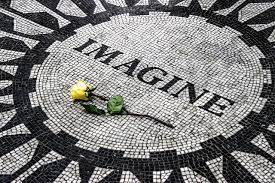
Which brings me to Lennon’s famous and infamous song. It’s not one of my favorites and never has been, but I have a different understanding of it these days, informed in part by hearing a bit of an interview with Lennon shortly before he was murdered, but perhaps more from my own widening perspective. I always thought of the song as an endpoint. That the imagining was the goal. But really it’s just a necessary step. We can all imagine worst-case scenarios: our government and law enforcement systems let those nightmares shape a lot of practice & policy, for better and worse. But most of us don’t spend much time imagining significant, creative change. Maybe that’s why we keep implementing small, makeshift changes instead of restructuring the systems that created the countless small problems. Instead of inventing an energy-intensive meat substitute, dismantle corporate farming; instead of reducing some criminal sentences, create alternatives to incarceration.
Hard to imagine? Exactly. It seems worth the glucose (a term for energy usage that Roshi Joan Halifax uses regularly, and which I am stealing) to try. How much glucose do we spend catastrophizing? I read an excellent article a few years back arguing that Black writers had wasted too much of their energy writing to a White audience, defending their humanity or what have you, when they could have been writing for each other, and Imagine what they could have accomplished if they had.
One more point on imagination, and a bit of credit to your writer. I think someone did my astrological chart when I was a child and even though (even then) I didn’t really believe in that stuff, I liked the interpretation that I was good at seeing a situation from all sides, so I clung to it. This is, of course, an act of imagination. It may be a kind of cognitive resonance, a logical imagining, but it’s still creative. I clearly passed judgment on different kinds of creative thinking and decided this one was okey dokey. Why? Perhaps because I wasn’t criticized for using this skill, whereas my other creative failings were not infrequently critiqued or diminished. It’s a skill I still prize, but one that I keep to myself more these days. Being able to understand someone else’s motivation or thinking leads some vocal parties to align you with “them:” the other, the criminal, insurrectionist, White supremacist, etc. so introducing any understanding, which is a form of compassion, is counter-revolutionary (or just plain old evil). A lot of people simply don’t want to imagine why others might think a certain way. Are they afraid they’ll be sucked into the dark side? afraid they’ll have to see the enemy as human? afraid to feel compassion for someone they have judged as “bad”? It’s a disturbing and frustrating blind spot, and an impractical strategy as well. If we don’t try to understand the other, we’ll never be able to genuinely reach out to them and make our case in a way they can hear. And I don’t believe we can succeed in resolving the enormous, wicked problems of our time without recruiting as many folks as possible.
I admit, I still feel my body tense up when someone asks me to take a moment and imagine something – when I’m on a Zoom about prison abolition or white supremacy, for example; but I try to just note that physical reaction and dive in for as long as I can stand the water. If nothing else, it can be a fun exercise. At least when I am able to silence that voice in my head telling me my ideas are uninteresting. What the fuck does she know, anyway?




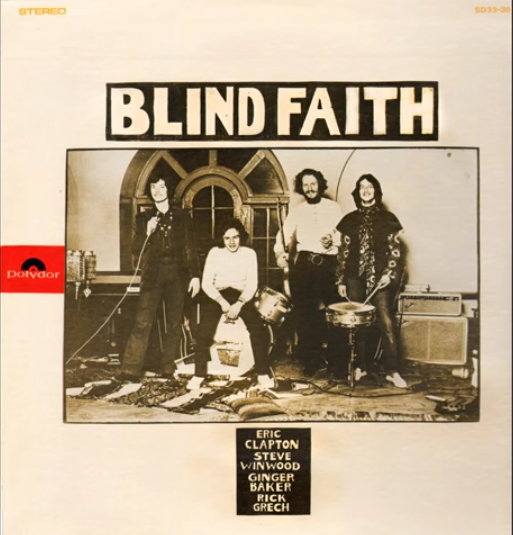 Lucky happenstance brought me to Can’t Find My Way Home, a onetime alltime favorite song of mine.
 Some of you may know that I struggle with deeply seeded self-loathing, despite actually liking myself quite a bit. I tried DIY brainwashing, which didn’t work. (Maybe I need a guru? Ritual? Drugs and a sex cult?) I’ve also tried changing my inner monologue – rejecting negative commentary, not allowing my dog to critique me in a voice that sounds a lot like mine. It’s really hard, y’all. Maybe if I put “be nice to Zoe!” signs in every room of my house. And on the inside of my glasses. And in little notes in all my books. And in post-its on every screen I view. It takes a ridiculous amount of attention.
 Two hours ago, the Minneapolis City Council voted, in a veto-proof majority, to Defund the Minneapolis Police Department. This will be a hasty post, but I’m just sooo excited, friends!
 It’s been years since Fiona Apple’s last album, as it usually is. She’s a hermit who hates giving interviews and rarely leaves the house, a protegee who released her first album at 19, back when that was unusual, and proceeded to make an award acceptance speech that marked her as a freak for as long as people decided that lasted. And she does seem to be a bit of a freak, as so many of us are. What does Fiona have to contribute to the latest, most conscious wave of feminism?
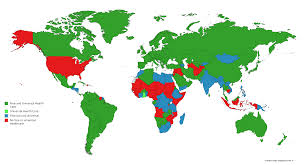 The whole country is in emergency response mode now. But there were plenty of people in emergency response mode before coronavirus reared is crowned head. So many great ideas are being thrown around – tuition forgiveness, free health care, rent forgiveness, money simply sent to people who need it – all of this because people are in economic distress “through no fault of their own.”
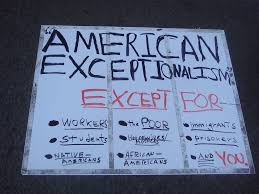 Oh, so many mini-strokes listening to Trump try to calm the country after failing to respond quickly and appropriately to a pandemic, but one particular phrase is a pet barfpoint of mine.
 I had a lovely day today. Nothing special. I had planned to spend most of the day writing and reading, but instead wiled away the hours interacting with folks and art. My journey began at a too-popular bread n breakfast place. Tables freed up one at a time as I anxiously waited for a place to plant my incipient biscuit sandwich. A 4-top opened up when I reached the front of the line, and I took it a little guiltily, checking to see if a nearby twosome was getting up anytime soon so I could swap out my spot.
  I’ve been thinking a lot about justice lately. (Pick your reason.) I’m particularly interested in our default definition of justice and how the tight circumscription of that definition keeps us from exploring ideas and actual practices that might benefit victims, society, and (heavens!) the perpetrators themselves.
  I haven’t put together any real resolutions for this year, though they always tempt me. My fantasies of symbolic slate clearing (post-rain, new years, moving) is at odds with my aversion to goal setting, so here I sit, wobbling on as usual. I suppose this behavior is more Buddhist, even if I got there by defeat instead of acceptance.
 (There may be a related “political non-violence” piece in the works, but that will have to go on the race blog. By the way: upcoming Race Blog!)
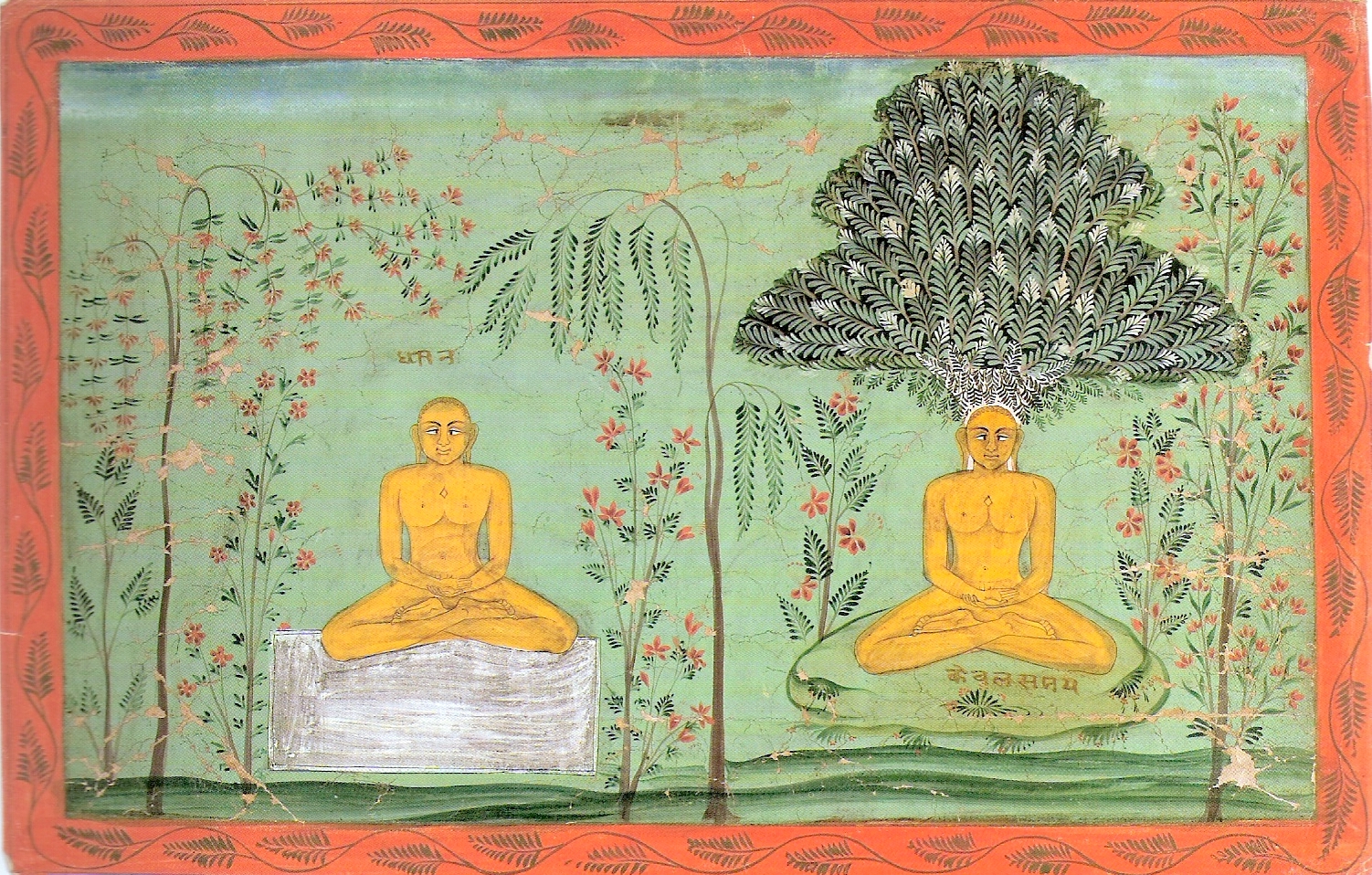 A lot of people come to meditation through drugs. Usually in one of two very different ways. Either they find meditation as a respite and palliative from alcohol and drug addiction and toxic patterns of behavior, or, like the recently deceased Ram Dass, they touch another, entirely different world through drugs – psychedelic drugs – and seek a spiritual life as a way to hold onto, or expand upon, or share that world.
 clawing my way to enlightenment