Meditation as Practice

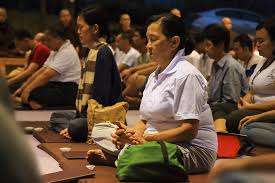
group meditationHi, folks! It’s been a while. I’ve been all sorts of busy lately, with classes, work, and taking care of stuff that is even more challenging than blogging, believe it or not, including setting up a new blog. I cannot tell you how much I loathe making the countless decisions a new blog requires. But I’ve also decided it’s important, so it’s taken me away from writing time. I’ll let you know when that’s good to go.

I did hit up a 2-day Vipassana retreat last weekend, which is a good way to kick off the re-initiation of the writing life. Not so great, maybe, when you start composing blog pieces in your head as you’re supposed to be meditating, but that’s what happened. Accepting what comes up is just as important as redirecting back to the body & breath, right? Since pen and paper aren’t allowed on retreat, I’ll try to recall my no-doubt-brilliant ideas as best I can.

My mulling was not over the practice of meditation, but meditation itself as practice for life. This is the reason I meditate, and probably the reason I keep going back to Vipassana, despite the rules and rigor, instead of some other practice (well, that and the commitment to financial accessibility). I don’t meditate to reduce stress or relax or be happier, though that happens. I meditate in order to make myself a better person. Not better in the sense of more ethical or helpful or kind (though they tend to latch on like burrs, too), but better in the sense of less judgmental and less reactive. To me this is the key to everything I want.

If I can sit through a burning pain in my leg without walking away, maybe I can listen to a coworker say something offensive without throwing a correction in their face. If I can sit with that pain without labeling it bad, maybe I can accept the person without labeling them racist and have enough compassion for their unavoidable experience to find out where that comment came from and engage them in a discussion that might create a space for them to hear me (and me them), instead of defending themselves against my impulsive reaction. If I can allow waves of tingling sensations to flow through my body without seeking to hang onto them, or mourning their departure when pain inevitably returns, then the next time I’m walking down the street laughing with friends and someone approaches me for money, maybe I can meet them squarely and fairly in that moment without being angry about the intrusion of the world on my fun time.

And maybe, maaaaaaaaaaybeeeeee if I can stop critiquing my experiences as good or bad, I can stop likewise critiquing myself.

Oh, I also intend to reach enlightenment. And end all my suffering. Cranking the sitting back up to an hour a day should do it. Onward!


Harper’s Scary

Long Live Bad Puns!

harpersI’m afraid to open this month’s Harper’s magazine, which our mail carrier crammed into my mailbox a week ago, over the objections of a squirrel-deformed jack-o-lantern, a Día de los Muertos calavera, and the dog.

I’ve subscribed to Harper’s continually for nearly a decade, and periodically before that. It was a primary source when I was writing about forgotten female horror writers of the early 20th century in grad school. The Guy & I have a monthly ritual of quizzing each other on the Harper’s Index at breakfast, and the Readings section has provided some of my favorite hilarious lists, bizarre transcripts, and brief personal narratives of all time.

But the last year has made me question my loyalty. It started with the rambling, pathetic, not-mea-culpa by John Hockenberry, entitled My Life in Exile. Continue reading “Harper’s Scary”

Climate Concern or Clever Self-Loathing?

mr yuckI understand Climate Depression; I’ve definitely sunk into it a few times this year. (The More You Know!) But what haunts me far more frequently is Climate Anxiety. It manifests as a pair of equally insidious Mxs. (plural for Mx.) Yuck-type parasites that sit on my shoulders, choking off any organic action, shouting contradictory half-remembered rules before every eco-related decision I make, and squeezing out any space reserved for the mythical good angel, who would tells me that I am okay. Well, eco-decisions can’t happen more than a couple times a day, right? Oh ho ho, if only you were right. You see, the indomitable bond of too much climate knowledge and too much self-criticism is far more powerful than either one alone, hamfisting its way into my consciousness in countless ways. For example:

You should go work out so you don’t get depressed

  • but that just burns more calories, so you eat more food
  • and leave a bigger footprint
    • jesus, are you kidding? what good are you when you’re depressed?
    • what good am I when I’m not depressed?
    • well, for one thing, you’re less likely to eat chocolate picked by enslaved children in Africa and shipped half way around the world for your pleasure
      • you know, the world’s running out of chocolate: do you need the chocolate? doesn’t someone need that chocolate more than you?
    • fine, I’ll go to the gym
      • you’d better bike
      • I’m going to bike
        • yeah, but you were going to go to the hardware store later; maybe you should go to the gym on the way; it will save time so you can get more accomplished today
        • too bad you’re not a real environmentalist – then you’d find a way to haul that lawnmower home on your bike
          • *sigh*
          • fine, I’ll drive; but it’s only on the way if I go to the other hardware store
            • is that one farther? then you’re contributing more CO2
            • yeah, but doesn’t the closer one engage in more unethical practices?
          • Shut up! I’m biking!
            • good
            • yes
            • even though you’ll use the time it eats up as an excuse to get less done today
          • My bike bag’s filled with crap
            • careful what you do with it!
            • what kind of crap? recyclable? compostable?
              • some kind of plastic
                • recycle it! Wash it out first.
                • No, don’t! That wastes water.
                • you have to wash it so it’s not tainted
                • is this even recyclable anyway?
              • there’s food in it…
              • COMPOST IT!
              • damn, you waste a lot of food; you should be ashamed of that
                • I am
                • not enough to stop doing it
              • but what about the plastic? what’s the number on it?
              • can you even read it? your eyes are terrible. probably because of all the sugar you eat; sugar’s destroying the swamplands, you know
            • Fuck it. Just throw it all in the garbage. The world’s ending anyway.

… leaving the door open for climate depression.

So that’s about 5 minutes of my life. Not every day. No… every day, but not always that bad, or maybe it will only happen 5 times a day. But on days like yesterday and today, when (hormones? low iron? gray skies?) I am walking that fence between depression and functionality, there’s barely time to regroup between episodes. I can literally do no right, so it’s difficult to do anything without a looming sense of doom.

This is despite knowing that most of the things I agonize over have little impact on the climate. Little enough to be functionally zero. And that on the flipside, the incessant agonizing itself can be debilitating, preventing me from making any decision, let alone an ostensibly “good” one, and injecting a cloud of fear into everything I do, climate-related or not.

Because when it comes down to it, it’s not about climate. It’s about self-loathing. There’s a theory (which has worked for me) that a lot of back pain is psychosomatic – real pain created by your brain to distract you from difficult feelings. It manifests as back pain because your brain is an avid trend-follower, and knows that lots and lots of people have back pain, and the sources are often inscrutable and cures unsuccessful, so it creates back pain. My brain is doing something similar, and gadblessit, it’s trying sooo hard to protect me. Just as it used to do with my back pain. But instead of throwing a blanket of physical pain over me to distract me from anger and sadness, it’s trying to make me perfect so that I will be lovable. It’s not about the environment. Eco-morality is a convenient rubric by which to judge and critique and guide and advise me into becoming a good and worthwhile person.

I know this, too. But there’s knowing and there’s knowing, right? I’m going on vacation in a few days, and I was thinking of trying to take a vacation from Mxs. Yuck as well. To see if I might be happier, more productive, ultimately better if I refuse to indulge the voices that are trying to make me better. I’m thinking about it, but it’s hard because the Yucks are almost always right. What right have I, a middle class American White woman, to stop worrying about ethics for a week?

  • But, Z, you’re just making yourself miserable. What good does that do the world?
    • What good does abandoning morality do the world?
  • You couldn’t abandon morality if you tried.
    • But that’s because of Mr/s Yuck.
  • No, it’s not. You have to trust that it’s in you.

Trusting yourself. Another thing the Sloathed (for self-loathed: I’m trying to get this trending: hah? haah?) suck at.

What would it take for me to unplug the voices and let it all go for a week? Massive amounts of mind-altering substances? Positive reinforcement? Will the world survive if I stop yelling at myself? Of course it will, but I still feel nauseated just thinking about it.


Do All That You Can

climate strikeI have a hard time just doing what I can. These days (ugh) in particular. There is the desire to shame myself for not doing more. You know the quote?

Do all the good you can,
In all the ways you can,
To all the people you can,
As long as ever you can.

The provenance is in question, but it was probably some religious leader. I should know better than to take advice from relgious leaders. But I’ll cheerfully latch on to any opportunity to criticize myself. Wheeee!

So I can read about Climate Change and create bite size chunks of facts for Minnesotans to absorb at the State Fair and write blog posts read by ones of peoples and bike to work and not have kids and skip that flight back to LA to see an old college friend. But I still felt obliged to attend the Day of Action for the Amazon (or whatever it was called) in the Cargill section of the Minneapolis Institute of Arts. Do all that you can.

Sooo not in my wheelhouse.

So not in my wheelhouse, in fact, that once I surmised the size (small) of the protest group, I decided to give myself a night at the museum instead. I don’t go to museums nearly enough! Being present with art is probably of equivalent spiritual value to the protest’s social value! Maybe I can weight them equally? Did I perhaps research whether the museum was open late that night before committing to the action? Was I looking for a smooth way out of the lack of fray, if the situation was fray-less? I’ve said too much already.

I have no problem being a number in a protest – one of thousands or even hundreds. I know that numbers are important and I’m happy to add to them. But to take public, political action in a small group requires certain qualities that I just don’t do well.

  1. Keep it simple, stupid

I hated this when I had to do it in door-to-door canvassing, while completely understanding the need for it. To me, nothing is simple. Everything has nuances and unknowns and alternate theories and history and gray characters. But those subleties don’t get donations and they don’t get media attention and they don’t get supporters pumped up. Catch phrases do. Rhymes do.

  1. Coordinated speech and action

Or what I like to disparagingly call Groupthink. Part of the problem is you need to be part of the group to be part of the think, and I tend to show up to protests alone and haven’t joined an activist group in a long time. (Ever?) Of course coordinated action can be visually arresting and effective when it’s a mass demonstration (take the prescriptions that rained down in the Metropolitan Museum of Art’s Sackler wing) and chants and songs can show energy and purpose, and rouse spirits and draw attention. But coordinated action doesn’t seem coordinated unless it’s en masse, and I can rarely listen to a chant without judgment. I cherry pick my chants, and that’s not what organizers are looking for. Here’s what I hear from the maybe 30 or so people gathered outside the museum after their action.

“Did you hear? That museum guy said ‘a museum is no place for social activism!'”

“What? Hahaha! That’s ridiculous! Booooo MIA!”

So, was this guy a museum representative? A guard? I’m mostly seeing guards. I mean, was he speaking for the museum?

“Art is social activism!” All: “Art is social activism!!! Art is social activism!!!”

Sure, sometimes.

“Social activism is Art!” All: “Social Activism is Art!!!”

Hm. Much less so.

So I walked away, and they all chanted a little longer and took lots of pictures and seemed very pleased with themselves. And that is great. I am not being facetious. Those people have to exist – people with strong beliefs who are unashamed to be one of a few mounting a protest that will get no press and disrupt almost nothing. Because that is where things start. But I am not one of those people. It hurts my soul to pretend things are simple, because my soul is a place of complexity and confusion and contradiction. How do I Do All I Can if I don’t do this? Is this something I can’t do? How is that defined? What does the word “can” mean? Does doing all you can mean giving up everything in your life that isn’t benefitting someone else? If that keeps you from sustaining yourself as a human, isn’t that detrimental to the cause? If I gave up my job, my possessions, my time, my beliefs, would that be enough? Would anything ever be enough?

Of course not. And I do accept that I am not going to completely dedicate myself to the world outside myself. But I also know that what I do is not enough, and what I’m good at doing doesn’t do enough. So I’m going to the Climate Strike on Friday.

*sigh*

Maybe there will be lots of people there and I can fulfill my role as a body without angst before biking home, reading something important, and watching BoJack Horseman. Cross your fingers for me.

Memorializing

holocaust walk
Holocaust Memorial in Germany

I don’t have a problem with the annual memorializing of 9/11. But last month marked the 400th anniversary of the beginning of slavery in the US, acknowledged only by some segments of the press and small memorials here and there. It would have been easy to miss it entirely. It makes me wonder what we commemorate and why.

I’ve been listening to the White Lies podcast, which is ostensibly an investigation into the murder of the Reverend James Reeb, beaten to death after joining the movement for voting rights in Alabama. But really it’s an examination of the South, and culpability, and how we lie to ourselves in order to absolve ourselves of responsibility. It’s not just the South that excels at this. Our country loves to forget the horrors we’ve committed. Unless we’re turning our crimes into victories, which is a specialty of the South. As is the “memorial as fuck you.” Not just Confederate statues deep into the 20th Century, but a statue of the Klan’s first Grand Wizard a week into the term of Selma’s first Black mayor. In 2000.

Perhaps this makes sense to you. A country doesn’t want to rest on its mistakes and crimes, it wants to celebrate its achievements. It wants to encourage pride and patriotism. So we remember “good” things we’ve done and times when we were victimized, but not anything for which we were responsible, in which we fucked up. But I keep thinking of Germany and the ubiquitous reminders of the Holocaust. There is another way to do things. It might help our understanding of history and mitigate our arrogance if we acknowledged African slavery and Indian genocide in the same way.

Of course, Germany made reparations to Jews. I don’t know if they could memorialize if they hadn’t. How would we feel in this US if we were constantly reminded of those crimes against humanity, while simultaneously recognizing that the structural racism and oppression continue. Someone might want to do something about it. Who knows where that could lead.

Then again, right wing racists are on the rise in Germany, too, so maybe nothing does any good.

Now I’m in a bad mood.


400 Years Ago (+ several days)

1619I was going to post about how my critical self likes to take stock of my failures at the end of every season, but I think the cute, self-deprecating, sad overview can wait. Because where I really fucked up was in not writing about the 400th anniversary of the beginning of slavery in what was to become this country by what were to become the admired White settlers of Jamestown, in colonial Virginia. You can look it up. The image above and quotes that link to excellent work are in the NY Times feature, The 1619 Project.

Slavery is not a blight on this country’s fine history; it is not a shameful period of time with a beginning and an end. It is this country. The United States is a country of brutality and greed, where we have always put profit above people. Our government has had to be forced, by disruption and death and citizen disgust, to make every expansion of human rights that we have grudgingly, eventually agreed to. Maybe that’s the way it always happens. I’m not enough of a student of history to say for sure. But when I read that Trump’s “least racist person in the world” line is about as close as he’s ever come to accurately quoting Thomas Jefferson, who repeatedly insisted that, “nobody wishes more than I” for abolition, while enslaving Black people and profiting financially and sexually from their exploitation, should I really be surprised? Should I be shocked that the legacy of slavery infects our very language? Should I not expect that our country would lead the way in pushing humanity towards extinction?

There is some debate that the Anthropocene (the geologic era of human influence) would more accurately be called the Capitalocene (the geologic era of capitalism), because it is not humanity that has warmed the planet to the point of crisis, but carbon-fueled capitalism. And what is capitalism but the pursuit of financial gain at the expense of everything else? (But the invisible hand, you say, what about the invisible hand?? The invisible hand is, in my view of the moment, nothing but an excuse to pursue wealth uninhibited by ethics. You, capitalist, don’t have to worry about whether what you are doing is wrong, because the market will correct you if it is. Look at the world and tell me that isn’t bullshit.)

But the heedless racing toward mass extinction is only one example of our culture of slavery. Capital punishment is another. As is mass incarceration. Bryan Stephenson (maybe the new Buddha/Jesus?) writes in the above 1619 feature, “Slavery gave America a fear of black people and a taste for violent punishment.” A country of slavery would also be expected to hurl barriers in the paths of non-white humans trying to seek safety therein; to use food and deprivation as weapons; to deny health care, etc. The idea that those lucky enough to buy themselves a good life have somehow earned it is as backward and unscientific as the belief that Europeans are of a different and superior species to Africans.

Slavery is an economic system in which countless lives are destroyed in order to fill the treasure chests of a few, and those lives are vilified in order to justify the destruction. Whether smearing the victims as racially inferior, lazy, greedy, better off, ignorant, foreign, stupid, dirty, insignificant, or violent, it’s all the same. It’s all a way to make brutality palatable and selfishness noble. And it will destroy, if not all of us, then certainly the lifestyle that it has created.

I’m feeling despondent today, but not depressed. Yay for me! Boo for you.


this is just a link to a thing on the Amazon

I’m not up for writing today, and this is the time I have to write. Sorry, folks. I’m going to make tomorrow’s lunch, read some more Stamped from the Beginning, and leave you with this characteristically excellent piece on the ravished Amazon from the vlogbrothers: https://www.youtube.com/watch?v=zhESYHHbzsc .

“There has never been a greater reminder that nationalism is a disaster of an ideology.”

Minnesota White

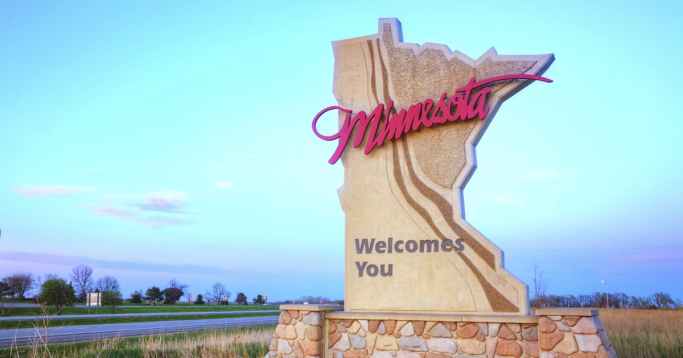
mnniceLast night was the last night of our 6 month, once-a-month, Unpacking Whiteness exploration at the Zen Center. I honestly got more out of it than I thought I would, and when we went around the circle to give a brief comment on our reaction to the process as a whole, mine was that I was surprised how much I learned from the White people in my group: that I’ve been exploring this topic for a while, unlike many of the participants, and hyper conscious of race my whole life, unlike (based on what they’d said) nearly all of the other participants, and I wasn’t sure I’d get much from the others in my little circle. But every week someone brought up something I hadn’t thought about, or hadn’t been able to put into words, or hadn’t been brave enough to confess to, and I deeply appreciated both what they gave me and the hope they gave me for the potential of other White people. Not that this group of Zen meditators is representative of all White people, but still, I’ll back pocket that optimism.

After we had all said something, anyone was welcome to pick up the talking piece and say whatever they were inspired to add. I didn’t think I had anything else, but a few people’s comments sparked (another!) revelation, and I decided to share.

So many Minnesotans I’ve spoken to talk about never having had Black friends, about having grown up in an entirely White community, about having no relationships with people of color, and it occurred to me that the very culture of Minnesota may in fact be racist.

I doubt that is the main reason why this state is still so white. I would but the biggest blame on the racial covenants that are just now coming to light, the people harassed out of their homes, the lynchings in Duluth, etc. But if you look at Minnesota today, how welcoming is it to people who aren’t White, Christian, and Mild? Minnesota Nice isn’t just about passive aggression and passing politeness. It means you made all the friends you’ll ever need in 5th grade, and there is no reason to let strangers into your life. It includes complaining about things to everyone except the people who can do something about it. It means not talking during a movie, but also not having the huevos to tell the person who is talking to be quiet. It means glaring at the person who laughs too loud; and calling the person at work who answers an emailed question directly, without copious smileyfaces and explanation points, “rude.” It means an inordinate amount of people who do not like to be touched, a preference I’d never before encountered. It means that social anxiety can go undiagnosed, because that’s just how people are here. If you are physically expressive, people think you are dramatic. If you are physically affectionate, people think you’re an artist. Or gay. (You probably are.)

I brought this up at work a few years back, when we were talking about culture. (This was before I was brave enough to bring up the fact that we were entirely avoiding a discussion of race.) Nobody was volunteering an answer to the HR Director’s question, so, like many before her, she went to me, because she knew I’d have something to say. I don’t really have a problem with that, except for that fact that in this workplace it is sometimes used against me. But fine. I decided to grab the spotlight and broach the issue of Minnesota culture.

Being indirect in speech, being passive, continually deferring to others is perceived as “normal” here. I know I am perceived as different or bold or whatever because I express opinions when asked, because I sometimes reveal what I know to be true, because I have the gaul to disagree with someone in a meeting where we are supposed to be giving feedback on a topic. You think this perception is normal, but it is not. It is cultural. My behavior was not unusual in Chicago or Los Angeles. It may have been slightly less typical for a woman, but it was not abnormal. You think it is abnormal because people do not typically behave that way in Minnesota, but your standard is not universal, and people who don’t follow that standard should not be Otherized.

Despite the reality that what I actually said was far less coherent, I had several people approach me in the days after that training to express how I’d opened their eyes. It was kind of stunning.

So my revelation last night was looking at this culture through a racial lens and finding even more that was unwelcoming. If I, a run of the mill middle-aged White woman, perceive this culture as repressive, what kind of impact does it have on various people of color? People who might culturally express themselves through spontaneous song or dance? People whose religion is built on argumentation? People who express trust and affection through touch? People who laugh loudly and look for friends across borders? So the Jews plant themselves in St Louis Park and surround themselves with other Jews. And then the Hmong came. And the Somalis. And they also tend to plant roots in neighborhoods that cater to their own culture. And why wouldn’t they? I don’t blame them, and I don’t think it’s all about the language or affinity bias. Minnesota, even Minneapolis/St. Paul, is dominated by a White, Christian culture in a way that Chicago and Los Angeles were not. Yes, the uber-culture in the US is always White, but there was too much of a mix of folks in LA & Chicago for any one cultural standard to dominate. I can’t define either of those cities by culture. When people do single something out, it’s usually an aspect of White culture, like the hippie laid back Californian, but that’s never representative. Minnesota Nice is far more accurate.

So it’s not just the poor transportation and the ridiculous rental  prices that keep the Twin Cities from becoming Manhattan. It is our culture of Whiteness and Christianity. It’s oppressive and it is inherently exclusive. And it keeps these goodhearted meditators from having Black friends and Latino neighbors. It makes me sad, but recognizing something concrete always inspires me because concrete can be broken up. I felt inspired when I broached this in the circle last night. I thought it was another eye-opener, another way in which life could be improved for everyone. Something else we could work on!

But no one talked to me afterwards. No one thanked me for this awesome peek behind the curtain. No one openly agreed with me. Of course, that may be because I headed straight for my Chacos and walked out right after I helped put chairs away. I’ve never felt entirely welcome in the Zen center, and that also makes me sad because I set admittedly high expectations for Buddhist communities. Too much ceremony & formality for my comfort? Too little magical ability on their part to reach past my defenses and psychically will me to stay and commune? Aren’t they all enlightened already?!

yeah.probably my own weirdness.

Citizenship

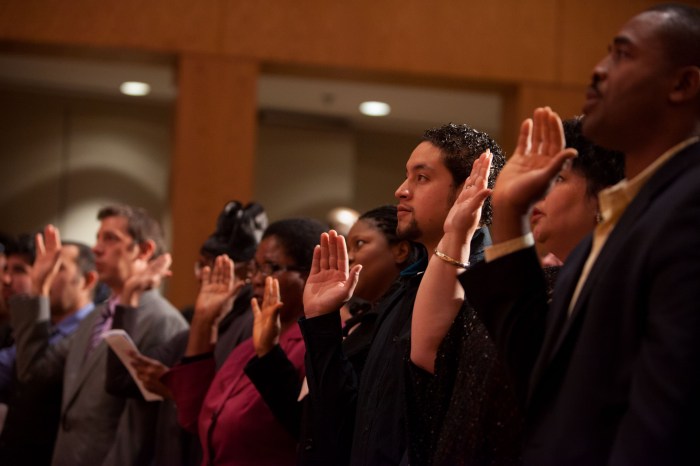
naturalizationI wasn’t going to write anything about the impressively racist Trumpeet that grabbed the headlines this week. What is there to say? I don’t have a broad audience – everyone reading this feels more or less the same about it; everyone recognizes the xenophobia & ignorance & historical resonance.

But a months-old note to myself and another exceptional On the Media interview have given me a bit more insight, so I thought I’d share. Continue reading “Citizenship”

Do What Works, Instead of What Makes You Feel Good (The End of Empathy pt. 3)

cc imageSorry for the inconsistent posts, folks. I’ve been wrapped up in a State Fair exhibit and thus entrenched in Climate Change lit. It’s taken an emotional toll, to be honest. I’m not proud of that. Oooh, middle class American White Lady feels bad about the warming planet. Pooooor American White Lady. Yeah. I’d like to come up with a better excuse for the depression that engulfed me when I dove into this swamp, but this is what I’m left with.

Happily, a different kind of climate change book has been helping me cope. I just finished Don’t Even Think About It: Why Our Brains Are Wired to Ignore Climate Change, which got me to jump off the doom train and mount the bipartisan babble bicycle (sorry). I loooove books about the human brain and how it fucks us up. The Invisible Gorilla, Why Buddhism is True, and the somewhat discredited Thinking Fast and Slow are all excellent. This is another in that genre, but with the specific task of improving communication about climate change in order to push us towards a critical mass of action.

There is a lot of excellent information here: about our attachment to identity, our need to conform to the ideologies of the social group we’ve chosen, the way we assess risk, confirmation bias, etc. I could nerd about all of it for paragraphs, but I’m committed to the same goal as the author; improving communication and action on climate change. With that in mind, here is my biggest takeaway from the book.

Do whatever the fuck it takes to get people to move on climate change.

Maybe that’s a big extreme, or maybe it’s not. I could say that whatever the fuck it takes means chaining myself to an oil derrick or lying down in the middle of a freeway or  blowing up a CAFO, but would that really be more effective that building support for carbon-reducing legislation? Most likely any non-believers who heard about my awesomely dramatic actions would be gifted with yet another reason to shun (what they view as) my “beliefs,” so those performances aren’t actually what it takes to get shit done. Let’s adjust:

Do whatever the fuck it takes to actually get people to act on climate change.

This is harder, because it’s not about declaring my convictions or self-righteously putting myself in harms way. It’s about doing what actually works, instead of what makes me feel good. And what works is letting go of my own narratives and beliefs and biases in order to join with my Others to fight the real enemy: the end of humanity and the world as we know it. (I don’t say the end of life as we know it, because that’s not necessarily an enemy or a bad thing. Moving towards a lower carbon lifestyle is necessary and can be even fun.)

This means I have to stop thinking of CC nonbelievers as stupid or sheep and start seeing them as vulnerable little human beings just like me whose circumstances have led them to the same kind of groupthink and bigotry and skepticism as mine have, just from the other political side. They critically distrust authority like I critically distrust the White House. They believe their community of caring, like minded people just like I do. They mold evidence to match their ideological beliefs just like me.

If I want them to join the fight against global warming, I have to make it their fight. I can’t just wait for the government to draft them into my war.

How do I do that? My embracing religious perspectives, by expanding the consequences of CC beyond the realm of environmentalism, by moving away from blame. It feels so good to blame, but it’s worse than unproductive. We have shared values, and if we identify and build on those, we may actually be able to fight the corporations that don’t have values because they’re not people with consciences but vehicles of production and profit, and the politicians who don’t have values because they’re only interested in what will get them through the next election cycle.

What are the shared values? Protecting children, being responsible, enjoying life, making decisions for ourselves, and maintaining good health may be a few.

So I clearly have the brilliant idea. I could work on turning it into actual communication. And I’ve tried a bit of that with the abovementioned exhibit. But how much is that really going to do? Who else should I be reaching out to? Through what medium? Why would any of the nonbelievers believe me, a believer, anyway? Any ideas on how to disguise myself? Help?

Responsibility v Fragility

white liesI don’t believe in free will. We can argue that another time. Right now I’d like to briefly discuss what this means when confronting issues of white supremacy and racism.

Denying free will does not mean denying responsibility. Certainly, one could choose to use it in that way, but that’s not my bag. Within the given framework that my actions are the culmination of everything – universally, politically, genetically, environmentally – that has led to the moment in which the action was taken, I still acknowledge some kind of “me” who understands ethics and feels compassion and has a history and as such, I am responsible for my actions. I am where I am because of the circumstances that have led me here, but now that I’m here, I am part of everything that has contributed to my current state. If this doesn’t make sense to you, I get it. I can’t explain it in a way that even I can fully defend, but it is what I believe.

Similarly, White people must accept responsibility for racism, even though their position of power, their privilege, and their ignorance may not be consciously chosen. We are where we are because of white supremacy, and we have hurt people with our words and our actions, inevitably. Taking responsibility means different things for different people, but I do think it must include recognition of current, pervasive, devastating and dangerous racism, and our complicity in it. For most of us, that means talking about it.

The White producers of the podast White Lies say that in their home state of Alabama, all the White people they tried to interview about racism and the Civil Rights movement said they’re tired of talking about all that. When asked when they did talk about all that, what deep, soul-searching conversations led to all this exhaustion, of course there was no answer. Because they have never talked about it. White people are worn out from all the conversations they’ve never had.

I’m not mocking them. It is exhausting. Carrying the collective knowledge of the shared White guilt of centuries of oppression is fucking exhausting. But the weight isn’t lessened by avoiding it. Talking about it, accepting our participation in racial injustice, actually does help. I have been talking about race for a while now, and I am here to testify, folks, that you can build White Racial Stamina. Can I get a witness! I’m not as fragile as I used to be; I can (sometimes) accept responsibility and recognize my complicity without emotionally devastating shame. It’s an endless journey, but I’m definitely further along the trail than I was even a year ago.

I am a living part of a living world, and just as there is no impenetrable barrier between my organs and the environment that keeps them functioning with Oxygen and water, there is no impenetrable barrier between my actions and the actions of the history that led to me. Breathe it in, clean it up, exhale the waste.

Anger (The End of Empathy, pt. 2)

rageAh, Anger. It’s the hip vibe of the Trump era. Friends and acquaintances and annoyances and feminists and proud white supremacists all sing the praises of anger. It’s the caffeine of activism: perceived as necessary to wake up.

Trying to categorize sensations or psychological states as feelings or emotions is about as difficult as trying to distinguish between Empathy and Compassion. Just so we’re on the same page, though, let’s agree to this: emotions are uninterpreted physical sensations: they start in your body and often are almost instantaneously translated into something else (one of the things meditation tries to slow down), but they are real things, no matter how you interpret or indulge in or ignore them. Feelings or secondary emotions (don’t ask me to distinguish between them), are emotions interpreted on a very quick and base level: maybe fear or anger or attraction. I used to be a proponent of the Two Emotions: Love and Fear theory (pretty, isn’t it?), but now I buy into four: pleasantness, unpleasantness, arousal, and calmness. These are vague and hard to describe, but I think that’s the point. Meditation in the back yard on a lovely summer day: calmness; light breeze: pleasantness; neighbor’s dog growls menacingly: arousal; dog bite: unpleasantness; your neighbor calls you an asshole for bothering their dog. Anger is the most obvious next step, right? Probably. The neighbor’s reaction is unjust, and you have been done wrong, which typically leads to anger. And that’s fine and natural and all that.

Here’s the thing: the anger may be caused by the injustice, but it isn’t necessary to address the injustice. The most gut-level, emotional reaction would be to punch the person or kick the dog or both. Most of us would agree that this is not the ideal reaction, however, and few of us would do it. Maybe we know the neighbor’s going through a rough time, or the dog is sick, or maybe now that you think about it, you might have accidentally hit it in the face when it startled you. There are reasons why you don’t act on your anger.

And yet, people love to talk about how anger is necessary to social justice work. I simply don’t believe that the most effective actions that have been performed in the name of reform and progress are actions of anger. The anger may well have helped the recognition of the social ill, but acting in anger, instead of assessing the situation, looking at the history, finding an appropriate organization through which to organize, or a creative way to call attention to the issue, is typically feckless and often disastrous.

I used to love the saying, “if you’re not outraged, you’re not paying attention,” but now I find it offensive. No one should judge or police anyone’s feelings. You can be informed and aware and active and mindful. You don’t have to buy into anger activism. At best, the anger clouds the message of the activism. Did the marchers in Selma act out of rage? No. Were they angry? Fuck, yeah, but that was not how they chose what to do. They marched because of a reasoned decision that this action would bring attention to the cause and have the greatest national impact and likelihood of changing the law. Nonviolence itself is a suppression or redirection of anger. Action in anger leads to riots.

Maybe you like riots; maybe you think they’re effective. I can’t say you’re wrong, I can only say my heart hurts when a single innocent (no one is innocent, yeah yeah) person is hurt in blind anger. Not only is it immoral (the forces that led to it are immoral, yeah yeah), it makes those in the right look like they’re in the wrong. It’s a terrible recruiting strategy. It is true that the organizations working for civil rights in the South in the sixties knew that white kids would have to die before the national media would pay attention to what was happening, but they didn’t kill those white kids. Riots are understandable, and they may sometimes lead to indirect positive action, but the pain caused is deep and awful.

My father was extremely angry, and did not hide it. He did a pretty good job of not expressing it in the form of physical abuse, which his parents did, but the threat of violence was always there nonetheless. I wasn’t really allowed to be angry around him, so I suppressed it or let it out in short bursts of screaming to punk music. And then when I got out of the house, I exploded with anger all over Los Angeles.

When I was in college, anger was my #1 go-to secondary emotion, by a longshot. And it suuuuuuucked. Yes, there was something invigorating, something exciting about it, but at the same time I could feel it eating away at me, depriving me of sleep and joy, draining me of energy and focus. I chain smoked and cut myself to release some of the stress of that raging rage, but my main outlet was on the streets of LA, where I could drive recklessly and aggressively and yell at people from the bubble of my car without consequences (usually), and lay on my horn and speed on the freeway at 3:00am. But none of it made me feel better, and some of it was truly dangerous.

I am now a recovering rageaholic. If you catch me on a bad day, I don’t look like I’ve recovered much. (My partner would agree.) But the bad days happen less since meditation, and even better is my ability to move on when I am overtaken. I used to cling to anger, because it is energizing and it feels purposeful. It can be a kind of hot, thrilling mania. But I have never made good decisions while I was angry. Most of the really embarrassing moments in my life have been born in anger.

I know there’s a popular book about the power of women’s rage. I don’t need to read it, but I’m sure it has value. Black people have historically been pressured to stuff their anger because of the manufactured stereotypes of primal, unbridled emotion; and because it could sometimes get them killed. And of course that’s horrific and of course women and Black people have the right to be angry. Anger and rage are a part of life, but sanctifying rage or dwelling in it is always destructive to the rager, and often to others. Maybe I’ve put too much weight on this – it’s the longest post I’ve written in months – but a central tenet of the great Claw to Enlightenment is not acting on my base instincts, my raw emotions, the bullshit behavior that’s fucked up humanity for centuries. I’d like to better. I think we all can do better, but we first we have to know what we’re doing.
The End of Empathy, pt.1

(Unnecessarily dramatic title brought to you by the allure of alliteration.)

invisibiliaInvisibilia is one of my favorite podcasts. Given, I only listen to half a dozen podcasts, but that’s because I’m picky, dammit. They recently did an episode on empathy, that left me with at least as many questions as answers, which is, in my view, doing things right.

Before I get into this, I’d like to try and distinguish between empathy and compassion (something the Invisibilia ladies did not do). You can disagree with my conclusions, but good luck trying to find definitive definitions. I’ve read half a dozen interpretations online and no two of them agreed. Even my trusty Shorter Oxford dictionary couldn’t help, for the simple reason that English just doubled up on the term by pulling it from two different languages. Empathy is Greek; Compassion is Latin. As much as I’d like to believe that every word in our ridiculously large lexicon is unique and necessary, it’s simply not true.

But I do think there is an important distinction in the definitions applied to the two words. When they are distinguished, one is taken to mean something like co-feeling: actually experiencing the pain, etc. of another. This is also referred to as Affective Empathy. The other is more like relating to, or understanding, or being able to identify with another. That’s called Cognitive Empathy, but I’m going to refer to it as Compassion, because that’s the word typically used in (metta) meditation, and I’ll use Empathy as co-feeling (except where I’m forced to do otherwise by the language of my sources). Compassion seems to have a level of useful detachment to it, which also aligns with Buddhism; whereas empathy gets you deep in the shit.

You may have heard that empathy is on the downslide in our youth. This conclusion is mostly based on self-assessments that have been administered to college students methodically over the past 50 years, with some cohort-wide behavioral changes tossed in for validation. Most of the guesses as to the why of it all have to do with decreased personal interaction with others due to technology, highly competitive schools and sports, and an emphasis on “success.” I’m interested in why it’s there, but more in our capacity to right the course going forward. And that ties nicely into the “punching a Nazi” culture that has compelled and repulsed me ever since Trump got elected.

The Invisibilia episode hinges on a clash of values – those of host Hanna Rosen, and producer/job applicant Lina Misitzis. Hanna fully admits that her goal, the show’s goal, is to help listeners feel empathy (either definition) for people who they might typically write off. When Lina asked her “Why?” I was stunned, but impressed. To me, compassion is an inherent good. Compassion increases connection and decreases conflict and isolation. It’s what we should be aiming for as a species. The most horrifying thing about terroristic acts is not what they do, it’s that they do not care about the people they perform these acts upon. Religious extremists are terrifying in their absolute assurance that they are correct, and that others are not worth correcting or worth giving a shit about.

(I was impressed with the Why because I think questioning any assumptions is a wise move.) Anyway, Lina’s position is that empathy is not healthy because humanizing people you are opposed to weakens your resolve to fight them. She said she had listened to an interview with the guy who organized the racist Charlotte rally, an interview that let him express himself like a regular person, and it started “fucking with my conviction.” I guess it’s natural that this worried her, but it ties into a couple things that I’ve heard a lot the last few years, and that I disagree with.

First, that anger is a great motivator, or that it is necessary to fuel action.

Second, Don’t Know Thy Enemy.

Third, Compassion is a limited resource.

To be continued soon. Sorry for the delay on this one, dear reader/s.

Listamania

top 10I struggle with lists. Two of my best friends love lists. They try to get me to make my ranked lists and compare them to their ranked lists. Top five movies of all time. Top ten novels. Three best fruits.
BEST. FRUITS.

Lists are hard for me because I take them too seriously. The most recent challenge was contributing my list of 10 to the top 893 songs of the aughts. (Our indie music station is at 89.3 on the dial.) Specifically, the Essential songs. Meaningless. Is it the songs that most move me? The “objectively” best songs? The songs that are most musically representative of the era? Most lyrically aughtian? Should I cover the broadest range of music? Of performer types? It was too much. I think I wound up with a tidbit of each of those descriptions, and after several hours of analysis typed it up quickly and sent it in. Regretting all the breathtaking great songs I left out.

Some of you addicts are drooling to hear my list now. I get it. I would be, too. I truly don’t remember what was on it, but I know I included Amanda Palmer, Missy Elliot, TuNeYaRds, Elliott Smith, Lizzo, Rufus Wainwright, Kanye, and Sufjan Stevens. Sorry to disappoint.

But it’s not just making lists that’s hard; it’s the addictive yet disturbing assessment of the lists of others. I judge others according to how their lists compare to mine, judge myself by how my list compares to theirs, and judge their lists on a scale of my esteem for their creator. A song can theoretically drop a few clicks in my worst of list if someone I artistically respect makes a good argument for it, but I’m more likely to think less of a person for liking something I loathe.

Lists! The easiest clickbait on the internet. Top 10 most gruesome ways to die this year! Top 10 ugliest child stars! Why do we love them so much? It’s not just the thrill of having strong opinions about something insignificant. It seems to fall into that realm of human specialty: categorization. It’s one of our greatest strengths as a species. Evolution has blessed us with exceptional categorization skills. Safe and dangerous, while often ill-defined, are clearly important to survival. I’m sure if I weren’t rushing to finish this I could come up with a handful of others, and most of the unnecessary ones are at least innocuous. The ones that concern me are when we create a list based on a narrow set of characteristics, then label the list with a much broader title, then believe that title and apply those characteristics to the items we’ve decided to put in that list.

What am I talking about? I think my generalizations are no longer serving me.

You smile and say hello every morning. You tell me I have a wonderful dog. My dog likes you. I put you in the “nice” category. You mow my lawn after I break my leg and I upgrade you to “good.” Now that you’re in the good category, everything you do is colored by that label. The longer you stay in the good category, the harder it is to get booted from it. You say something that might be sexist and I attribute it to your age. You say something that might be racist and I attribute it to your homogenous surroundings. You say you’re a Republican and I have to wrestle with cognitive dissonance. Because Republican = Bad.

This has been brewing in my brain for a long time, and I’m not going to tackle it all here, but when we categorize people – good or bad; Democrat or Republican – we do it to make things easier on ourselves. And it somewhat necessary. For fuck’s sake, we can’t be expected to make a decision on the righteousness of every policy. We choose a side and trust that they’re making the right decision. We categorize people as good or bad so we don’t have to reassess them every time we meet. But “good guys” have gotten away with literal and figurative murder because we let the category define the individual, instead of taking the person’s actions on their own merit or lack thereof. Democrats have done horrible things. Republicans are sometimes right. We are so wedded to our lists that pulling a well-established someone or something out of one is worse than pulling teeth. It makes us question our ideology, our judgment, our perceptions. It’s horrifying. And liberating. And probably necessary.

I think one of the reasons I’m so reluctant to make lists is because I know how committed I am to them. What if I’m wrong? What if Jason Isbell is more worthy than Rufus Wainwright? I have to be willing to make that switch if I’m proven wrong. Rufus will forgive me. Or, more likely, he will flamboyantly not care.


Sitting in the Shit

headAnd sometimes you just have to accept that you’re in a bad place, and try not to spread it around. The compulsion is to try to justify it with the things you’ve failed at, the ways you feel you’re not supported by your partner or community, the demands of your job, the horrors of the government, your kids, climate change. It is all of that and none of it, but addressing any of it while in this state is downright dangerous. You can justify anything – any outburst, any insult, any rebellion – but that’s just because you’re clever, not because you’re right. And the outcome of any reactive interaction in this state will likely hurt you or someone else.

So maybe you bike it out, or drive around yelling with songs on the radio, or have a few drinks or some weed, or play video games for hours, or watch a pointless film, or ideally, just sit with it and meditate; but don’t blame it on anyone, including yourself. If you decide that anyone’s actions can significantly worsen your wellbeing, you’re reinforcing the idea that you have no choice in how you react to the world, and if you believe that, then why bother meditating, anyway? If you decide that, well, this one time it really was Joe’s fault, or Trump’s fault, or my fault, then you will also feel compelled to keep defending that position, which again reinforces the idea of your own passivity.

It is as much everyone’s fault as it is anyone’s fault, and as much no one’s fault as anyone’s. You are constantly touched by everything you interact with, but that touch doesn’t have to knock you down, and it doesn’t force you to push back. If you make up some excuse for the present state, it’s just going to prolong it. Accept the shit, try not to say too much, and know that, like everything, it will change. The less you attach to it, the easier it is, and the sooner you’ll move past it.

Now you’re going to publish this piece, have a shot of cucumber vodka, and quietly watch Game of Thrones with the partner and the dog. Then sleep. And see where you are tomorrow.

Cops & Fear

policeWhat does it mean to be afraid?

You’ve probably heard about the recent murder verdict in Minnesota. If not, here are the facts: a cop was convicted of second degree murder in the shooting of a civilian. It is the first time a police officer has ever been convicted of murder in Minnesota. Of the 98 officers in the US arrested for on-duty fatal shootings in the last 15 years, only 4 have been convicted of murder. And here is the context (you saw it coming): the cop convicted of killing Justine Ruszczyk, a White woman, in Minneapolis, was Mohammed Noor, a Muslim, Somali, Black cop.

Both Noor and Yanez, the cop who killed Philando Castile in 2016, said they feared for their lives and shot to defend themselves. I don’t doubt that for a second. Have you heard the video of Yanez? He’s clearly terrified. I have no particular reason to think either of these men had any desire to kill anyone, ever. But why is fear a justifiable excuse for shooting a civilian while on duty? And why only sometimes? Prosecutors in fact mocked Noor’s fear on the stand, asking, “The whole blonde hair, pink T-shirt and all is a threat to you?” Kind of sickening, right? Implying that a black man in a do-rag would have been a real, or at least a reasonable threat.

I’m not saying cops shouldn’t be afraid. They should be human. But they should also be held to a higher standard. Anyone licensed to carry and discharge a deadly weapon on the job should be held to an incredibly high standard. Every attempt should be made to draw out and minimize all implicit biases. Extensive mindfulness training should be mandatory, to keep them from reacting on base, baseless instinct. Instinct itself should stop being treated like some kind of gift and recognized for what it is: a reaction based on a lifetime of accumulated experiences, traumas, observations, and media input, supplemented with evolutionary impulses and only occasionally informed by the reality of the given situation. Is it okay to be afraid of a black man shooting a gun at you? What about a black man holding a gun? A black man? A black child? A black child running away from you? When does it stop being acceptable to justify violence with fear? Why is violence accepted as a reaction to fear? I could be scared walking down a dark street at night in what I perceive to be a bad neighborhood, but that doesn’t give me the right to kill anyone who approaches me. A black man could be scared when he’s pulled over by a police officer because he sees people like him being killed on the news with horrifying regularity, but that doesn’t give him the right to kill the officer when he approaches his window. It doesn’t even give him the right to run away from him.

I don’t pretend not to understand the elevated circumstances in which cops work, the unimaginable stress in dangerous areas, and the threats they often do encounter, but this fear defense is so fucking grey it seems to have no precise meaning at all. If they’re that afraid, they shouldn’t be cops. Or they should be treated for that condition before they’re on the street. If their training itself is telling them to be that afraid, the training is fucked. Maybe my barely thought out alternative is ridiculous, but it’s not unprecedented. Mindful police training is quietly happening around the country. It has the potential to help the officers live better lives and improve the outcome in all of their interactions.

I’m going to call toxic masculinity out in this one. What else could be the source of the belief that compassion and reason and equanimity and thoughtfulness are bad qualities in a person for whom a deadly weapon is an office supply? Or is it capitalism? The American Way? So many destructive ways of thinking.

I like the idea that there are only two emotions: love and fear. I don’t know if that’s accurate, but it makes sense that the more you love, the less you fear. If law enforcement can stop seeing love and compassion as enemies of the job, there might be less enemies of the job, and they might be able to actually, effectively, serve and protect all the people in their community.

The 1A, Lizzo, Jordan Peele, and other things that scare white supremacists

key & peeleWhen we were asked, in our April Unpacking Whiteness circles, to talk about the ways in which white supremacy had hurt us (White people) the first thing that came to mind was my favorite NPR shows. I didn’t share that the group, in part because I was determined to let my answer be spontaneous once the circle came round to me and in part because, let’s face it, Capitalism is a more impressive answer than “Joshua Johnson.”

But I love Joshua Johnson. The 1A Friday news roundup has become my favorite news show, because of him. He brings on excellent reporters, from a variety of backgrounds, and they have real discussions about issues that matter to me. What sets it apart are Joshua’s humor and facilitation skills, his incorporation of cultural events, and the fact that he’s Black. A lot of the issues most prominent in my purview today are issues I’d just rather hear broached by a Black journalist (police shootings, reparations, Trump, economic inequality). And honestly, it makes me feel better hearing a Black man calmly discuss and laugh at the insanity of the world than it would a White man. It’s essentially meaningless when a White man laughs at the state of the world, because White men have pretty much always benefitted, whatever the swirling chaos around them. (I’m sure some of you believe we should not allow ourselves to laugh at the world, but I am not engaging with you on this. I get it, but you are not going to seduce me over to your side of the fence.)

But it’s not just Joshua Johnson, or Sam Sanders of It’s Been a Minute, or even the “Barbershop” segment on Weekend All Things Considered, where Michel Martin bounces the news of the week off of knowledgable POCs. It’s also the pure, off the chain joy of Lizzo, the cinematic depth of Jordan Peele, the all-around genius of Donald Glover, the breathtaking, brutal honesty of Claudia Rankine.

We have been fucking ourselves, people.

We’ve been looking at ourselves and our world with one eye closed for so long. The oppression of Black people has deprived all of us of inestimable riches. Some have always managed to claw their way through the muck and shine against all odds, but what would we have been privy too if all odds weren’t against them? What would we be blessed with now if the playing field had been equal?

We can’t just blame those who’ve shamelessly, openly worked to keep Black people down, whether through racial covenants, incarceration, strict White social standards, general dehumanization, etc. The “see no color” philosophy that was a big part of my childhood culture implicitly excused the exclusion of Black voices because we were “all the same.” You could have (and some definitely have) done the same with race theory: concluding that since race is a construct (true), drawing distinctions between races or calling attention to race as it exists today is meaningless (not true). Hell, everything we know is a construct. From the Buddhist perspective, there is no difference between me and the chair I’m sitting on. We draw distinctions because we need them to function (if I am the food, can I eat the food?) and we draw more and more complex identities in order to function in a human society. And the final, most visible glaze in that creation is the identities that society imposes upon us. They may not be permanent, but they are absolutely real.

My background is in theatre & literature, but I have never thought arts & culture so important as I see them today. So much of that is because of the way life as a Black person, particularly a Black person within a Black culture embedded in a White country, is being artistically expressed today, and particularly in popular media. What might have changed if Atlanta, Insecure, Blackish, and Empire (created by Black people) were all on TV when I was a kid, instead of just Sanford & Son, Good Times, and The Jeffersons (created by White people)?

William Faulkner wrote this in a piece on desegregation in 1956:

The white man knows that only ninety years ago not one percent of the Negro race could own a deed to land, let alone read that deed; yet in only ninety years, although his only contact with a county courthouse is the window through which he pays the taxes for which he has no representation, he can own his land and farm it with inferior stock and worn-out tools and gear — equipment which any white man would starve with — and raise children and feed and clothe them and send them North where they can have equal scholastic opportunity, and end his life holding his head up because he owes no man, with even enough over to pay for his coffin and funeral.

That’s what the white man in the South is afraid of: that the Negro, who has done so much with no chance, might do so much more with an equal one that he might take the white man’s economy away from him, the Negro now the banker or the merchant or the planter and the white man the sharecropper or the tenant. 

Segregation, racist policies, and the history of slavery are still defining features of the United States, and POC are still thriving in spite of it. It’s hard to imagine how much farther along we might be as a country and a species if we had extended full citizenship to everyone, ever. That’s the funny thing about white supremacists. If they really believe in the superiority of the “White Race,” they should be the biggest advocates for levelling the playing field, in order to prove their point. I don’t see a whole lot of that going on.

More Moments in White Awareness

I’m attending a once-a-month, 6 month Unpacking Whiteness discussion series at a local Buddhist centerI signed up hoping to uncover an unbreakable bond between Buddhist philosophy and racial justice, where I often find conflict, at least on the surface.

More on that at some point. For the moment, I’ll just say that it has not served that purpose, at least not yet. And Yet, it has been enlightening in a different way. I wasn’t thrilled with the first session, but introductory meetings tend to be pretty thin. Most of the people in my little group hadn’t spent much time thinking, and less time speaking, about their own Whiteness and Whiteness in the world, and I facilitate those discussions whenever I can, so I was metaphorically twiddling my thumbs for much of the March meeting.

But this week things got good. By which I mean, they got vulnerable.

We started by going around the room and each sharing an act of historical racism committed by White people, preferably in Minnesota. I liked that everyone was instructed to phrase it as White actions, rather than Black or Brown or Red victimization. As in, “a mob of White people lynched three young Black men in Duluth in 1920” (fact) rather than, “three black men were lynched in Minnesota in 1920.” The passive voice is a powerful way to excise blame. I was intrigued by how many of the responses focused on atrocities committed against Native Americans. I don’t think that would have been the case in my hometown of Chicago. For better or worse, Minnesotans have more awareness of what they have done to Indians than what they have done to Black people. Many people think Black people just chose not to live here because it’s so cold or White; whereas, even if they can’t tell the story, they know Whites screwed over the people who lived on this land before us.

There were then two questions assigned to our small groups. How have you benefitted from White privilege and how have you been harmed by White privilege? The answers to the latter were particularly interesting. I honestly had no idea how I was going to respond, allowing me to, for once, answer pretty spontaneously. Everything I said bounced off of some excellent point a previous participant had made. Whether it was the shame I carry for being White; the feeling that any Black person would be crazy to trust me or any White person with real friendship; the fear of asking POC real questions about race because I know they’ve been burdened with the reality their whole lives; the oppressive White supremacist system of Capitalism and how it engenders competition, and constant dissatisfaction, and environmental destruction, and exclusion. (I highly recommend you have this conversation with a group of friends or open-minded strangers. Or in the comments below. I’d love to hear what you come up with.)

Our final task was to go around our breakout circles and say a few words about how we were feeling. One of the Zen priests, who happens to be in my group, said he felt terribly sad about the feelings of separation from POC that everyone had touched on. But I had to honestly say that I was both relieved and excited. Relieved that I had brought more muck to the surface, and excited at the prospect of embarking on disinfection. I don’t know how yet, but you can’t change what you can’t see.

To Explain or Exclude?

genderThere’s a tasteful sign in the most liberal of liberal coffee shops in my city that “asks that you use gender-neutral language when addressing its employees. Thank you.” Great. I have no problems with the sign. But I’ve whined to a couple of friends about not yet having the huevos to ask the business to clarify what they mean. Yes, I know what they mean, and most of their liberal patrons in their liberal neighborhood in one of the most gender-spectrum-friendly cities in the country know what they mean, but what about the ones who don’t? Continue reading “To Explain or Exclude?”

Rest in Peevishness, Samuel French

sfI worked at the Hollywood Samuel French store for eight years in and around the nineties, as a manager for two or three of them, and I’ve never been prouder of a title. I wasn’t surprised to learn it was closing (I am familiar with the internet), but I already miss its grimy magic. The theatre and film selection was incomparable, the music books drew Morrissey and Michael Jackson back repeatedly, but it was the culture of Samuel French, organically and unconsciously crafted by the underpaid employees of 7623 Sunset Blvd, that make it worth mourning.

Most of the staff were artists, and we always had a core group of theatre and film experts who (shocking) couldn’t make a living in their chosen field. They weren’t the most equanimous lot. There was an undercurrent of anger that flowed through the staff, who were forced to listen to lazier, less experienced, talented, intelligent, and/or knowledgeable versions of themselves daily regaling us with their successes while demanding free advice. Unless a customer was exceptionally appreciative, deferential, and humble, they probably experienced some of the fallout from this conflict.

I don’t excuse the behavior; I’m not unashamed of it; I only explicate it. If you wanted Zen, you could go to The Bodhi Tree. Here you had employees who would spend 15 precious minutes thoughtfully collecting a requested type of scene thanked with, “can’t you give me something you’ve never given to anyone else before?” Or the equally narcissistic demand, “can you give me a monologue that’s perfect just for me?” As a soft-core monopoly in the era before social media, we had the privilege of taking out our frustration on anyone too demanding. Several A-listers were told that if they wanted special treatment, they could try and get their plays elsewhere. Pre-twitter, no one person could ruin our reputation. Pre-Amazon, no one would dare try to put us out of business: there was nothing to replace us.

Of course, there was also plenty to keep us going, even beyond the limitless book-borrowing policy. Our favorites were when people came in with a specific description of a piece for which they’d forgotten the title, which the team in back would jump on with all the passion of agents trying to solve a bizarre crime. Sometimes we were just happy to help because you were nice, or because this was something we could control. We could prove that we were worthy, that we were real actors, writers, filmmakers, by demonstrating our superior artistic knowledge, even if our careers felt like failed crapshoots. In here, experience and diligence alone might occasionally earn sincere gratitude, or the feeling that you had something worthwhile to offer.

The peevish, hyper-literate employees are what made Samuel French special. Maybe they didn’t always give you exactly what you wanted, but it was always personal, not algorithmic. You could get lucky and catch an employee after a trip to NY, eager to share all the newest plays, or a film buff who just read the latest Tarkovsky criticism. Even if you didn’t walk out with the monologue that would make your career, you were the recipient of a personal, complex series of choices that couldn’t be replicated elsewhere, with all the quirks of human interaction sprinkled on top. We gave our hard-earned expertise away to people who by and large did not appreciate it, while the eleven phone lines rang ceaselessly and the queue at the register lengthened and the mail orders piled up and the shelves were stripped of stock. And we did it all for around $10 an hour. The store could have, theoretically, charged for advice, but then our bona fides would have been questioned; and if our jobs had been strictly customer assistance most of us would have quit. The consultation was inimitable because even if it was given grudgingly, it was given without obligation, and contained all the eccentricities, proclivities, and marvels that come with that.

Several of my coworkers went on to successful careers, but then they didn’t work there anymore. None of the hourly employees working in that store were exactly where they wanted to be. They were lurching down the same road as those who frequented it. An older employee once told me that staff were more themselves at Samuel French than any place he’d worked. It made for good staff rapport and four marriages, but the tradeoff was unhidden capriciousness. For better or worse, when you walked into Samuel French you got authenticity: battered bookshelves, card catalogues crammed with scribbled notes, a surfeit of resources; and the human equivalent in its employees, who contained multitudes.