Feelin’ It

I recently finished a fascinating book called The Extended Mind. (If you’re on Goodreads, you can find my review here.) It covers all sorts of realms where we store intelligence, adaptation, knowledge, and wisdom beyond the skull, starting with the rest of our own bodies. I’ve been all up in listening to my body since I started body scan meditation over a decade ago, but interpreting that as a kind of intelligence is new for me. The combination of body awareness, interpretation, and situational analysis has had some interesting results of late. Here’s one example.

I did a session of “below the belt” exercises yesterday, following my virtual kickboxing platform, and decided to perform the dead lifts I usually skip because they always hurt my back. They weren’t so bad this time, but I still had some pain. B was up when I finished, so I mentioned it to him. I showed him what I was doing & asked what could be wrong. He said I was bending my back. I said I wasn’t. He demonstrated. I didn’t see the difference. Eventually he said I should tuck my butt more, and that made sense. I tried it. He might be right. Pretty dull scene.

Behind the scenes: drama! When he said I was doing it wrong, I immediately got defensive. I noticed this when we were moving cedar planters in the yard over the summer, too. B said I was lifting with my back and I responded maturely with something like, No I’m not! or So’s your mom! and left both of us mildly annoyed. I was just as defensive this time, but decided to be “adult” and power through it. Once the instruction was over, I took a shower and sat down to unpack what had actually happened.

What actually happened is that when he corrected my form, he used a tone he doesn’t use often – slightly excited, slightly loud, and with a bit of upspeak at the end of the sentence. My body immediately went defensive. I could feel it: a tension that my brain interpreted as a threat, and to which I immediately wanted to respond with denial. I assume it’s a holdover from childhood, from a father who responded to every mistake and demonstration of ignorance as if I were deliberately fucking with him. This would lead to a long (sometimes hours long) narcissistic and inane lecture or interrogation in which I was not learning or growing or investigating, but just desperately trying to come up with the answer that would get him to stop.

The response is different with B – I don’t see him as a threat, but the physical tension motivated by the tone caused me to react with a defense of my intelligence, an ego defense that makes it impossible to learn. I didn’t forget about the yard incident; I knew my response was not ideal, but I assumed it was embarrassment, not wanting to be wrong. The thing is, I like being wrong these days; I’ve actively worked on detaching any ignorance I unwillingly harbor from my self-esteem, or from myself at all. It’s been incredibly liberating, and these days I usually don’t have to work through much of my own shit before I can come to a place of openness and acceptance. Why was this different? Well, it turns out I’m more forgiving of content than style. If B had said the same words with a different inflection, there would have been nothing to overcome. I memorize the exact phrasing of every singer or every song I’ve ever liked, and apparently the exact tone of every phrase that has ever hurt or humiliated me. The ears keep the score.

Though I didn’t fully understand why it was happening, I was able to observe my body with just enough distance to recognize that my reaction yesterday was unreasonable and unhelpful. I couldn’t make it go away, but I could decide how to react to that feeling. Instead of saying, “you’re wrong” again, and giving into the amygdala hijack that was taking place in my monkey brain, I decided to white knuckle my way through it and take the imperfectly articulated advice.

Progress, but still not ideal.

Once I figured out what had happened, I talked to B about it. I said he had used a certain tone that he doesn’t use often, and that probably came out of concern for my physical safety, but which my body interprets as a threat to my intelligence. My reaction to that type of threat is to get defensive, which makes it hard for me to reap any value from what he’s saying. He said he wasn’t entirely sure where the tone came from, and didn’t know if he could stop himself from ever using it again. I agreed, but said I wanted to explain what was happening so that we would each have a better understanding of the dynamics underlying those interactions in the future. I think we both walked out of the assessment without any wounds or additional defenses, and with a better understanding of each other.

I don’t know whether his tone was caused by fear, if he uses it with other people, or if investigating that fear might help him modulate his communication style in similar situations with me or others going forward. That’s his journey. For my part, I now have an ally in breaking up similar chain reactions going forward. That’s potentially one less wound, one less grudge, one less bitter pill to carry around and cram down someone else’s throat.

Healthy for me? check

Healthy for this relationship? check

Good for the world? check.

Is this ridiculously boring? It sure feels like it might be. (Ever listen to someone talk about meditation? I sat without moving! I observed my breathing! Jesus.) To me it is thrilling. It’s like I’ve been hauling around this box of tools for decades, and I suddenly know how and when to use them. All these gifts, all these answers that I didn’t know were here all along.

Still haven’t found the tool that fixes my employment situation. More on that another day.

Apocalypse Pfffffth

Apocalypse Pfffffth

So many people are so freaked out about the elections this week. If I allow myself to indulge in the lists of potential consequences of a Republican Congressional takeover, I am one of them. But the wider view has, weirdly, mitigated my fears quite a bit.

Our government has never been truly representative. In fact, outside of White men, most adults in the US have not been represented for most of our country’s existence. We passed the Civil Rights and Voting Rights Acts in the sixties, then spent the next two decades dismantling the path to democracy those laws laid out. Slashing the highest tax rates, union busting, the defeat of the ERA, the abolishing of the Fairness Doctrine, redlining, starting a war on drugs to incarcerate young Black men then denying them the right to vote once they’d been released. Let’s not forget AIDS and the stigmatization and abuse of LGBT folks and the legal right to deny them jobs and services. Just look at the 80s clothes and hairstyles and you can surmise the shittiness of the politics. There were no Good Old Days of American Democracy. There were better days than today, perhaps, and better days than what we fear is coming, but marginalized groups are much more visible now than they were in my childhood, and their voices are much easier to hear (sometimes even coming from positions of power), so is representation really diminished? Or just different?

And are we as a country so much worse now than we were 20 years ago? Or are our failures just more obvious? Trump didn’t create racism or xenophobia or conspiracy theories, he just welcomed them to the surface, and in doing so gave those people a sense of community. He made them feel loved. Twitter and Facebook loved them, too. And love makes you feel strong, and bold, and chosen, and driven. I don’t deny that there are people who would not have been raiding the Capital on January 6th if Trump and other liars hadn’t egged them on, but that doesn’t mean they wouldn’t have been vulnerable to someone else, to another narcissist trying to profit off their vulnerability. Loneliness and fear make you easy pickings.

I agree that things are not great. I agree that every election seems more consequential than the one before. However, the threat is not as new as people pretend it is. There has been a war on Black and Native people going on pretty much ever since White people arrived here. Often on women and immigrants and Queer people as well. I’m not saying that BIPOC and LGBTQ folks aren’t concerned about this election, I’m saying that the unique terror of our times is really only unique if you come from a place of historical privilege. Is it the apocalypse?

The Jews had their apocalypse.

Native Americans had their apocalypse

African-Americans, too

The Irish had their apocalypse

The Armenians

The people of Hiroshima and Nagasaki and Dresden

Gay men had their apocalypse

Our friends and our enemies, the extremists and the mainstream press, are all feeding our fears. Can we absorb the information without the stench that goes with it? Can we be motivated to vote without terror and hatred? I’m trying, and sometimes failing. Whatever happens with the numbers this week, I know what I have to do: say hi to folks I pass on the street, chat with the community at Peace House, meditate, spread joy, donate, participate, try really fucking hard to see god in everyone. Fear walls us off, and what we need now is connection to our people, and they are all our people. We can build communities of love the way Trump has built communities of hate, but not with hate as the foundation. Monsters come to life when we believe in monsters.

I want a good government more than I can express. I want housing and healthy food for everyone, and restorative justice and sustainable business practices and universal rights and healthcare and reparations and loving, honest education and disability justice and ALL OF IT. I vote for whatever will bring us closest to that whenever I can. But the government won’t heal us. We heal us. Disenfranchised communities have been caring for themselves forever. The more the powerful marginalize us, the more we can recognize our affinity and interdependence, and learn to lean on and support each other. I don’t want the US to become less democratic, but if it opens people’s eyes I’ll be there waving hello.

Get out and vote. Smile at the folks in line. Eat well. Be good to each other. Love,

she walks in beauty

she walks in beauty
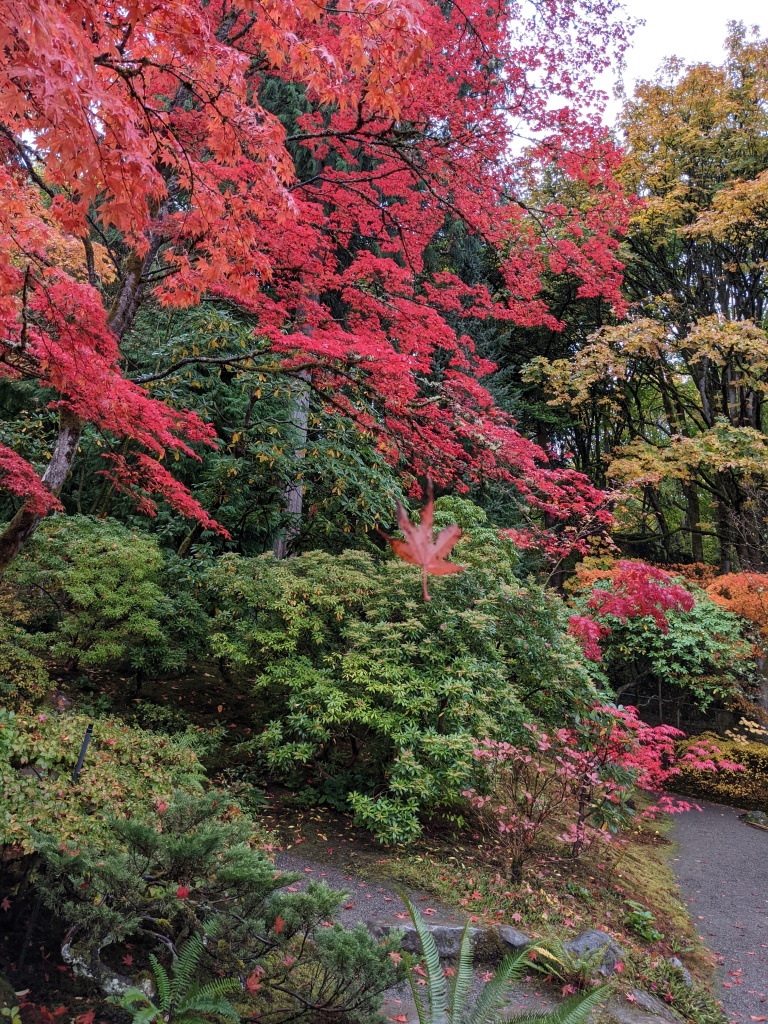
this was in Seattle’s Japanese garden last year, but the colors are comparable

Autumn has arrived in, and nearly departed from, the Twin Cities. We were out of state for the kickoff and I was afraid we’d missed the best of it, but as with most fears, this one was unfounded. It’s been a particularly weird fall: 80 degrees on a Tuesday, highs in the 20s the following Monday, record high today, 6 days later, and finally retreating to normal temps tomorrow. Everyone was out cleaning gutters and raking leaves in the gorgeous, sunny, 70 degree Saturday, which I find kinda sweet, in the same way that I feel connected to all the folks shoveling as V and I walk past the morning after a snowstorm. There is something about living in a place with real seasons that creates a landscape for community in a way that living in LA did not. Of course, the relational fertility of this climatological setting is marred by the repressed nature of the culture, so it may be a wash.

I haven’t done any formal, deliberate leaf-peeping this year (anyone else find that term creepy?), but my meditation-ripened mind has been just overwhelmed by the beauty of the trees I encounter in my everyday travels around the neighborhood. On the first snowy morning (yes, we had that too in these wacky few weeks) we walked under the stunning red maple across the street and I could hardly stand it – the ruby leaves dappled with and descending into white snow was almost too beautiful to bear. Again yesterday, walking under a waterfall of apple and orange colored leaves as the wind dragged them off the branches, I had to stop and, weirdly, close my eyes. I felt like I was in some kind of fantastical landscape, some sci-fi world in which photosynthesis produces a vast array of colors and this evanescent beauty is the norm. How long would I live there before I failed to appreciate it?

I don’t know the answer to that, but I’m pretty sure it doesn’t matter where you are. There is always beauty to be found (though I know in some places you have to have exceptional vision), and humans can become accustomed to anything. Take the weather in Los Angeles, the mountains, the ocean. Yes, people who live there will say it’s perfect, say it’s beautiful, but in my experience Angelenos are just as susceptible to taking that beauty for granted as folks are anywhere else. It often takes a change, a newness, an outsider to really get it, to see what is performing right before our eyes.

It’s the watcher, right? The observer. Emerson’s transparent eyeball. Buddhism’s witness. It fills that crucial role of observing without judgement, but there is also the secondary purpose of experiencing with minimal baggage, of seeing with fresh eyes, of childlike love and appreciation. When people ask me what I’ve gotten out of meditation I have a lot of guesses, but the benefit I am most sure of is the exponential increase in moments of spontaneous joy and gratitude. Not because I’ve worked on it or talked myself into it, but because meditation has simply allowed it the space to enter in.

Being Ram Dass

Being Ram Dass

Hello, dear readers! I’ve really missed you, or my perception of you, which is writing and publishing here.

My partner and I took 2 vacations in September, after going almost nowhere for nearly 3 years, and then for whatever reason I haven’t had the mental space or inclination to write much lately. But I can feel it changing. Something typically Z-ish will come out soon.

In the interim…

I finished (nearly – it was an audiobook & I had 30 minutes left when the library took it back) Being Ram Dass this week. I’m not a big biography or memoir person, but we had a long road trip and we’re both fans, so I made an exception. He was working on this with Rameshwar Das right before he died. Since I didn’t hear the ending, I don’t know whether he considered it complete when he moved on, or if Rameshwar Das filled in the final bits, but he does talk quite a bit about dying, which I always find compelling from someone who is actually on that edge, especially someone like Ram Dass.

I’ve heard many of, and weekly listen to more of, RD’s talks, so the really good stuff, the funny, vulnerable, human, loving Ram Dass stuff was nothing new to me. And if you want that, I’d recommend the Here and Now podcast instead. What I valued most in this book was him returning, again and again, to fucking up.

My first reaction to the stories of him getting wrapped up in ego, or power, or non-spiritual drug use, or blame, or self-pity, or self-criticism, or lies, or disingenuousness, was discouragement. I mean, if Ram Dass, who had known Neem Karoli Baba – who had known universal unconditional love – who had been guided by some of the highest beings on the planet and devoted his career to the pursuit of truth kept falling off the path, what hope is there for me?

But the flip side of that interpretation is (you already know the answer) that when we keep fucking up, we are just like Ram Dass. Human life is an institution not designed to cultivate spiritual development, but it’s the only school that would let us in, or the only one our guidance counselor told us about. So if that’s the major we chose, we just have to make the best of it & get what we can out of the curriculum. Much like the Acting BFA my former classmate & I were deprecating a few days ago: it wasn’t a great program, but we’re grateful for what we managed to take out of it. Unlike the Acting degree, we don’t have any other programs to compare it to, so living is truly the best and worst option available to us.

As Edward Abbey wrote, “Life sucks? Compared to what?”

Write at you soon, loves.

Memorial for a Drunk

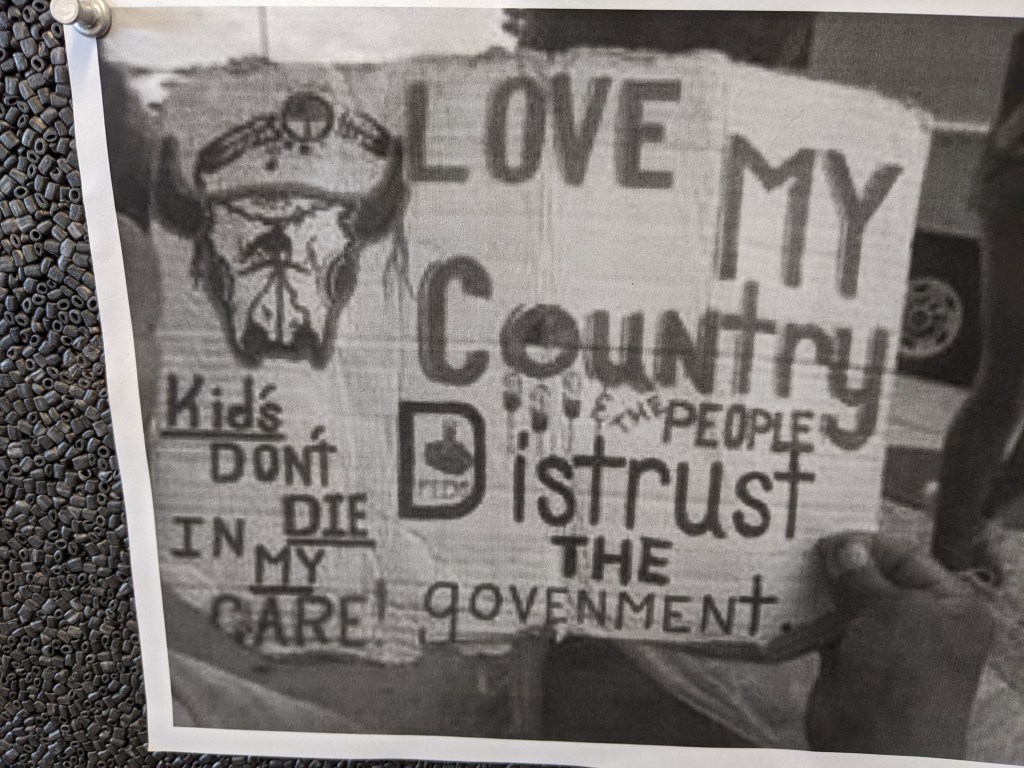
one of Frank’s memorable signs

The center where I volunteer on Fridays – let’s call it The Gathering Place – held a memorial for one of our community members last week. The Gathering Place serves a hot breakfast & lunch M – F, but more importantly serves as a place for low income, and unhoused, and other folks in the area to hang out, get some coffee or Gatorade, and be in community with each other. Being there has become my favorite part of every week, and I feel more welcome there than pretty much any other place in my life right now. More about that another time.

Today I’d just like to share a bit about this memorial for a man called Frank. I’d only seen him twice – my guardian volunteer tried to introduce me to him but he was pretty drunk & disengaged both times. She told me made great cardboard signs, but the one he attempted when I was there was incomprehensible. She also told me that there was a period of time when he would regularly lie down in the very busy street outside of the center, and the director & other folks would have to stop traffic & get him back on the sidewalk. And that he currently had a place to live, which was “a miracle” given how hard it was for non-sober people to get stable housing.

So that’s all I knew about Frank.

He was hit by a car & died last week. He wasn’t much older than me. And they held a memorial for him.

K suggested that folks write tributes on pieces of cardboard, since he was famous for his signs. (One offered “Ble$$ings” for donations on left side, and TRUMP STILL SUX on the right.) Many did. Signs like, everything is free in heaven, but you can come back here anytime, and you are so loved and already so missed/ your spirit is with us forever in your Gathering Place community, and my prayer for you is good food for lunch every day in your afterlife. Many people spoke – some of the volunteers who had known Frank for years, some of his friends among the community members at the center, and some of his loved ones from elsewhere who had come to share their grief with others who knew and loved him.

L talked about how Frank helped him when he got out of prison, how much L’s family cared for him, and the ritual he and his brothers had performed for him earlier that week. He also said he’d spent the night crafting a beautiful cardboard sign in tribute, but as he got up to fetch another marker, he’d knocked his coffee all over it. He decided that was appropriate, because Frank’s signs were never too neat.

“Frank spilled the coffee!” someone offered. Laughter.

K talked about how kind Frank was – how he never had a bad word to say about anyone, and “I wish I was like that.”

“No you don’t!” from a neighbor. Laughter.

“It takes all kinds” from another.

The guy who currently runs the center told us that one day Frank was hanging out, drunk, and getting a little belligerent. He was thinking he might need to ask him to leave when Frank said, “I gotta go to detox.” He & K walked Frank the two blocks to the familiar treatment center, and while they were waiting to get checked in, Frank was telling them a story. About breaking into San Quentin. He was slurring his words, so they weren’t sure they heard him right. “Breaking into San Quentin prison?” Yep. He managed to pull it off, but “getting in there’s a lot harder than getting out.”

He then read us a letter from a family member, talking about Frank’s relatives, his youth breaking horses in South Dakota, his many skills, and the people who loved him.

A friend who came with her two young children spoke softly about how Frank was more than a brother to her, that he was kinder than her own family, and how important he was to her kids.

C read a poem about the last time he cut Frank’s hair – cut it all off at Frank’s request, after a period of sobriety when he wanted a new start. He spoke of how we all try to be better, and how often we all fall short, and try again. And he spoke of Frank’s hair falling to the ground and being carried by the wind to line the nests of birds. Tears.

A volunteer painted a cardboard sign, “Spirt of Frank – Living on in kindness and humor and all his many friends,” and said she realized after she finished that she had left an “i” out of Spirit, but Frank often had misspelled words, so she decided to leave it. She remembered how Frank would bring his signs to J and ask if words were spelled correctly, and once J said, “no, but leave it; you’ll get more money that way.” Laughter.

J is possibly the least liked of all the regular participants at the center. He’s narcissistic, rude, and shows signs of Oppositional Defiant Disorder. He’s a hoarder who lives in his car, parked in front of the center, and pisses and throws garbage all over the front lawn, then complains about the volunteers who clean it up. He rubs grease on the pole where another member parks his bike. He’s full of conspiracy theories, particularly about how the government and law enforcement conspire against White men (LOL). He’s not threatening, as folks there occasionally are, he’s just, as a sweet, older volunteer there summarized, a jerk. I’ve never seen him say or do anything considerate since I’ve been showing up, and he’s always there. But not only did he, apparently, help Frank out with his signs, he actually raised his hand to speak kindly about him during the service. He had to be a bit of an asshole – saying that Frank just wanted people to care about him and no one did, despite ample evidence from the previous hour of testimony that many people cared for him. Regardless, he recognized Frank as a funny, honest, and admirable person – a loving guy who was kind to others, and that more people should be like him.

I mentioned my shock to the two lovely ladies I volunteer with later in the day. They pointed out the irony of that last statement, which of course was not lost on me, but I had to persist with my own recognition that he had the capacity to be kind, caring, and respectful, which I had thought far beyond his reach. Not that I had any high hopes for J or his future potential, but just that there was something there which I hadn’t seen, something Frank had gently dragged out of him.

Every day at the center teaches me something, opens my heart a titch more.

One of the volunteers suggested we sing a song to close the ceremony. When no one else had a suggestion, he started I’ll Fly Away, a spiritual I only know through Oh Brother Where Art Thou? and which I had just listened to for the first time in years on our road trip last week.

I sang for Frank, wherever he flew, whatever culturally appropriate song accompanied him there. I felt honored beyond description just to be there and listen to this tribute. No one denied he was a drunk, no one judged him for it, and no one gave it any more weight than it deserved – as a part of his human identity. A part he tried and perhaps failed to let go of, but a piece of the funny, kind, creative, generous, beloved man he was.

The Lesson You Need

The Lesson You Need

If you’re on “the path,” as we spiritual nerds call it, you’ve doubtless found yourself connecting more intimately with some teachings than others, and that changes over time & circumstance. I have been glued to this one for a few months now, and it’s been life-changing in that subtle, Buddhish way.

I don’t actually remember who this came from – a contemporary Buddhist text or dharma talk, or Ram Dass or one of his ilk, or all of them. But it fits into all of that stuff. There are lots of ways to phrase it, but I like this:

The lesson you need is always right in front of you.

There are lots of ways to interpret this. You can go with the idea that everything is preordained or meant to be. Despite not believing in free will, I don’t find that helpful. For me, it’s another version of the belief that every moment is an opportunity to awaken. But it’s better. Because awakening seems beyond my control. I can’t reason myself into awakening, so perpetual opportunities just seem like missed opportunities. But the lesson I need being here, right now? And not having to sign up for another intensive retreat to experience real spiritual growth? That I can work with.

Basically, it turns every difficult or shitty thing into an opportunity for practice. How can I Buddha my way through this situation? Now that moments present themselves in this way to me, challenges have become a fun and enlightening game.

My partner’s changed our plans at the last minute? Okay. Am I attached to the previous plan & if so, why? Would getting pissed off at this moment improve anything? Teach anything? Cause suffering? What does my past experience tell me?

Someone wants to discuss a topic on which we are ideologically opposed. How can I open my mind while still being genuine? How can I be simultaneously engaged in the conflict and loving? Can I hear what they are saying without shoving them into a pre-labelled box? What is my goal here and what is theirs? Is mine driven by ego or empathy? Can I find a way to connect & namaste either within or outside the strictures of that conversation?

At the State Fair: why do I feel the need to judge my fellow fairgoers? What is it in me that is reacting to something utterly superficial in them, whether it’s how they look, the clothes they wear, or the slogans they brandish? How can I soften that?

Even moments far pettier: I think we’re supposed to cook something one way. The guy thinks otherwise. Instead of fighting him on it or grasping onto my opinion at all, I admit that I just heard my theory somewhere and have no idea whether it has any validity. We carry on from there.

Put another way, in one of Ram Dass’ lectures he recalls requesting a particular type of microphone for a talk he was giving, and when he arrived they didn’t have it. He started to get pissed off, then recognized, “oh, there’s my yogi, disguised as a microphone.”

Some of you will likely think this isn’t even worth sharing; others may find it revolutionary. I haven’t even told you the best part yet: I do this all without self-criticism. When everything is a lesson, I’m showing up as a student, not a fuckup or an asshole.

I can’t adequately express how much lighter the combination of pausing, sitting in not knowing, and the lesson perspective has made everyday challenges. So much of it is about space, which feels to me like a pause paired with a distancing and a refreshing breath. That Space allows the witness room to step in and observe what’s actually happening outside of the ego; outside of an agenda, personal history, or judgement. The witness doesn’t tell me what to do, it just gives me perspective. All I do with the perspective is bring it into my thoughts and actions and see where it takes me. It infuses a bit of wisdom into the situation, which allows me to make better, more conscious, more loving choices. I cannot recommend it enough.

Student Loan Forgiveness as a Metaphor

I heard this frustrating and beautiful story on NPR last week (which is somehow lost in the web). When it comes to issues that actually have more than one reasonable position, NPR will generally try to give voice to opposing sides, so as I listened to this young woman recount the numerous ways (3 jobs while attending school, being hospitalized for exhaustion, etc.) and multiple years she had to struggle in order to keep her college loans low and pay back what she did take out, I assumed she would conclude as so many I’ve heard have, with Why should someone else get a free ride when I had to bust my ass to pay off my loans?

She didn’t. She didn’t want her younger brother or anyone else to suffer like she did.

What makes this narrator so compassionate? Perhaps it’s because she has a younger brother – a face to put to the potential suffering. Perhaps she’s just a generous person. Perhaps it’s because her parents are immigrants, and she’s grown up with the idea that you make sacrifices to make things better for others.

When I think about it, in my memory (utterly bereft of statistical backing) it seems most of the people I’ve heard complaining about student loan forgiveness are middle-class White men. Assuming (against all reason) that I am correct, why would that be?

I think it might come back to the lie of the American Dream. Those who buy into it have to believe, to a significant degree, that we have a level playing field. That we not only start the race from the same location, but with the same strength, speed, quality of coach, abilities, shoes and feet to wear them, instructions, familial and community support, nutrition, etc. They believe this even as they see that others cannot attend college at all, that some can pay for college painlessly, that some are desirable enough to be paid to attend college.

They say they worked hard to pay off their loans, as if that act of valor stands in a vacuum. As if others are not working just as hard, or twice as hard, for a quarter of their wages. As if the sacrifices they made, the luxuries they denied themselves, weren’t too extravagant for a large portion of the population to even shoot for, let alone deny themselves. As if people haven’t had to struggle through poor public schools, hunger, poverty, and unsafe environments just to walk through the doors of the college, and walked out with a lifetime’s worth of debt. As if the racial wealth gap weren’t a hallmark of American society and as if thousands upon thousands of Black people with degrees weren’t using their relative success to financially assist their systemically underprioritized, underpaid, and overburdened friends and family members rather than pay off their own loans.

I’m not saying I don’t feel it when things like this happen. I had a pang of bitterness just last week, when I found out that my old roof did not sustain enough hail damage to be replaced by my insurance company, when the house half a block away did. Why does she get the free roof? Why do I have to keep waiting that a giant storm hits before the thing starts leaking and the cost has to come out of my own pocket?

Because that’s just the way it goes. And I’m totally fine.

The idea of fairness on this fraught and complex an issue is, frankly, ridiculous. The world is a bizarre place and the number of factors contributing to someone’s financial and academic success are almost unimaginable. Justice may be possible, though we’re certainly far from that, too. Fairness is relative, at best. Besides, contemporary capitalism isn’t about fairness anyway. Maybe the loan forgiveness objectors should try communism.

And, all that aside, why would we ever want others to suffer as we’ve suffered? Do we think it makes things better? Yes, life is suffering, but Buddhism believes it is undesirable and avoidable thing, and we work on ourselves and the world to alleviate it. How do we alleviate it? By letting go. Letting go of our righteousness, our ideas of fairness, and everything else we’re attached to. It helps everyone, spiritually. And easing the burden of college debt helps everyone in practical terms as well. Without the stress of crushing debt, people are healthier and happier, rippling that wellbeing out to their community and easing the burden of the health case system. Without having to put hundreds of dollars toward payments every month, people could be saving or spending money on the products that “keep the economy moving” or buying healthier food or helping their neighbors or traveling to expand their minds and hearts. Without the desperate need to work a job, the best paying job, to pay off loans, people could be doing what they want to do, going into the fields they’ve trained for at what might be a lower starting wage, becoming entrepreneurs, working at nonprofits. People who came from poverty could start buying homes, building generational wealth, investing.

(the same could be said for universal health care, FYI)

Money encourages us to become very narrow in our thinking, because it breaks real, actual, complex costs and benefits into cold numbers. Perhaps your tally now shows -$100,000 dollars in paid loans and you see someone else at +$25,000 from the government. It looks unfair. But who is it unfair to? Everyone benefits from this, and what you have sacrificed does not change. I suppose you could argue that “my tax dollars are paying for their education.” Is that a bad thing? Don’t we want educated neighbors? Do you know what else your tax dollars pay for? The billionaire-expanding, environment-destroying, war-waging, and plain unnecessary crap we pay for? This seems like a far better investment.

Do I Need a Word for Stupid People?

My employer required a handful of DEI-related readings this quarter. Definitely a good thing, and/but the selections made me confront something I’ve been pushing aside for a while. In the spirit of facing up to my shit, here we go.

The issue is the troubling origins of the words “moron” “idiot” “imbecile” etc. Pretty much all synonymous terms were medical or legal classifications for individuals who did not conform to whatever arbitrary standard for intelligence or behavior was enforced at that time. The classifications were utilized to take away people’s freedom to live where they wanted to live, participate in society, reproduce, vote. The words were consequential and did not just designate difference, but inferiority. Although the usage has changed, the sting still lingers for folks, so removing those words from pointed use seems reasonable.[i]

The question I’ve been avoiding is the one that always lingers in my mind when this group of words is broached,

“But what am I supposed to call stupid people?”

The appropriate response is, of course, “why do I need a name for stupid people?”

“Because there are stupid people out there, and I may need to reference them in writing or conversation.”

Do I, though?

I’ve argued in at least one post and an op/ed that writing off our perceived (often political) enemies as “idiots” is not helpful. It places a nearly impenetrable wall between us and them and, yes, the language itself fortifies the wall. If they are idiots, there is no reaching them, no reasoning with them, no point in concerning ourselves with their motives or wellbeing. If they are idiots, there is no point in trying to talk to them. I’ve argued against this usage with the ride or die Trumpers specifically, because holding fast to a belief in the face of contradictory evidence is something every one of us has done. Maybe it’s not over a political election, but rather in believing in superstitions, practicing harmful habits, defending the  improbable innocence of people we happen to like. The belief that we are rational actors leads us to trust ourselves too much, and to trust others too little, and facing up to our universal irrationality may help us be a bit more forgiving.

I have come to believe that people may believe stupid things, perhaps, or make stupid decisions, but no one is an idiot. Do we need a demeaning word for someone who is incapable of thinking the way that we do? Perhaps you’re wondering about people with intellectual disabilities, diagnosed or not, apart from any ideologies you might have. Would you call those people idiots? I wouldn’t. Those words imply some element of will, not a different intellectual capacity, and all of the words synonymous with idiot have a tinge of insult and judgement that hang on them. It would never cross my mind to call someone with an intellectual disability an idiot. Besides, our definition of intelligence is far, far too narrow. Everyone who is conscious has some kind of intelligence, whether it be the ability to make something, to love well, to appreciate beauty. None of us excel in everything, and there’s plenty of variety to go around.

What if someone is unwilling to apply their intelligence? That makes them stubborn, right? Or willfully ignorant. Not stupid.

So do we need a word like idiot? Do we need a word that takes what we perceive to be the circumstantial inferiority of a person and turns it into their entire identity? Do we need a demeaning word for people with disabilities? Do we need a demeaning word for Black people? For gay people? For women?

How might the world shift if we did not have a demeaning word for people who are intellectually disabled or make harmful or ignorant decisions? Would it force us to look at them as people with flaws, like us, instead of demons? What would it look like if, instead of saying, “Those Trump supporters are idiots,” we said:

Those Trump supporters believe something that has been proven false, or

Those Trump supporters are being manipulated by greedy, ambitious people, or

Those Trump supporters are being led by their fear.

I immediately feel my compassion extend towards those people, in a way in which I wouldn’t with a mob of idiots. Which ones could you relate to? Who is worth caring for? Who might you be willing to talk to? Each one of those descriptions contains within it a clue to solving the perceived problem. Does that opening put too much responsibility on our shoulders? Is that what we’re trying to avoid?

An idiot is a person who is not like us, a person not worth considering. A person whose motives we don’t even need to think about, because even if they did have motives, why should we learn about them? They’re stupid, after all. We separate from them in word and deed. We lock them out of the human club by naming them as something other. Separation is a method to shut down compassion and a lack of compassion separates us from our companions in this journey.

I think I can live without it.

As for my use of crazy… that’s for the next therapy session.

[i]

I don’t argue that these or any words be removed from the language entirely. This is about mindful speech & writing.

3/4 of a box step

3/4 of a box step

I’ve been feeling pretty good about myself lately.

My new volunteer gig is frightening and wondrous. The easiest and hardest volunteering ever: literally nothing I have to do [exhale] … except hang out with people I don’t know [gasp], and infinitely rewarding.

And I’ve developed a new superpower: CHANGE. As some of you may have read in The Fireworks Guy anecdote, I (yes, the writer you know and love) have the ability (it’s okay: you can touch the hem of my garment) to stop doing destructive shit! Not only have I stuck a wrench in the churning hatred of Fireworks Guys (so successfully that I don’t feel any anger even when surprised by one of the little bombs anymore, just … surprise), I also preemptively stopped myself from falling into passive-aggressive relationship patterns twice last week.

The magical source of this newfound talent? Dumb old meditation. The best explanation I can give is that I’ve grown accustomed to my thoughts, or to observing them. Instead of just reacting to a perceived offense thoughtlessly, my response sits in the center of my vision like a dog in need. I can get off my lazy metaphorical ass and try to figure out what the issue is, or I can ignore it, fester in my angry/grumpy/bitter automation, while it slinks off and waits for the next opportunity to bump me out of inertia. In both recent scenarios, instead of just thoughtlessly plodding along as I usually do, I had a brief debate with myself over my choices:

I’m gonna be withholding now.

But why?

Because I didn’t like that.

And will clamming up make you feel better?

… no

And will it make him feel better?

… no

And will it teach anybody anything?

… … … no

So?

Fine. Forget it.

And that was it. I just didn’t do the pointless, harmful thing. Twice. I was so excited about my new superpower that I had to share it with the Practice Check-In group at my local sangha on Tuesday. To be honest, I was feeling pretty fucking cool. Not braggy cool, just quietly proud cool.

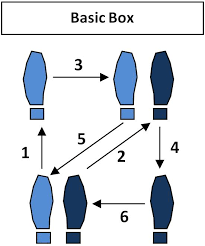
And then today I felt like shit. Depressed. Surly. Trapped. Drained. I took a short nap. I worked out. I logged out of my work computer. I listened to some Lizzo, did some dishes, took a walk. Everything helped a little, but I still feel shitty. What is this need for control? For consistency? Why do I panic whenever I’m down? I suppose there is some fear of feeling the way I used to when I was younger, of struggling to get out of it. And I have a need for answers. I have a few – an unfulfilling job, some bad news about a project I’m working on, eating too much sugar this week. But those answers don’t help me right now. Just sitting with it is probably the best thing I can do. But part of me wants to be better than that. Perhaps I need to stop thinking of the “good” things (my superpower, for example) as a step forward and the bad things (depression, criticism) as a step back, and see it more as a dance, a sidestep, an expansion into more, rather than better.

Writing helps, too. Thanks, friends.

Blooming Through the Unbearable

No danger that we are facing today is greater than the deadening of our response.

Roshi Joan Halifax, 7/18/2022

These were some of the first words shared at a talk centered on the spiritual Deep Ecology work of Joanna Macy Sunday, and a beautifully expressed warning against meeting immense challenges with despair.

That includes global warming, which refuses to fade gently into the night. And it’s a doozy – the most overwhelming, global, human threat to date, or at least for tens of thousands of years. A friend saw Elizabeth Kolbert speak at a university a few years back and was appalled when she answered the inevitable audience question of “what can we do?” with something like, Nothing. There is nothing you can personally do that will stop the headlong tumble towards an unlivable human planet. Here is where she is literally right: our household recycling, our composting, even our electric cars and solar panels are not enough, individually, to make a difference. The only individual actions that could make a dent would be those of leading political figures or the CEOs of prominent polluting corporations.

Here is where she is wrong: there is no such thing as an individual, isolated action in a living, social species. Not only do we bike instead of driving, we normalize biking and spark interest in others. We get the attention of those who want to sell bikes, who create tempting advertising around biking, generating more participation. Politicians glom on to boost their cred with the voting bloc of cyclists. Communities organize and successfully advocate for safer and more accessible bike paths, and more fearful folks now join in the ~carbon-free fun. The press reports on the changes in city planning. Car companies produce more electric vehicles in attempt to lure climate-conscious riders back. No single action occurs in a vacuum, and all have unseen reverberations.

And here is where she is deadeningly wrong: we have no idea what will actually improve our chances on planet Earth. That Not Knowing isn’t just a Buddhist practice, it is as scientific as it gets. Every scientific “truth” is literally a Theory, even the ones we take as gospel. No one knows how high the temperature will get, what exactly that will mean for our viability, or what might deflect us from that path. We have good models and predictions and explanation that we use to guide our actions, but we do not know what awaits us. Some people find this frightening. Some cling to the best guesses and worst case scenarios and despair in the presumed inevitability of The End. But Not Knowing, as a practice, is ultimately liberating. If we don’t know the future, we are free to accurately assess and focus on the present: is this act loving, kind, compassionate, meaningful, wise? Is it done for its own sake and not to reward my ego? Am I using the terror of the future to justify cruel behavior in the present? Whether it all fell apart tomorrow, or humanity were saved with the sunrise, would this still be a Right Action?

And here’s the other spiritual bit, the bit that Roshi Joan alluded to at the top: If we close ourselves off to action, because we believe it won’t fix anything; to our own heartbreak, because it hurts; to the pain of others, because it’s hard and uncomfortable; to lapping up the beauty of our world, because it will go away; to laughter, because there are so many reasons to cry; to love, because of impermanence, why are we even here? We do the best we can because it’s the right thing to do, not for an anticipated payout. Better to fail to save humanity by using less and loving more than to succeed by brutally annihilating a third of the population, right? It’s not about the fix; it’s about nurture.

Impermanence is the (admittedly shaky) foundation on which the Four Noble Truths sit. Everything is impermanent, including us and our planet. From the Buddhist perspective, it shouldn’t matter whether Earth’s temperature rises by 4 degrees Celsius tomorrow or in 2500. The urgency may increase, but the mindful behavior would be more or less the same.

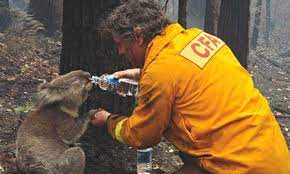
Or maybe I’m wrong. Certainly the ongoing Heat Death of living creatures and landscapes makes me ponder quitting my job and devoting myself to whatever beneficial behavior I can muster up, and the likelihood of that happening increases as record-breaking temperatures and other environmental events become more dire. But I (breathe) try to return to the center of kindness, empathy, joy, and love. I love being alive. I love this planet so much it hurts. And I’m working on loving the people who share it with me. If I let my fear control the narrative, that love turns to despair. And there is really no reason to despair, because we are here in this unbearably beautiful place, and every moment is an opportunity to help others see it. Sitting with one suffering person is lifechanging. Planting one hazelnut tree is lifechanging. Feeding water to one parched koala is lifechanging. Returning one starfish to the ocean is lifechanging. No single one of us can stop global warming, but the lives we live can contribute to a wave of carbon reduction, and every single one of us can contribute to the wellbeing of a living creature on this gorgeous Earth.

Annoying Little Boddhisattvas Everywhere

Annoying Little Boddhisattvas Everywhere

I was walking with B & V after the most recent of the January 6th Committee’s televised hearings, describing the witness tampering that Liz Cheney had teased at the end, when I stopped myself mid-sentence. “My god, there’s no hatred in my voice when I say that name. Do you know how long I’ve been hating the name Cheney?” Decades of (arguably justified, if unhelpful) emotional enslavement to anger and disgust and horror around the lies, war promotion and profiteering, torture, and spying that defined her father’s vice-presidency vanished from my current self as I appreciated his daughter’s impartiality, levelheadedness, search for truth, and willingness to risk her political standing for our cherished institution of democracy. She has shown me that I can let go of the fraught attachment to the feelings, and that the letting go is not a forgetting or absolution. I think her political philosophy is inhumane, plutocratic, and destructive. I think her father was a war criminal. I would doubtless vote against her if I had a chance to do so. And I can hold all those beliefs and take any oppositional actions made available to me without hating her, without feeling any tension or revulsion at all; fully recognizing her as a part of the greater human mess and a person worthy of compassion. Liz Cheney has helped lower the bar in the best way, though I’m still working to drop it further: how little can I understand or sympathize with a person’s actions or beliefs and still empathize with them as a part of me, an interdependent element of my complicated world?

In the 90s, Ram Dass’ shrine featured Neem Karoli Baba, Buddha, Jesus, and Bob Dole. (Remember when Bob Dole was the ultimate enemy? FunnyNotFunny?) He said when his gaze settled on the latter photo, he would feel his heart tighten, and know where his “spiritual homework” lay. I don’t have a shrine, but if I did today I wouldn’t put Trump on it. I’m not welcoming that daily dose of constriction, but I know it’s something to strive for.

Last week, while picking up garbage around the community center where I volunteer to hang out with unhoused and economically marginalized and other random folks from the area, a guy started harassing me about why I was cleaning up there. He wasn’t happy about it and wasn’t, I realized a few sentences in, interested in actually conversing with me so much as lecturing me, and it wasn’t pleasant. But it didn’t take long for me to recognize several truths he had unveiled. First is my persistent desire to be liked and even appreciated, which has been a barrier for as long as I can remember – causing an often immature reaction to criticism and at times preventing me from being honest with people when it’s important to do so, and, as in this case, taking too personally words aimed at the idea of a person, and having little or nothing to do with me. I also have a compulsion to explain myself, which I guess I can attribute to ego attachment. (As my best friend once said to me, “I bet you’re one of those motherfuckers who has to explain why you’re leaving to your boyfriends.” It had never occurred to me that not doing so was an option.)

When my critic was giving me shit about “my own house,” I also had to recognize that I have neglected my own community in favor of coming to this one every week. I view the unknown neighbors on my block as unworthy of my attention – comfortable, middle-class white people who are so polite and reserved that I have written them off as repressed and dull. I have thought about hosting a happy hour, but never done it. I have convinced myself that I wouldn’t know what to say to them, yet I’m literally and figuratively going out of my way to converse with what are often mentally or chemically ill folks in another neighborhood. I’ve often declared in the past several years that my particular talents serve best through my talking to well-intentioned White people who don’t see the destructiveness of their internalized racism, ableism, etc. yet I do that almost exclusively in structured, deliberate environments, rather than creating open spaces where those meaningful conversations might unobtrusively and effectively seep in. There is work to be done here.

The final and perhaps most successful boddhisattva who came into my life recently is The Fireworks Guy. I liked fireworks well enough as a kid, but both of the dogs I have lovingly raised as an adult have been terrified of fireworks. Like most good mothers, I have loyally hated the things that cause harm to my kids. A few weeks ago we took V to our local dog-friendly restaurant patio for the first time in a year, and as soon as the server delivered her beloved marrow bone, a massive firework went off a few houses away. V started shaking, I yelled an obscenity, and B took off in anger (rare for him) to find the people who did it. What he reported back was that the guys (a racially mixed group) saw the fireworks as an intentional act of rebellion to annoy “yuppies”, protest “gentrification”, and generally disrupt people’s comfort. On the flip side, I have long held fireworks to be a deliberate act of toxic masculinity, symbolic violence, and cruelty towards nearby animals and traumatized humans. In fact, there’s little truth to either my accusation or their justification, certainly in the sense of a higher truth. Both beliefs are lacking in compassion and overflowing with resentment and blame. Something clicked in me after B’s interaction, and I made a conscious decision to stop getting angry about fireworks. V isn’t nearly as traumatized by them as she used to be – CBD chewies have worked wonders, and thunder (which we can’t pin on anyone) is much harder on her nerves – and I’m tired of crafting narratives of cruel, abusive men in my head. There are enough real ones out there. I haven’t got time for the pain.

Weirdly, that worked like an off switch. Once I let go of my manufactured justification for harboring the anger, the anger disappeared completely. I still don’t like the sound of fireworks, and I still wish it didn’t bother V, but I’m no longer wasting a single iota of energy on hating the perpetrators. Crazy, right? I’ve certainly tried to let go of emotional attachments in the past with far less success. I don’t know if this one came easily because I’ve been practicing more, or because I recognized the weirdly ideological motivation for the resentment or what, but it does give me hope for my indubitably lifelong efforts to let. shit. go.

Thank you to all my teachers.

Anything to Celebrate?

Anything to Celebrate?

Hello, dear readers.

It’s not that I haven’t been writing lately, or that my mind and body haven’t been churning with thoughts and confusions and frustrations and the need to purge them through organized language. I’ve just had a really hard time doing so. I started 5 blog posts in June that just spiraled into anger or despair or pathos. Still working on some of those, but in the interim I find it necessary to summarize the just-concluded Supreme Court term for my own sanity, to explicate the sources of my feelings of horror and doom that have been growing ever since Merrick Garland was denied a hearing in 2016.

  • A potential life (no constitutional protections for people carrying dead fetuses) potential birth (no constitutional protection for ectopic pregnancies) an embryo (no constitutional protections for IUDs or Plan B pills) a zygote is more important than the life of a living woman or other pregnant person (Dobbs v. Jackson Women’s Health Organization)
  • Border patrol agents cannot be personally sued for physically abusing and harassing citizens (Egbert v. Boule), and police officers cannot be personally sued for failing to inform suspects of their Miranda rights (Vega v. Tekoh)
  • The rights of people to carry hidden, loaded guns wherever they want is more important than the rights of states to vet those people in order to protects its citizens and law enforcement officers from random or impulsive violence (New York State Rifle & Pistol Association v. Bruen)
  • Our tax dollars can pay for students to attend religious schools that may choose to decline admission of students who are gay, trans, queer, or non-Christian (Carson v. Makin)
  • The right of a public school employee in a position of authority to publicly perform and encourage participation in a Christian religious practice in front of his charges at his school is more important than protecting students from religious targeting, coercion, and potentially unfair treatment (Kennedy v. Bremerton School District)
  • US carceral authority is more important than tribal autonomy Oklahoma v. Castro-Huerta
  • Protecting corporate profits is more important than the planet’s capacity to support human life West Virginia v. Environmental Protection Agency

Hearing the Supreme Court’s decisions roll out this term has left me feeling the same way I did when I watched a before and after video of war-ruined cities in the Ukraine – art and culture and homes and lives crushed before my eyes. For what? Who does this serve? How do we let this happen? Will we ever recover?

In the excellent podcast Amicus, Dahlia Lithwick has been framing Supreme Court decisions in terms of what they say about where our compassion lies/ who and what we care about. On this July 4th in 2022 we do not appear to care about women, LGBTQ and non-Christian youth, Tribal sovereignty, victims of gun violence, people abused by law enforcement, or the environment. We do seem to care about veterans, at least in some circumstances; and although the safety of refugees and immigrants was not the impetus, I am pleased with the dismissal of the Remain in Mexico policy. I don’t know if that’s enough to keep me hopeful for this country. Nor are the January 6th hearings, despite the committee’s dispassionate, indefatigable, truly exceptional work restoring some of my faith in elected officials. There is so much worth saving. I hope the foundation will be strong enough to build on if these fires of hatred, violence, greed, and neglect burn our country to the ground.

This Is How I Fight

Everything Everywhere All At Once

I wasn’t ready to propose solutions last week, and I still hesitate, because, after all, what hasn’t been said, and attempted, and written off and what can we possibly do about it anyway? I post this only as an attempt as a Buddhish perspective on this ongoing nightmare of violence and pain.

I haven’t delved too deeply into the current wave of ideas, because most of it is the same old story: lots of people centering gun regulation, other people focusing on mental health (though not doing anything to improve it). I did read Malcolm Gladwell’s 2015 article on the interesting theory of the slow motion mob, which aligns with the increase in fame-motivated and bigotry-motivated incidents (hate seems far too broad a term for attacks on specific identity groups), and I listened to an interview with Drs. Jillian Peterson and James Densley, (Minnesota!) Professors of Criminology who have written what seems to be THE book on mass shooters. Their research supports my (upcoming!) proposal, but like every human I know my brain is choosing which information it wants to hear, so I won’t claim objectivity. With that caveat, here are their key findings, based on extensive data and interviews. A few that stood out to me:

  • 80% of shooters were in a noticeable crisis prior to shooting, 40% had been for years
  • Psychosis was not a factor for 70% of mass shooters, and was minor in another 10%
  • 70% of mass shooters were suicidal prior to and/or during their attacks
  • Other than shootings at houses of worship (typically motivated by religious or ethnic hatred), shooters were part of the targeted community nearly 90% of the time

Dr. Peterson has summarized:

There’s this really consistent pathway. Early childhood trauma seems to be the foundation, whether violence in the home, sexual assault, parental suicides, extreme bullying. Then you see the build toward hopelessness, despair, isolation, self-loathing, oftentimes rejection from peers. That turns into a really identifiable crisis point where they’re acting differently. Sometimes they have previous suicide attempts.

What’s different from traditional suicide is that the self-hate turns against a group. They start asking themselves, “Whose fault is this?” Is it a racial group or women or a religious group, or is it my classmates? The hate turns outward. There’s also this quest for fame and notoriety.

https://www.politico.com/news/magazine/2022/05/27/stopping-mass-shooters-q-a-00035762

I feel like there are two real questions here, that either get conflated or shrunken down to one.

  1. How do we stop mass shootings?
  2. How do we stop people from wanting to commit mass shootings?

If you’re just interested in #1, then gun regulations make the most sense, especially those that restrict the number of bullets and the speed at which bullets can be fired. Obviously, background checks and red flag laws make sense. Putting age minimums on most gun purchases makes a fuck of a lot of sense, since the brain isn’t fully developed until our mid-20s. (Do I have to say it? We don’t think people are mature enough to drink, smoke pot, or, in some places, buy cigarettes until age 21; but they can buy an AR-15 as young as 18, are “adult” in the eyes of the justice system at 18, and can be tried as an adult when as young as 12, depending on the crime and the state.)

Maybe #2 seems too hard, but you want to reduce gun violence overall? Gun culture is one of the defining characteristics of the US, and the obsession with gun “rights” in some communities seems to prevail over almost everything else. Gang violence is dominated by shootings. It seems pretty clear that people are more likely to grab a gun in the face of internal or external conflict here than in other countries. Just look at the data on gun purchases during the pandemic. I doubt you read this blog for the research, but it’s worth noting that I could not find a single article on the increase in gun sales in other countries during the pandemic, while in the US nearly 20% of households bought a gun when COVID showed up, and 5% of those bought a gun for the first time. We view crisis as conflict and conflict as threat and threat as something that can only be fought with deadly weapons. Maybe there’s another way to think? Maybe we could see crisis as an opportunity for outreach and connection? Despite the emphasis on self-defense, people who purchased firearms during the pandemic were more likely to be suicidal. Suicides make up 2/3 of our gun deaths and the majority of mass shooters are suicidal.

Although folks like to put them in non-adjacent boxes, the culture that encompasses fearful self-defense and gun ownership and aggression goes to the source of #2. Why do people want to commit mass shootings? Whether they are glorified suicides or not? The illusion of separateness. Whether you believe it’s an illusion or not, the feeling of separateness seems to me pretty clearly the source of every act of aggression, ever. Sometimes the illusion is made unbearably realistic through abuse and neglect. As Dr. Peterson said above, early childhood trauma is the foundation of this behavior. Bullying is an act of separation, and creates feelings of separation. Inflicting abuse in general is impossible without the belief that you are harming a distinct, separate entity, even though the consequences inevitably impact both the one performing the action and the one it’s performed upon. Othering particular races or religions or other groups is creating separation, but young men like the Buffalo shooter are likely to join White Supremacist groups for the feeling of belonging and purpose they offer. If we want to stop people from committing mass shootings, we need them to feel connected to nonviolent, caring people.

Okay, great, Z. So what if we agree with you? What can we do about it? Can we force people to see the world in a different way? Can we compel compassion?

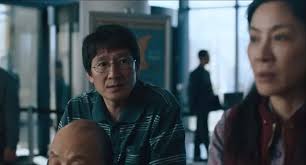
Last weekend we watched Everything Everywhere All At Once. It’s delightfully weird and fun, and, being the kind of nerd I am, I was particularly excited about both the fairly casual acceptance that there is no given purpose to life, and the transformation of the unimpressive husband from a nice, nerdy simpleton into a hero with one line: “this is how I fight.” That he is not supportive and loving out of weakness or fear or blindness or shallowness, but as a philosophical stand in the face of meaninglessness. His kindness is his weapon. I’ve said it before and I’ll surely quote it again: “If nothing you do matters, the only thing that matters is what you do.”

Big problems set us searching for big solutions. Perhaps that’s right, but the big solution to suicidal/homicidal acts may be comprised of millions of actions perceptible only to the actor and, sometimes, the recipient. What does it cost us to show a little extra kindness – a bit of embarrassment? A twinge of awkwardness? A minor inconvenience? And what is the payout – a potentially life-changing impact on another human and their community. I assume that every one of us has had a bad day in which a few words from another person completely turned us around. Kindness, just regular everyday kindness, has stopped people from attempting suicide that day. No one person can be held responsible for another person’s horrific act, but as a society we are not guiltless. We are our brothers’ and sisters’ keepers, because we are fundamentally interdependent and a connection to others is an essential part of every person’s wellbeing. I’m not a gamer, but I do appreciate the practice some video games offer – an alternative lifestyle, even. If you run across another character in a game (provided your goal isn’t to kill everyone you see), it’s generally a good idea to talk to them – you don’t know what you could discover. If we could play life with the same curiosity and fearlessness, I think we’d be a lot better off.

Yes, some people make it hard to be kind. Those are usually the ones who need it most. And yes, you should listen to your own warning bells and no, you can’t save everyone, and often you won’t even see the rewards of your work, and not everyone with a gun can be helped with simple kindness. But the return on investment is enormous.

Yes, vote to make it harder to shoot people, and support free mental health services, but I truly can’t think of anything that would make more of a difference than a concerted effort to be kind to people we interact with, to look at people as though they were something more than extras in our lives.

Upon completion, this all seems so obvious that it’s hardly worth posting. I hope it was worth reading. As by kickboxing instructor says, at least I showed up!

She Always Brushed Her Teeth

Hello, lovelies.

I have neglected the blog lately not because I have nothing to write about, but because there is too much. And writing feels so petty. And what does it accomplish. What does anything accomplish?

So here we are.

I have so many thoughts about the recent killings, and I have my opinions on solutions like everyone else, but for now, a heartbreaking moment of connection.

About a week ago, there was a clip of Amerie Jo Garza’s stepfather talking to a reporter on NPR, crying as he spoke, grasping at narrative.

She was the sweetest little girl who did nothing wrong. She listened to her mom and dad. She always brushed her teeth. She was creative. She made things for us. She never got in trouble in school. Like, I just want to know what she did to be a victim.

She always brushed her teeth.

That gutted me, and I spent the next several minutes sobbing harder than I had during this entire ordeal.

A few days later, our little Socially Engaged Buddhist group met online, and our facilitator referenced the exact same line.

What is it about that sentence?

In a different context, it might even be funny. Some joke about a guy being dragged down from the locked gates of heaven, yelling, “I always brushed my teeth!”

Is it the clash of the mundane with the profound?

Is it the conflation of obedience with the Goodness? Practicality with morality?

Is it that we all can relate to it, down to the feel of the brushes on our living gums? That we ourselves avoided it, whined about it, that we were worse kids than Amerie? That we could, if we chose to, be reminded of this little girl every morning, every night?

Is it the amorphous agony of hearing this man try to understand the incomprehensible? He wasn’t trying to paint a picture of his daughter for the reporter; he was searching for meaning, for an explanation. Here are the facts – how can it come to this conclusion? How could this happen to her?

It’s such a simple question, such a standard accessory to any crime against an innocent victim that we barely notice when people ask it. She always brushed her teeth forces us to consider it again, puts us face to face with the horror of loss and injustice, makes it real and specific in its universality.

It’s a piece of instrumental music that leaves you in tears without knowing why. It draws us together like a manifestation of our interconnectedness. We bear witness to all of it – the love, the pain, and the confusion.

You can leave it there, with that man, with all of the people who loved all of those children, with all of the people who loved the victims in Buffalo, in Tulsa, in Ukraine and Syria and Yemen and anyone who has ever lost anyone. You can sit with it and let it break your heart open.

That may be enough for now.

Waking Up is Hard to Do

Funny what intensive meditation will do to you.

In my experience, it’s never what you expect. Most of the influence on your life is subtle and hard to read – maybe you’re a little more patient, a little quicker to laugh, a bit more generous. I haven’t had a lot of big revelations that I can attribute to the causality of sitting.

But I got one this time! And I didn’t necessarily want it.

Not long into my intensive meditation course in April, and just minutes after an hour long sit, I went up to my office, logged into my work desktop, and heard, crisp and clear inside my head,

“girl, you cannot keep doing this.”

Yep, I have to leave my job. I don’t have to do it now; I don’t have to do it before I find a new one; there is no great urgency to it, and the admission has made every day a little more bearable, but that doesn’t mean I’m talking myself out of it. I have to leave.

I’ve spent the last 7 or so years justifying my job (not that anyone has asked for that, but the ego do take a bite out of honesty), as such:

  • I work for a nonprofit
  • my work doesn’t do any discernible harm
  • I am improving things for some people, if in an indirect way
  • I’ve learned some stuff
  • the pay is fine
  • I’m mostly respected and appreciated
  • I don’t take my work home
  • the benefits, particularly the PTO, are generous
  • as a result, I can do good (questionable term) in my free time

Many of you are probably looking at this list and thinking this is a pretty low bar. Some of you may think this is pretty sweet, and hardly worthy of complaint. I can take either perspective, but as someone who wants to do good (ugh), to have some kind of positive impact (meh), to increase the net amount of love and reduce the net amount of suffering in the world (that’s it), I have to open my eyes to not only the opportunities missed by spending my time at this essentially neutral job, but the fact that I am suffering from boredom and the knowledge that I do actually have skills and talents that could be applied in a manner that could actually reduce suffering, but I’m afraid to put myself out there.

Thus, this phase of this journey begins: the resume I haven’t looked at in 8 years (and can’t even find), the blahdom of job hunts, the agony of interviews. I am fortunate in that there is currently no rush. If I stop hoarding PTO, I can reduce my suffering by reducing my hours. If I increase my engagement outside of work, I can minimize the impact of my current work life. If I allow myself to be myself in job interviews (if I trust that I am not a shameful, broken thing who has to pretend to be someone else in order to be acceptable), I might actually find a job that I deserve and vice-versa. I’m excited about it, despite many avenues for fear and dread.

There’s a reason so many of us walk around with our eyes half-closed most of the time. Once you see what’s in front of you, you may be compelled to do something about it. And that ain’t always easy.

Generating Joy

Photo by Nuno Ricardo on Unsplash

Friday was gorgeous GOR GEE USSSSSSSSSSSSSSSS. I cut out of work early, dug up some grass in my yard, and biked over to the pie place in the hopes of some weekend dessert slices. The line at the pie place was a block long, so I laughed it off and kept biking. I couldn’t just turn around and go home because the weather was GOR GEE USSSSSSSSSS. Like, perfect. Like, bike down the street no-handed singing and conducting songs from the playlist of your youth gorgeous. I honestly can’t remember the last time I felt so happy. No – joyful. I was filled with unintellectual, full-body joy. It was fucking glorious. The only stain on the afternoon was a brief realization that, “fuck, I’ve become my father.”

I wasn’t mostly naked, I wasn’t riding an old Schwinn, but those were the only significant differences in our behavior. I didn’t hate my dad’s weird behavior as much as my sister did, but it was sometimes embarrassing. It wouldn’t have felt like such a betrayal if he had allowed us to be ourselves as he insisted on being himself, but it was only acceptable to be authentic if our authenticity matched his, and we were continually shut down for not behaving, thinking, or being exactly what he wanted us to be.

It’s difficult to separate the action from the person, and difficult to separate admirable behavior from a person whose behavior was often inconsiderate or cruel, but there is always that yin & yang. No one is all evil all the time, all inappropriate all the time, all annoying all the time, but our need to recognize and predict patterns and our emotional attachment/aversion to the behavior of people with whom we have complicated relationships is often tough to work past. As is our assumption of impure motives. Sure my dad was unconventional and weird, and I generally value that in people, but because I associate it with his narcissism, I don’t give him the credit others may earn from the same nonconformity. But what do I know? Just because he had narcissistic tendencies doesn’t mean he was incapable of a pure act of joy & self-expression. And just because I express my joy in a similar way doesn’t mean I’m a narcissist.

Or … does it?

Honestly, I don’t fucking care. I’m not hurting anyone and I’m alchemizing bliss out of spring air. The critical they can roll their eyes and think whatever they want. I am so tired of our joy-crushing culture.

What We Sacrifice: Wynn Bruce

What We Sacrifice: Wynn Bruce

I have been trying to spread the word about Wynn Bruce, and whenever I do I get choked up and blurry eyed. So it seems I should write about him. Wynn Bruce set himself on fire in front of the Supreme Court and died a few days later, a few days ago.

Wynn Bruce was a Buddhist and he cared about the warming planet and he set himself on fire. He was not explicit about why, or only in a coded way, but his father and his friends believe he was intending to call attention to climate change. He would not be the first to do so. I fear he may not be the last.

It’s hard to know how to feel about this. That is, it’s hard to have one feeling about it. It’s horrifying, brave, ridiculous, extreme, understandable, admirable, and frightening. As a pseudo-Buddhist, I rest primarily on honorable and heartbreaking.

Bystanders said he didn’t scream as his skin burned.

I can’t say this is the wrong thing to do, if he wanted to do it. It appears that no one ever suggested it, so there is no fault to be laid. I can’t say it’s the right thing to do – causing pain to loved ones in a deadly act that will have little, or any, impact. Removing yourself from the playing field, instead of staying in the loving fight. I wouldn’t argue with a chronically, fatally depressed person who took their own life.

Is it even suicide?

The only thing I can say, the only thing I may know, is that if he burned himself alive in order to call attention to Climate Change, we owe him the honor of paying attention to Climate Change. I don’t know what paying attention means to each one of you; I just believe that we bear witness to his death by bearing witness to the deadly changes in our living environment.

He attributed this beloved quote to Thay:

The most important thing, in response to climate change, is to be willing to hear the sound of the earth’s tears through our own bodies.

thich nhat hanh?

There is more than one way to do that. It will be painful, but it may also be generative and invigorating. The end is uncertain, but despair is not an extreme reaction. I hope we can move past it.

Practice (lots)

Practice (lots)

My intellectual energies are being diverted to my other blog this week, so this will be relatively short and feely (gross); call it observational, if you prefer.

I am a week into a mildly intensive three-week practice through my local meditation center, which entails as much as participants can manage or want to include of the following:

  • an hour or more sit in the morning
  • meditation in the afternoon
  • meditation in the evening
  • attending a weekly talk
  • attending weekly Qigong
  • read the recommended readings
  • listen to the recommended listenings
  • post (but only a little!) in the community Google group
  • read and comment on (but only a little!) others’ posts
  • attend Practice discussions with a teacher
  • attending a daylong retreat at the end of the 3 week practice period

Looks like a lot, listed out, for a practice that is supposed to be incorporated into your everyday life, rather than taking you out of it, as a retreat would. But you are encouraged to set your own goals according to your abilities and responsibilities. It doesn’t seem excessive to me.

Let me get my petty bullshit out of the way first. I’ve been to a handful of sits at this meditation center (and another dozen or so online) and I like the space a lot. Many meditation centers in the area are Zen, and while I love my UPAYA peeps and so many more in the Zen tradition, I’m not big on the type of ritual and formality it typically expects. Fortunately, this closest place to my home is pretty generically Buddhist. However, I was hoping for more from the main teacher, who I first sat with on Monday. My assessment is based on almost nothing: I didn’t get much of any vibe from him, and he didn’t laugh or smile at all during the 10 minutes or so he spent talking to us, so Fuck That Guy!

Just kidding, of course. I look forward to sitting with and listening to him more and seeing what he has to offer – I have no doubt it’s a lot. But I can’t deny that I am greedy for one of those knock-you-off-your-feet, Holy shit experiences that the White folks who interacted with Baba Neem Karolyi or Tcich Naht Hahn or the Dalai Lama talk about: that thoughtless knowing that this is someone special, the embodiment of, or at least confirmation of the possibility of, enlightenment. I know the hope that I would just happen to run across one of these exceptional folks at the Center that just happens to be a mile from my house is asking a bit much, but I’m disappointed whenever those hopes are dashed. Giving up hope is “the beginning of the beginning,” as Pema Chodron wrote.

If we’re willing to give up hope that insecurity and pain can be exterminated, then we can have the courage to relax with the groundlessness of our situation. […] Without giving up hope that there’s somewhere better to be, that there’s someone better to be [that there’s someone better to meet?] – we will never relax with where we are or who we are.

Pema Chodron, When Things Fall Apart, Chapter 7

Second, the Google group itself. Again, I get it. People want to connect over their practice and we can’t all be in the same place every day, so it’s a nice alternative. When we had that option with my UPAYA group we never used it, because we were all so sick of written, online communication, I presume. But beyond that, the main guy gave pretty specific instructions about how we were and were not supposed to use it. In fact, we should only comment if we were really inspired and we should probably wait several days and see if anyone else posted before we posted at all, but we should definitely post, but really we should wait and make sure that what we wanted to say was worth posting, but there should be maybe three posts a week, with maybe five to ten comments per post …. And then he emailed us three days later to point out that no one had posted and maybe someone should post.

I know we don’t want folks to go nuts and annoy everyone with constant emails and notifications. I just thought that could have been better conveyed by simply saying, “be mindful about what you post, ask yourself if it is contributing something helpful, and go to essence” rather than a weird collection of rules/not rules that seemed to make everyone reluctant to engage and felt a bit infantilizing.

Honestly, I think those are my only complaints with the nuts and bolts of the Intensive. Pretty minimal for me, so yee-ha! I am so very happy to have this opportunity to suffer practice with others, and particularly for the weekly meets and full day at the end, because far more than being urged into more mindfulness for a short time, what I really want and need is a sangha. Fingers crossed this may become one.

Now onto my responsibilities and self-assessment. I am likewise mildly disappointed in my behavior this week. I’ve focused very hard on the long morning sit and 1-2 additional sits during the day, as time permitted; I’ve read some of the readings and listened to some of the audio, and attended the Qigong & weekly meet in person; but I have basically behaved as though pushing myself through that physical discomfort and clocking more time would magically transform me, rather than making the effort to apply mindfulness to my regular everyday activities. I have perhaps been more conscious of what I’m doing – how much I’m eating, how I’m reacting to conflict, etc. But it could be much more, and I want it to be. It is possible that the magic is making me reassess my job satisfaction, which is scary, so that is … something.

Funny how I so look forward to sitting down to a half hour meditation, and am filled with dread when I settle in to double that. As if time itself is the problem. It is, in the most obvious way. After a certain point, the pain sets in. It doesn’t always come in the same way, or at the same time, but I have never sat for more than 40 minutes without feeling something – pain or discomfort (hard to distinguish between them in the early days). For some folks it’s the knees or back that cry out for attention or just (just! LOL!) overwhelming restlessness and anxiety. For me it used to be the I’d rather rip my crawling skin off than sit a minute longer, but nowadays it’s typically hip pain. I don’t know why it’s changed, but I’ll consider it progress. It still ain’t fun, but it’s easier to deal with physical pain than what was essentially terror and self-pity, in my case. I had at least one good sit this week where I just focused on the pain – the physical pain, not the psychological shit that it picks up while rolling around inside me. But in other sessions I was like, what should I really be doing here? and can I really sustain lovingkindness meditation for a freaking hour? and this is boring, there’s got to be a better way to use my time. I like mixing it up with guided meditations or focusing on a particular intention in a sit, but the fact is, I don’t need that. The best meditation response to this is boring is, of course, the boringness itself.

Maybe I needed this week to just power through the physical adjustments before I could focus the spotlight of my consciousness more deliberately throughout the day. That’s what happened, so I might as well believe it’s true. Starting today I intend to pick up the mindfulness a little more often, carry it lightly, let it watch as I walk through the daily grind. We’ll see how that goes. I’m going to take the recommendation in Norman Fischer’s so-far-excellent book, The World Could be Otherwise and try not to criticize anyone (maybe anything?) as well. I guess that starts now, since I ripped into the teacher and meditation center above (facepalm). Trying to be honest without flaunting irreverence. I definitely sense a warning there.

Wishing you enlightening sits, sitters.

intimacy

intimacy

I still have my birth date listed on Facebook, so I got a smattering of Birthday wishes this week. Most were from people I have never known well, one or two from good friends (most text instead), some from once-friends. No doubt I would have dived into some good old self-pity if I hadn’t had at least that, but despite the appreciation some sadness rose to the surface anyway. Not on the day: my birthday was lovely, with decent weather, a nice little hike with my guy & my dog, a delicious dinner, and all that. But when I went on Facebook the next day to address (“like”) the various acknowledgements of my birth, I felt sad. I started to write a post about social media and the pitfalls of not engaging with it – that the algorithms render me invisible and methodically shrink my reach, so that very few people see anything I post – but that wasn’t quite it. Then I logged into a webinar with Tara Brach and Frank Ostaseski today, and through the talk of loss and grief and death and living, one word connected with my current state.

Intimacy.

Yes, I miss socializing. During the most locked down days of the pandemic I think I most missed just going places – coffee shops, bookstores – and having casual, brief, human interactions with the workers or other shoppers. I value those almost meaningless interchanges far more than I realized. But that’s not the problem these days. I miss being known, being seen. And this is from someone with a partner who does know and see me. So greedy. I want more. I want to be seen in different ways by different people. I want what they see reflected back at me so I can remember who I am.

Even within intimacy there is so much variation. When a friend from college moved into town – someone who wasn’t part of my inner circle back in the day, but who I liked and knew and saw 5 days a week, 9 months a year for 4 years for fuck’s sake – I was thrilled, because we shared an intimacy. I was able to have a deep conversation with him right off the bat because I wasn’t trying to prove anything, or to perform my personality (whatever that is) or anything like that. He knew me, I knew him. We trusted each other. Even though almost all the details of each other’s adult journeys were mostly unknown, there was something there that I don’t feel with most people I know in my city now, people I’ve seen with some regularity for nearly two decades.

I also feel an intimacy with my Socially Engaged Buddhist group – 5-20 people who met online monthly, more or less, while studying a variety of topics under a variety of teachers for a year through a Zen center. I feel a deep connection to them, due largely, I’m sure, to our mutual commitment to open ourselves up to self-awareness and empathy and honesty and change. Certainly ego and etc. pop up sometimes, but there too I feel known and free to just be. I think it’s almost the opposite of what I have with my college friend. Whereas I think he knows me at my core, with my Buddhist group there is no core. Whether we can practice it consistently or not, we are all more or less committed to the idea that The Self isn’t all it’s cracked up to be. We share our spiritual and mundane struggles and strivings and return again and again to acceptance, love, and not knowing.

I have long-lived, deep friendships for which I am forever grateful, but they are mostly with people hours away by car or plane, and that distance is wearing on me. Since I can’t forge lifelong friendships overnight, I am attempting to make that other intimacy happen – the connection of spiritual commitment. As much as I love my online sangha, they are not HERE NOW, and I need an intimacy that is present and tangible, not just electronic. The weather is finally, way too slowly, changing, opening the world up again to my carless, afraid-of-the-frigid-cold self. I’ve enrolled in a 3-week, semi-intensive mindfulness course and plan to get to the nearby Meditation Center for talks and sits as much as possible. I’m hoping it will set me on the patch of feeling connected to a local sangha, but I won’t be disappointed in a better understanding of myself and the paths available to me right now.

None of that is bad. It just is. Wishing you all peace and moments of intimacy.

Be Like Putin

Putin as a boy

Oh, that’s right. We already are.

Like many of you, I presume, I’ve been feeling pretty down about the world – specifically humanity – of late. Not just the invasion of Ukraine, but the ongoing US-backed Saudi slaughter of civilians and starvation of children in Yemen, the abandonment and starvation of Afghans, the anti-truth and anti-LGBTQ legislation passing in state after United state, the infestation of voting restrictions and other steps toward the de-Democratization of our country, the Congressional blocking of nominees because they recognize climate change, and so on.

When I hit a breaking point with these kind of current affairs, I hit an empathy barrier – not for the victims, but for the perpetrators. So? You might ask. Why waste empathy on them? They don’t deserve it and they’re certainly not worth your emotional energy. That is a perfectly reasonable reaction, but Buddhism and other forms of Love offer other perfectly reasonable reactions as well.

If you can love something, you can love anything

I stole this from John Lewis, who said something to this effect in an interview I have yet to place. Simply put, hate creates hate and love generates love. The more you open your heart, the more open your heart is. Loving “bad” people doesn’t make you bad, it exercises your capacity to love. Love and loyalty are not the same, nor are love and admiration. But loving, or let’s step back from that loaded word – generating empathy – for flawed humans is a good thing. Because we are all flawed humans. And we all deserve empathy.

There are no Monsters

Okay, maybe there are; but far, far fewer than we like to assume. Some of the easiest people for me to hate right now were once damaged children – Putin grew up in poverty and Trump in privilege, but they both were (heard tell) deprived of much affection or unconditional love and their desperate striving for approval, power, and money seem an attempt to compensate for that. That’s not the focus of my argument, but I do think it’s important to remember, as President Bartlett passionately averred, “They weren’t born wanting to do this.”

So, muster up some sympathy for the shitty childhood if you like, but there is a path to a deeper understanding. I’ve been engaging in a practice of tracing what I presume to be Putin’s motivations and seeing if I can find those in myself. And – surprise! I easily can.

  • greed – whether it’s hiding the last piece of chocolate or giving the guy at the stoplight a dollar instead of $5 (or nothing at all)
  • nostalgia – Putin’s is for the Soviet Union; mine is for the best year or two of college, my reign at the theatre bookstore, or the best years in Minneapolis, where I could always find a friend at my local bar
  • heroism – if you think I don’t care about being the “good guy” you don’t know me well
  • revenge – rarely practiced it, kinda horrified by it, but have definitely thought about it
  • power – not obvious for me since I’m not career ambitious, but I absolutely want to be the one people defer to when I care enough to have a strong opinion
  • lying – yup; not as a habit, but sure
  • covering up bad things I’ve done – when I can, and when my conscience hasn’t stopped me. I once scraped up a car when I was driving buzzed in college. Never told anyone.
  • silencing people who talk shit about me – I’m sure I’ve talked shit about people who didn’t like me in an attempt to render them untrustworthy
  • taking my bad mood out on others – all the fucking time

It’s the actions Putin takes, the things Trump says that horrify us, but they all come from some combination of the above motivations and others. Just as everything we do is motivated by something

Recognizing the self in the other isn’t just an intellectual exercise for me. It’s both the foundation and the goal of my spiritual life. Which is not just about being kind or forgiving or certainly “good,” it’s about recognizing our Oneness, that we are all different expressions and perceptions of the same consciousness, or, if you haven’t studied Buddhism or taken large amounts of psychedelics, it may be easier to see it as different parts of the same body. I love this metaphor, originally (?) from Santideva – if your foot is impaled by a sharp object, your hand pulls it out. Your hand doesn’t ponder whether the foot pain has anything immediate impact on the hand; your foot doesn’t have to ask for help or explain its plight; your hand doesn’t expect recognition or payback; and your mind doesn’t have to oversee and assess the situation. Nothing could be more natural than moving to relieve your own pain. That is where I want to get, with everyone. With everything.

One of the reasons I love this metaphor is that you can extend it to almost any situation. Sometimes you can’t alleviate the pain and you just have to live with it. Sometimes you choose not to do the work to alleviate it and it pulls at your conscience like a bad deed. And sometimes that foot is so far gone, you have to cut it off. You don’t hate the foot, you can’t even really blame the foot. The foot is a product of the body and the world it interacts with. But just because you feel bad about the foot doesn’t mean you’re going to let it infect the rest of the body. We can practice compassion for the Putins and Trumps while still passionately working to stop them. But when we call them monsters, pretend we don’t understand them at all, exclude them from the pettiness, cruelties, and failures that are our shared human bullies, we fail to recognize these things in ourselves and fail to appropriately address them when they rise up and likewise try to motivate us.

Understanding our own pain and suffering, and how that plays out in our thoughts, connects us to the suffering of the world, and may prevent us from acting on it.

The problem with dissatisfaction and suffering isn’t that they’re painful but that we misunderstand their nature and purpose. What makes suffering painful is that we identify it as “mine.” In fact […], it’s the common human suffering […] loss and pain connect me to others, and to life. Experiencing suffering like this, suffering ends. It transforms into love.

from The World Could Be Otherwise, Norman Fischer

Okay, maybe (you say). But still, I’m not going to be like Putin. I’m never going to steal billions of dollars or kill an enemy or bomb a country. But those things are different from what most of us occasionally do by an order of magnitude only. Drawing a line on empathy is no less arbitrary than drawing a line between countries. If my empathy stops where someone’s political beliefs, or racial awareness, or capacity for kindness differ from mine, I’m just as narrowminded and closed-hearted as those whose empathy stops with my political beliefs, or race, or capacity for kindness towards them.

Yes, it’s kind of like saying you can’t fight love with hate, and maybe you don’t like that expression. How about, “the master’s tools will never dismantle the master’s house”. Better yet, let’s examine the full context:

The master’s tools will never dismantle the master’s house. They may allow us to temporarily beat him at his own game, but they will never enable us to bring about genuine change. Racism and homophobia are real conditions of all our lives in this place and time. I urge each one of us here to reach down into that deep place of knowledge inside herself and touch that terror and loathing of any difference that lives here. See whose face it wears. Then the personal as the political can begin to illuminate all our choices

Audrey Lorde, from The Master’s Tools Will Never Dismantle the Master’s House

Sure, Ms. Lorde was talking about the kind of terror and loathing that we “good people” know is “bad.” But it seems to me that her attention is not focused on the kind of hatred we practice, it’s centered on the practice, the terror and loathing itself. The separation, the hierarchies, the isolation and denigration: those are the master’s tools. Those are what we touch, what we reach down into. We can always and easily find a reason to hate someone, someones. If not the abused, then the abuser. But those roles are continually changing. The choice to empathize or reject are what remain.

The most loving people in the world have often worked the hardest against hatred and violence, and come out the other side without being destroyed by the work, or causing harm to others in the process. For me, that is worthy striving for.